
The short version
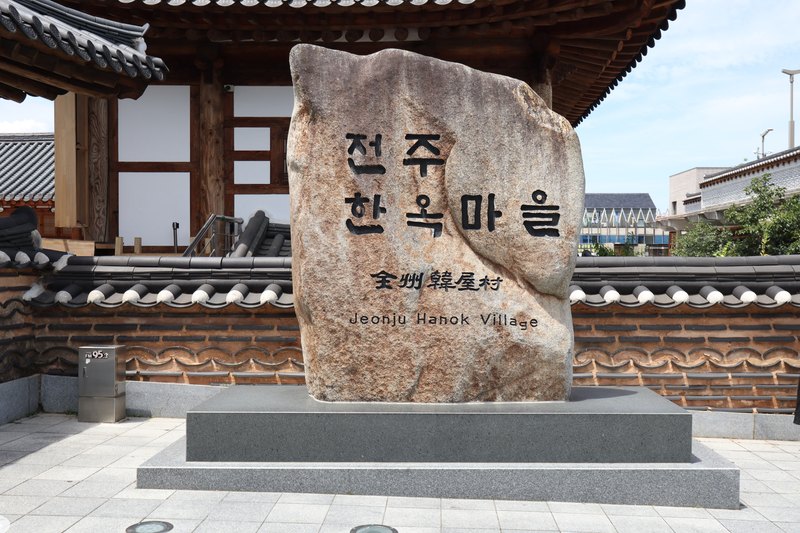
There is no wall around the village and no ticket booth.
Of the twelve cultural sites inside it, only Gyeonggijeon charges admission, and that is 3,000 won for an adult. The story that wearing hanbok gets you in free is widely repeated, but no such rule exists.
Deadlines that matter
Buying a Gyeonggijeon ticket
By when: Up to one hour before closing
If you miss it: That day you see the roofs from outside the wall. Pungnammun, Jeondong Cathedral and the hyanggyo are free and still open to you.
Last free shuttle
By when: 6:30pm
If you miss it: You walk the 2.5 kilometres downhill from the Omokdae stop to public car park number 4.
Nambu Market night market
By when: Fridays and Saturdays only
If you miss it: On any other day, the Youth Mall on the second floor of the market stands in for it. On Mondays the Youth Mall is closed too.
Right now
- 1The village itself is free. Gyeonggijeon is the only place you need a ticket to walk into; Pungnammun, Jeondong Cathedral and Jeonju Hyanggyo are simply open.
- 2Indoor sites mostly close at 6pm. If you see the interiors by day and walk the alleys in the evening, nothing clashes.
- 3The whole village is a no smoking zone. Lighting up carries a fine of up to 100,000 won.
Getting there
From central Seoul (Seoul Station, Myeongdong, Hongdae)
Take subway line 1 or the Gyeongui-Jungang line to Yongsan station (용산). From Yongsan take a Jeolla line train (KTX, Saemaeul, Mugunghwa) and get off at Jeonju station (전주). At the Cheotmajung-gil (첫마중길) stop in front of the station, board bus 119 and get off at the Jeondong Cathedral stop, 전동성당(한옥마을)앞.
- How long:
- About 1 hour 40 minutes to 2 hours 20 minutes from Yongsan to Jeonju station, then about 25 minutes by city bus. Roughly 3 to 4 hours door to door.
- Cost:
- The train fare is separate from city transit and changes with the train type and seat class, so check on the Korail booking screen. A taxi from Jeonju station to the village is 7,000 to 8,000 won.
Tickets go early on weekends and over long holidays, so book ahead on Korail. Bus 119 is a low floor bus, which makes it easier to board with large luggage or a stroller.
From the Gangnam area, or anywhere on lines 3, 7 and 9
From Express Bus Terminal station (고속터미널) on lines 3, 7 and 9, go to the Central City terminal (센트럴시티, 서울호남). Buses to Jeonju leave from Central City, not from Seoul Express Bus Terminal (서울고속버스터미널). Get off at Jeonju Express Bus Terminal (전주고속버스터미널), take city bus 79, 999 or 1994 and get off at 전동성당(한옥마을)앞.
- How long:
- About 2 hours 40 minutes from Central City to Jeonju, then about 15 minutes by city bus from the Jeonju terminal. Roughly 3 hours 30 minutes to 4 hours door to door.
- Cost:
- The express bus fare is separate and changes with the class, standard (일반), deluxe (우등) or premium (프리미엄), and with late night services. Check on Kobus or T-money GO. A taxi from the Jeonju terminal to the village is 5,000 to 6,000 won.
Jeonju Express Bus Terminal (전주고속버스터미널) and Jeonju Intercity Bus Terminal (전주시외버스터미널) stand side by side, three minutes apart on foot. Check the name of the one you were dropped at before you get on a bus.
From Incheon or Gimpo Airport (without going into Seoul)
At Terminal 1 the Jeonju bus leaves from stands 12 to 13 in the intercity bus (지방버스) section outside arrivals on the first floor, and at Terminal 2 from stand 8 in the basement level 1 transportation center. The bus arrives at Jeonju Limousine Terminal (전주리무진터미널), and you take a taxi from there.
- How long:
- About 3 hours 50 minutes from Incheon Airport to Jeonju, and about 3 hours 20 minutes from Gimpo Airport. Immigration and baggage claim come on top of that.
- Cost:
- The airport bus fare is separate. Check the amount at the airport ticket office or in the T-money GO app.
Immigration and baggage claim take time, so avoid a bus timed tight to your landing. Buy the ticket at the first floor ticket office or a machine; credit cards issued overseas go through.
What to have ready
- Shoes you can walk in: The main walking street has been levelled, but the routes up to Omokdae and the Jaman mural village climb a hill.
- A transit card: Jeonju city buses are 50 won cheaper by card, and if you tap out when you get off, you get two free transfers within 30 minutes.
- A little cash: Some of the stalls in Nambu Market have no card reader.
- A bottle of water: Taejo-ro has almost no shade on a weekend.
Phrases you can copy and paste
Step by step
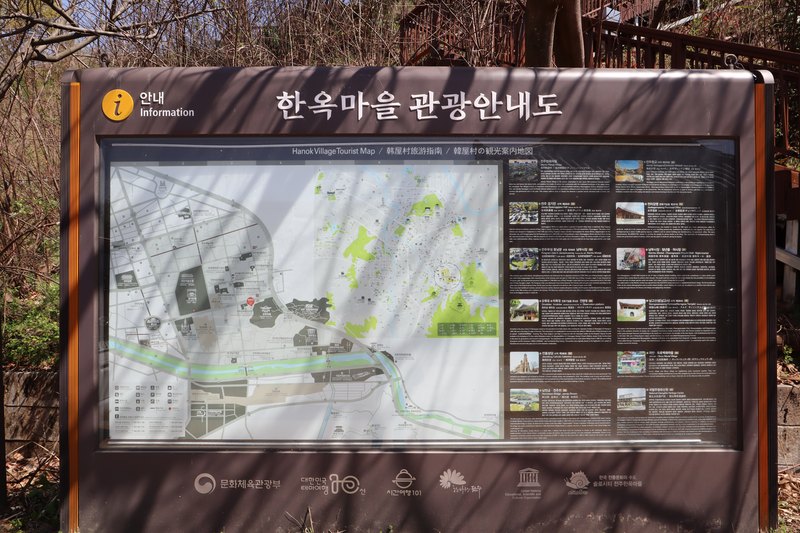
The route on a map
- 1
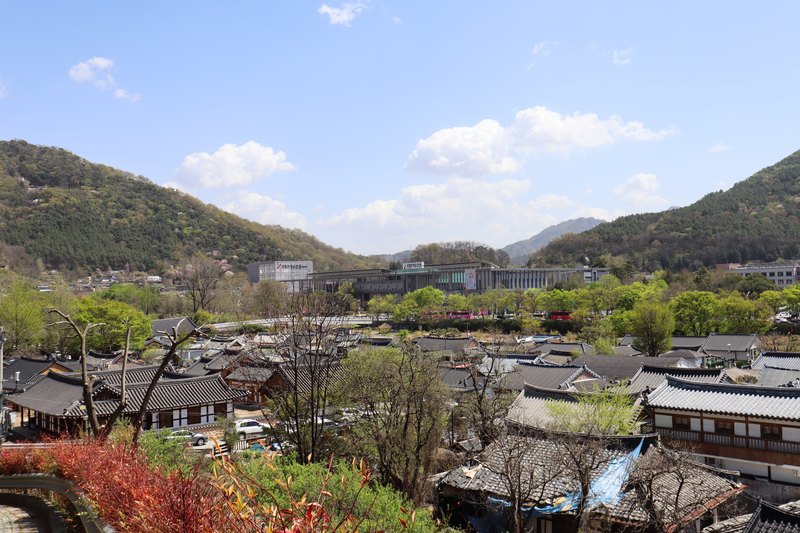
There is no ticket booth to look for on the way in
- Where:
- Enter Taejo-ro from the Girin-daero side, where the Hanok Village tourist information centre is
- Cost:
- Free
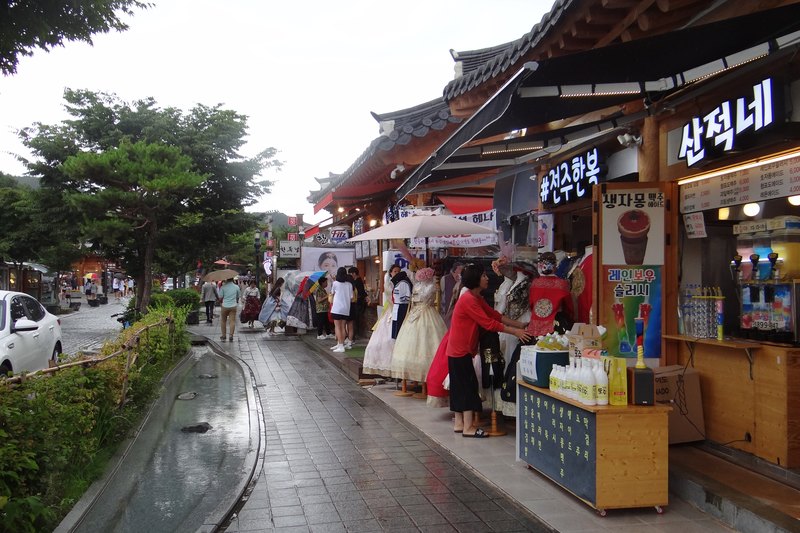
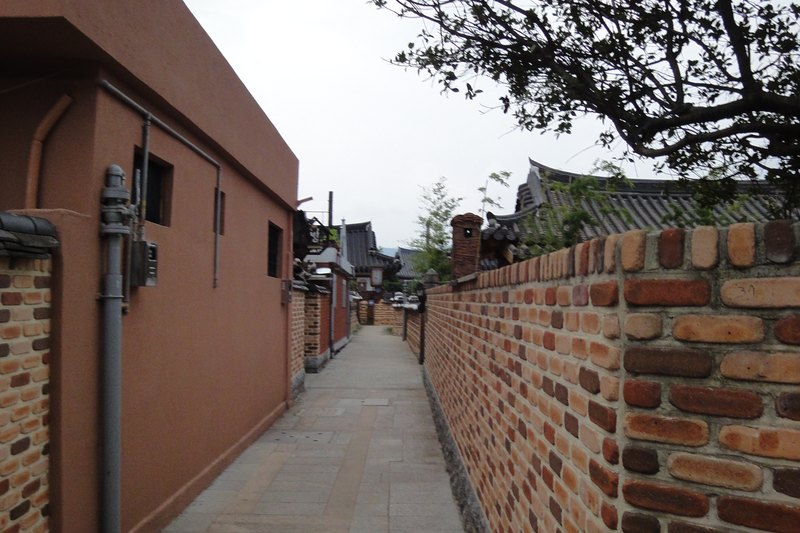
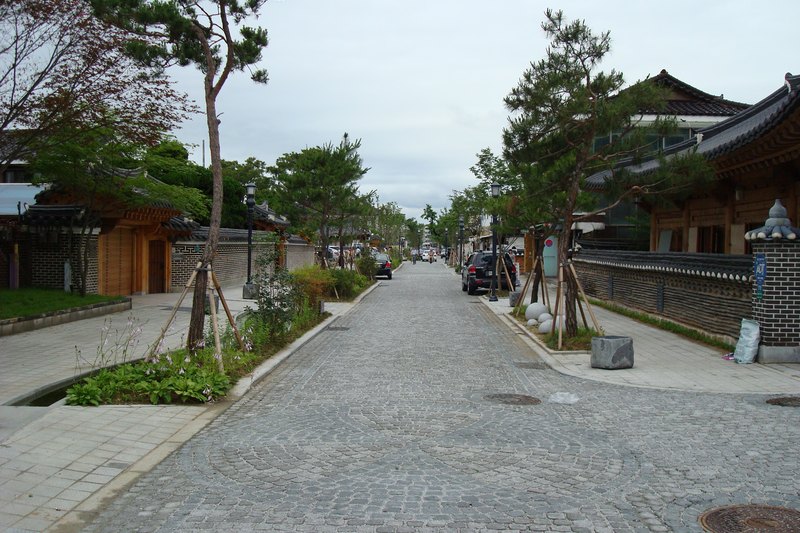
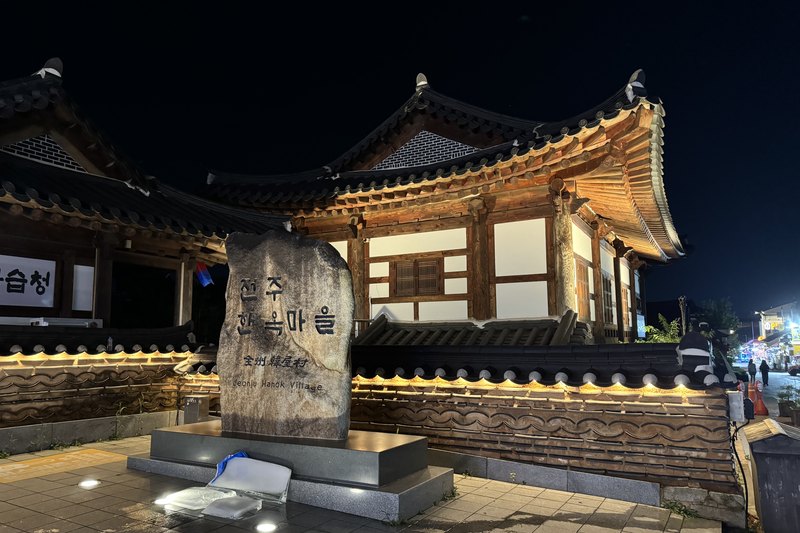
This village has many entrances. It is not a walled attraction but a tourist area laid over a neighbourhood where people live, so whichever alley you take, you are simply inside. The area covers 298,260 square metres, and 735 of its 947 buildings are hanok. Among them are 575 businesses: 203 places to stay, 183 serving food and drink, and 189 selling or renting goods. On a first visit the comfortable way to do it is to follow Taejo-ro and peel off into a side alley now and then. The tourist information centre has toilets and a nursing room, lends out wheelchairs and pushchairs, and has 23 lockers that take a 500 won coin you get back. They run out early on weekends.
99 Girin-daero, Wansan-gu, Jeonju, Jeonbuk State, South Korea, ★ 4.1 (29,238)
- 2
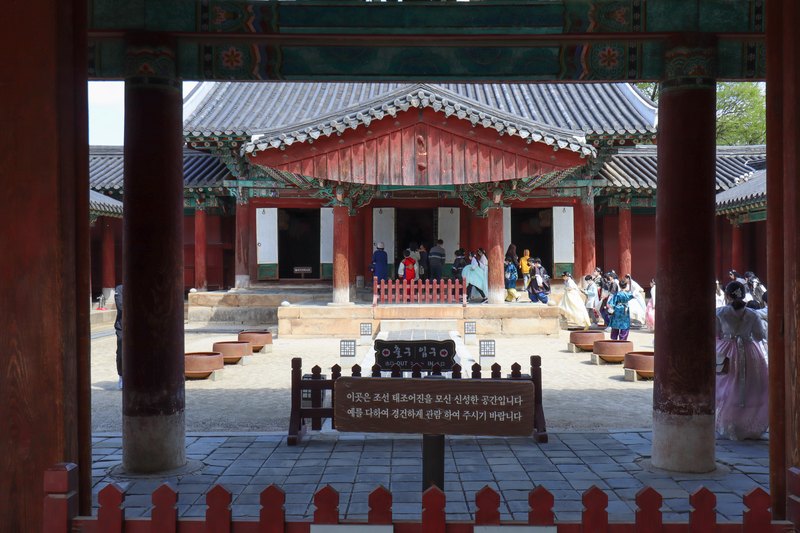
Gyeonggijeon, the one place that takes a ticket
- Where:
- In the middle of Taejo-ro, across from Jeondong Cathedral
- How long:
- March to May and September to October 09:00 to 19:00, June to August 09:00 to 20:00, November to February 09:00 to 18:00. Ticket sales end one hour before closing
- Cost:
- Adults 3,000 won, teenagers and soldiers 2,000 won, children 1,000 won. Residents of Jeonju and Wanju pay 1,000, 800 and 500 won respectively
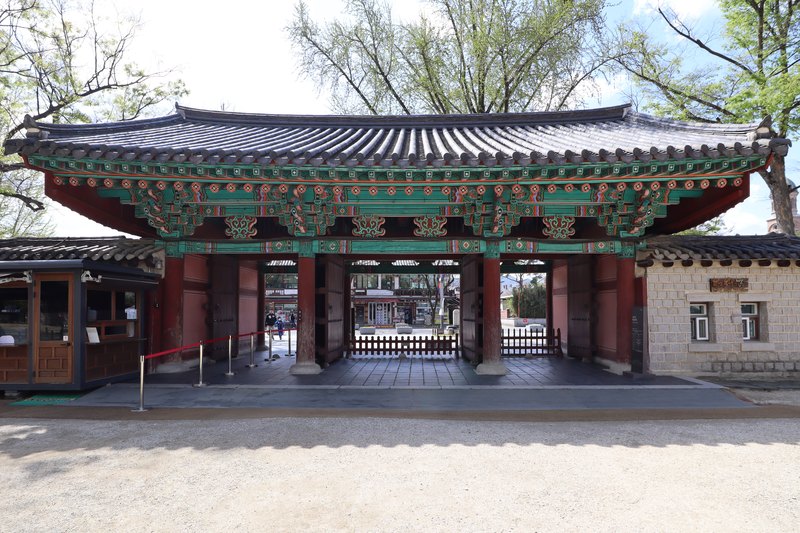
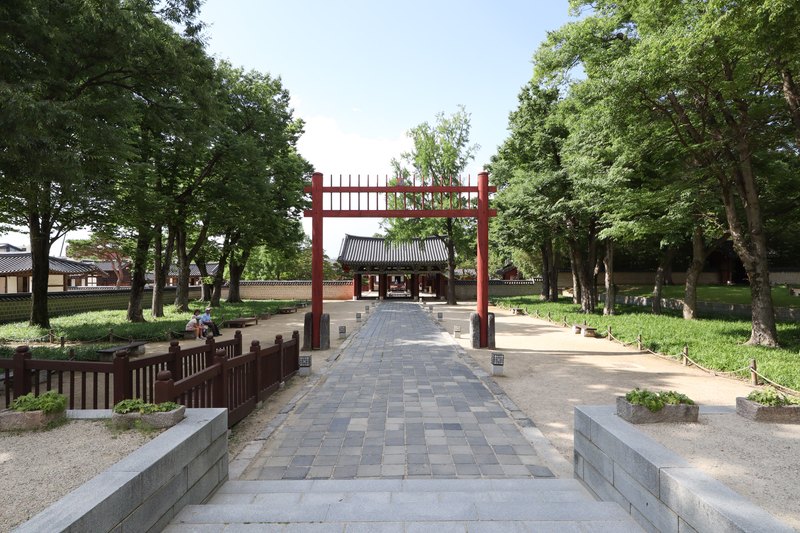
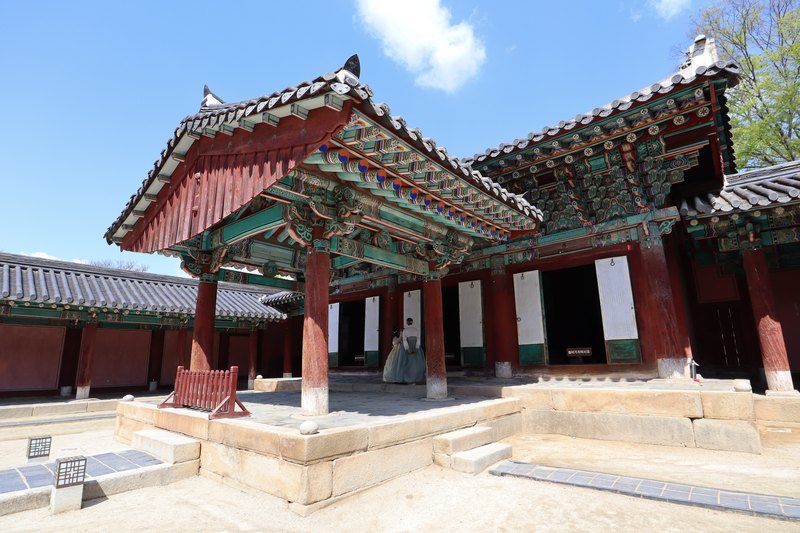
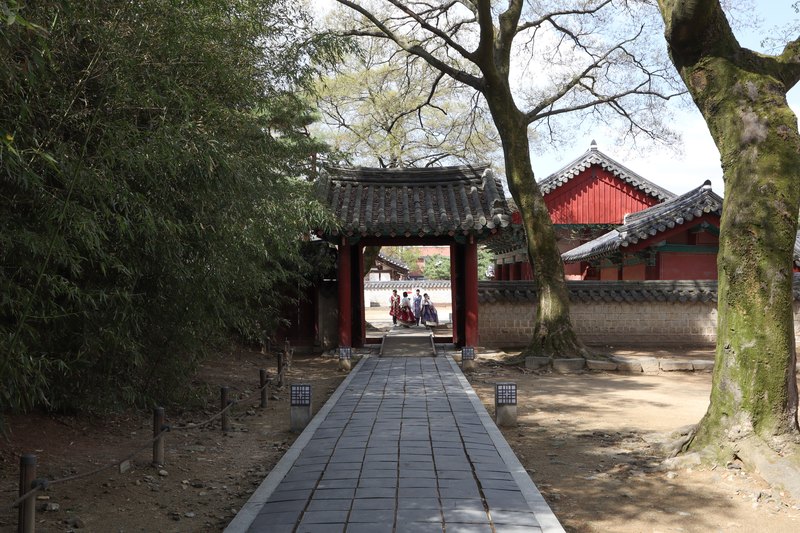
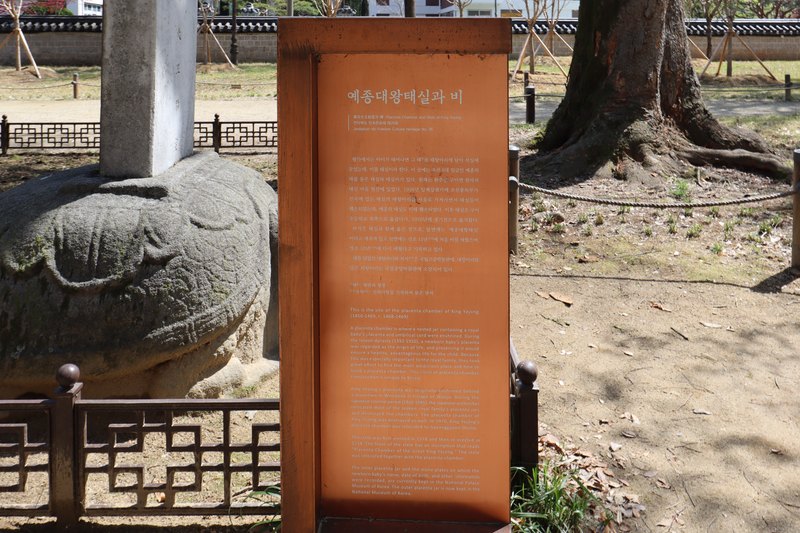
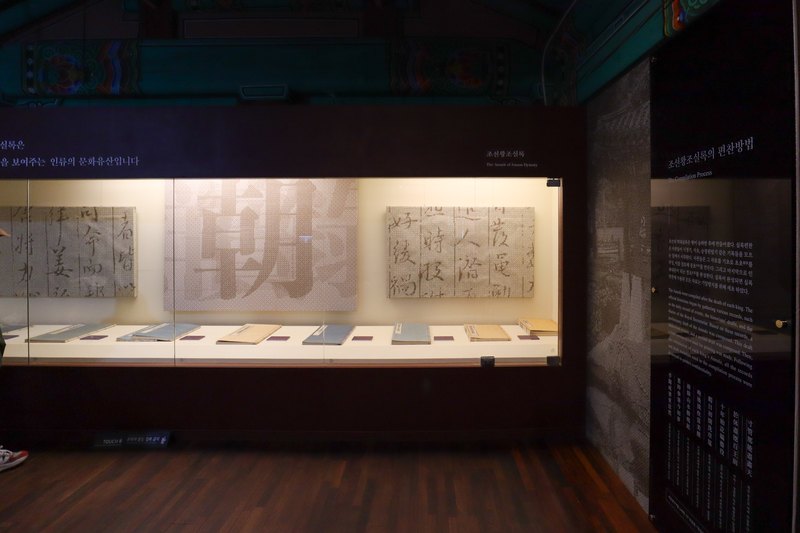
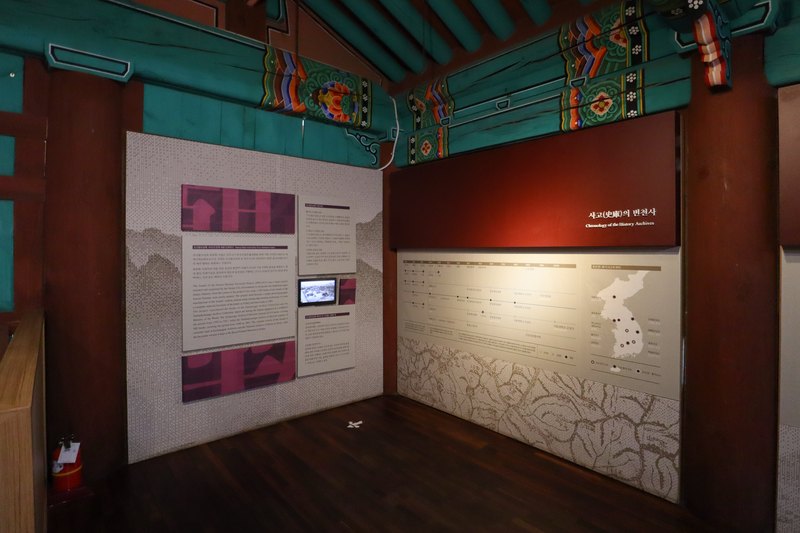
This shrine held the portrait of Yi Seong-gye, the founder of the Joseon dynasty, and rites were performed for him here. King Taejong built portrait halls in Jeonju, Gyeongju and Pyongyang in 1410, and in 1442, the 24th year of King Sejong, only the one in Jeonju received the name Gyeonggijeon. It was designated a historic site in 1991 and covers 49,589 square metres. Inside, the main hall stands in the centre, the Jeonju Sago archive that once kept the Annals of the Joseon Dynasty is to the east, and Jogyeongmyo, the shrine to the royal ancestors, is to the north. Two things on the price board trip people up. The dividing line for fares is where you live, not your nationality, so there is no foreigner rate at all, and anyone up to 24 counts as a teenager, not an adult. Giving the wrong age at the window and overpaying happens often.
44 Taejo-ro, Wansan-gu, Jeonju, Jeonbuk State, South Korea, ★ 4.3 (2,020)
- 3
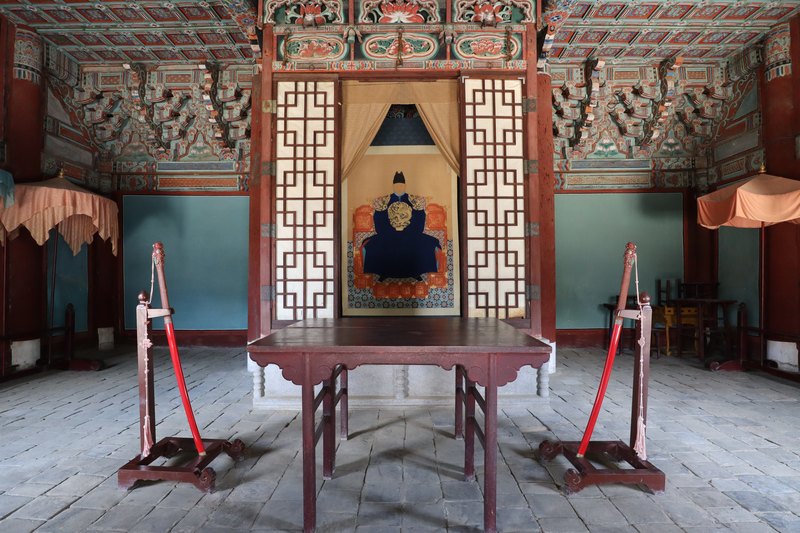
The Royal Portrait Museum is on the same ticket
- Where:
- At the north end of the Gyeonggijeon grounds, next to Jogyeongmyo
- How long:
- 09:00 to 19:00, until 20:00 from June to August and until 18:00 from November to February. The only closing day is 1 January
- Cost:
- No separate charge. Your Gyeonggijeon ticket covers it
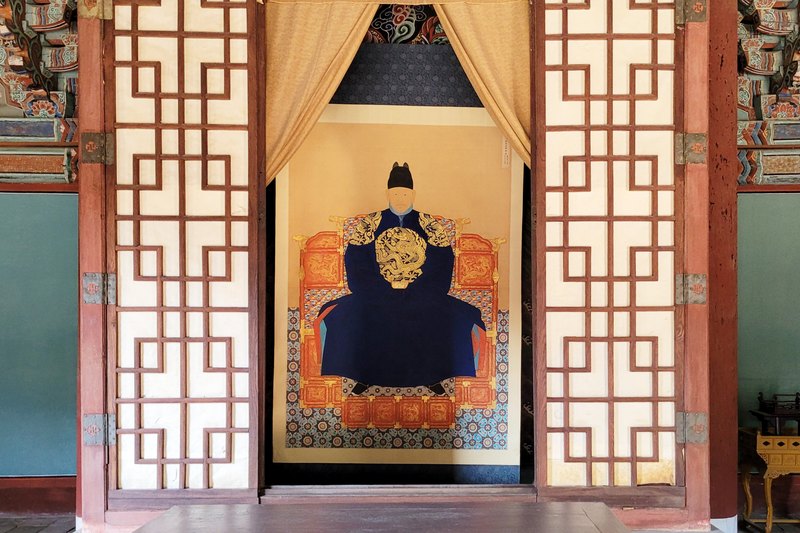
Plenty of people buy a Gyeonggijeon ticket and walk straight past this, but the museum is effectively thrown in. Eojin means a portrait of a king, and this is the only museum in the country devoted to them. It opened in November 2010, marking 600 years since the portrait of King Taejo was first enshrined in Jeonju. The rooms cover the Taejo portrait, history, palanquins, other royal portraits and a hands-on area, and a real palanquin once used to carry portraits stands on display. The portrait hanging in the main hall is a copy; the original, a designated National Treasure, is in here. Being indoors, it also makes a decent place to cool down or warm up for a while in summer and winter.
44 Taejo-ro, Wansan-gu, Jeonju, Jeonbuk State, South Korea, ★ 4.2 (1,344)
- 4
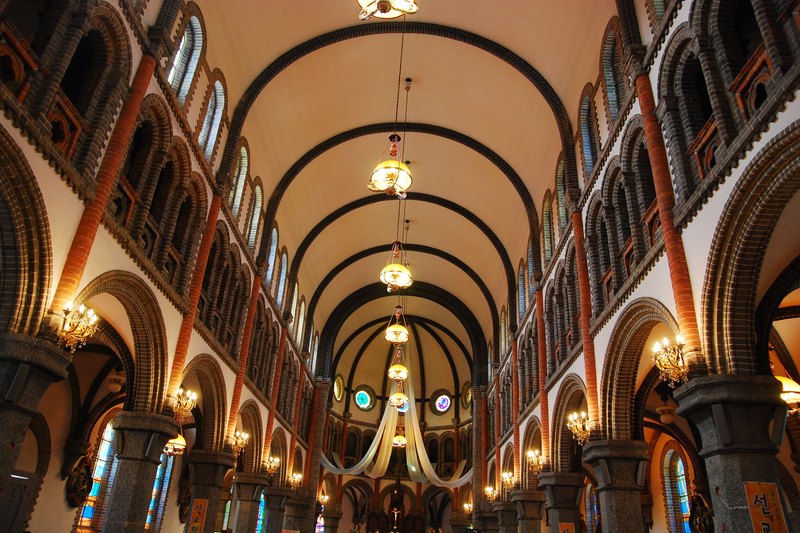
Jeondong Cathedral is one street away
- Where:
- Cross Taejo-ro from the main gate of Gyeonggijeon and it is right in front of you
- Cost:
- Free
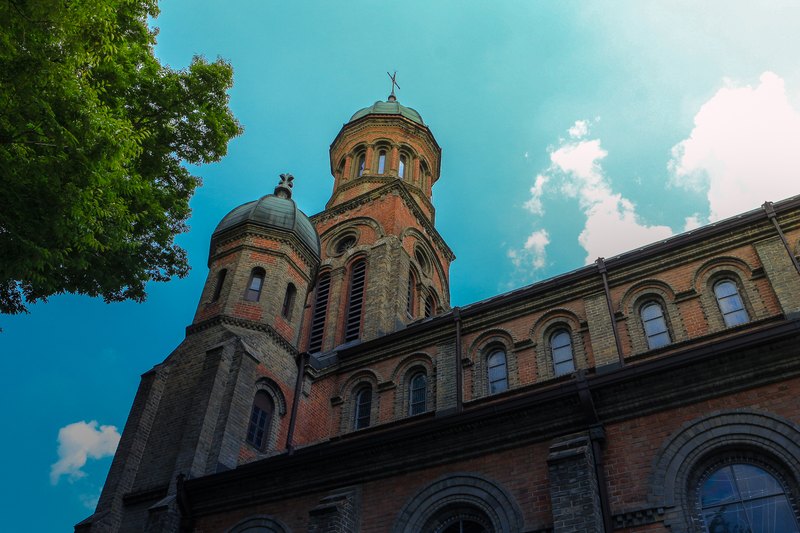
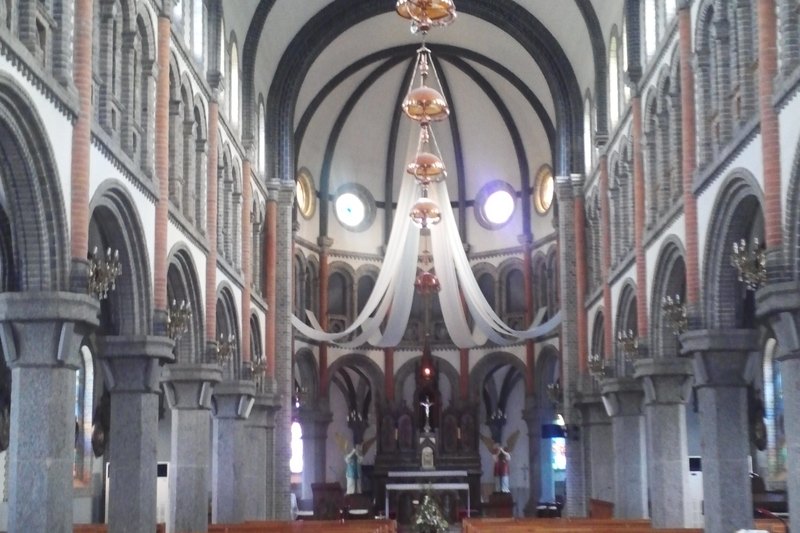
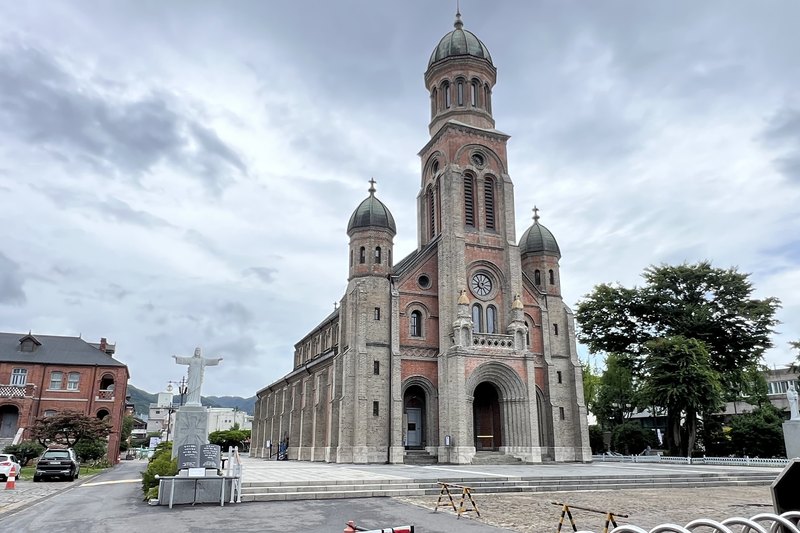
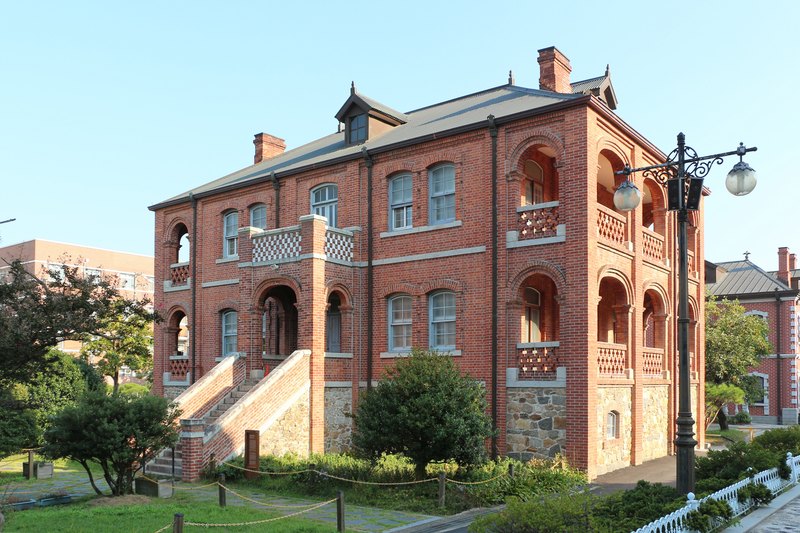
A Romanesque cathedral built in grey and red brick, so after a stretch of tiled roofs you turn your head and seem to have landed in another country. Which is why there is always a crowd in front of it. You can go inside, though viewing is restricted during Mass, so read the notice at the door first. The rectory behind the cathedral is a brick building from the same period and worth seeing alongside it. One practical catch: the public toilet at the cathedral is open from 9am to 5pm and not at all on weekends. Counting on it on a weekend afternoon will leave you stuck.
51 Taejo-ro, Wansan-gu, Jeonju, Jeonbuk State, South Korea, ★ 4.4 (3,946)
- 5
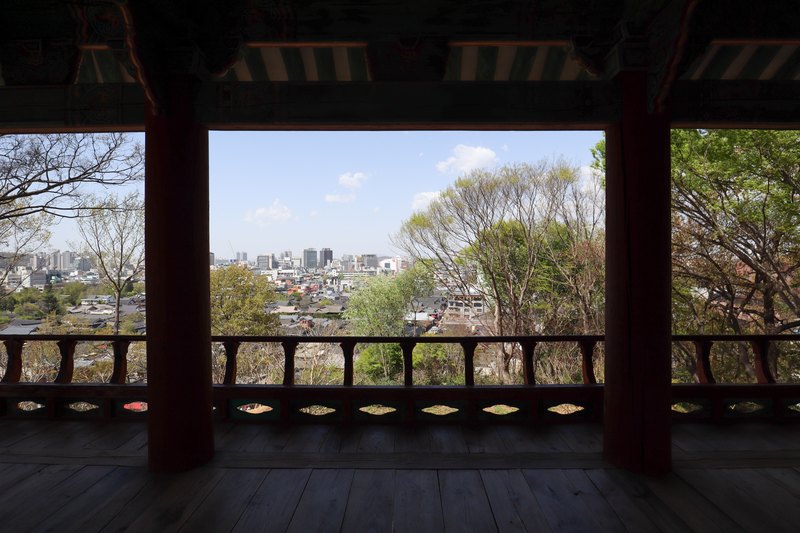
From Omokdae the roofs come into view all at once
- Where:
- Follow Taejo-ro from the information centre and it is the hill on your right
- Cost:
- Free
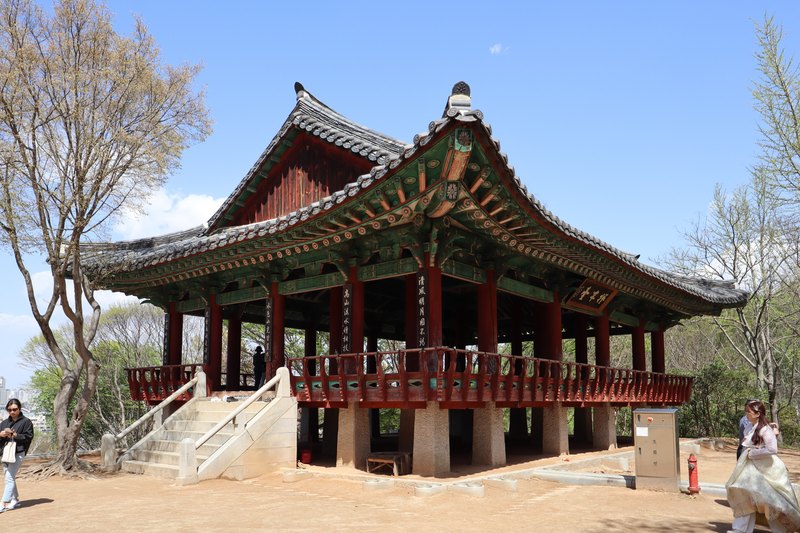
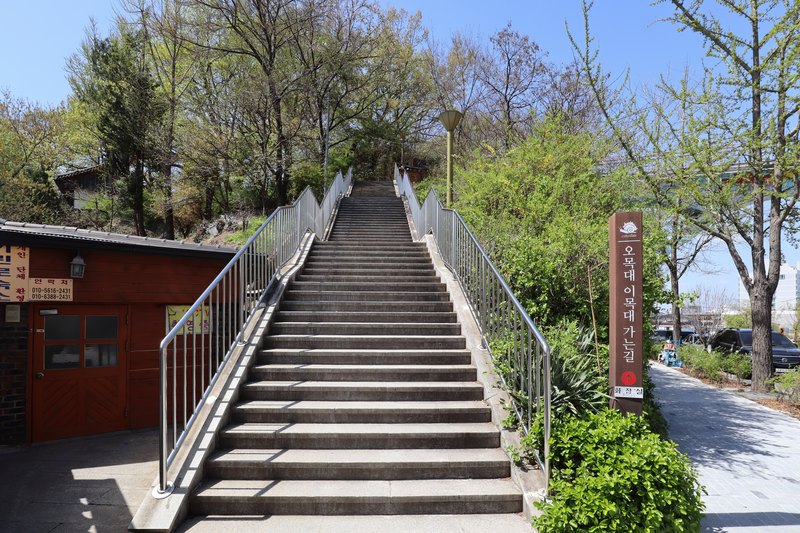
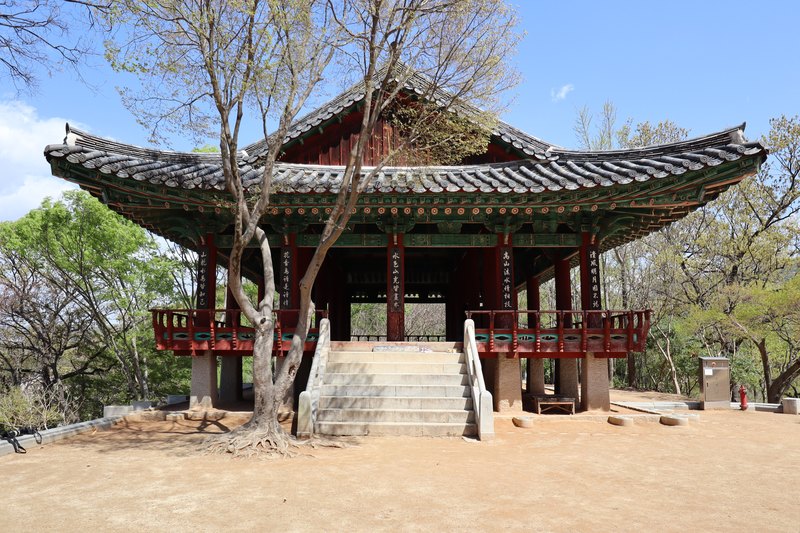
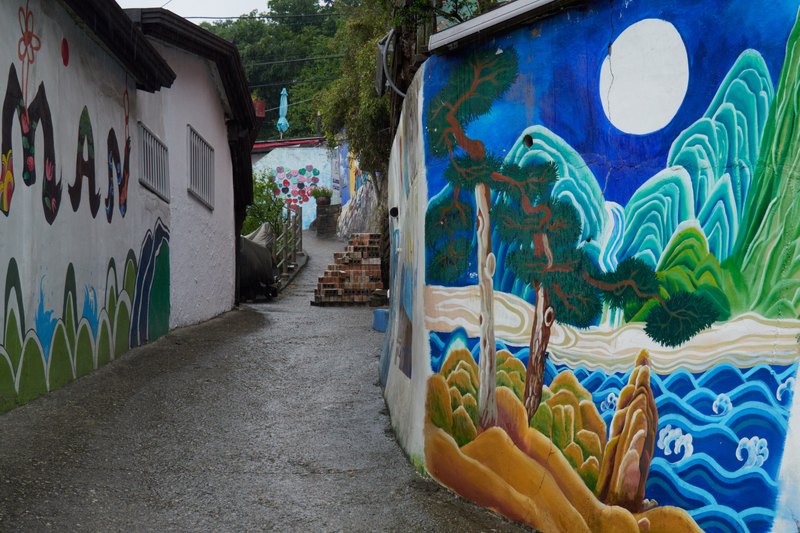
The sea of tiled roofs you see in photographs of the village is the view down from this hill. A few minutes of steps bring you to a pavilion, and the ground in front of it serves as the lookout. Omokdae is said to be where Yi Seong-gye held a feast on his way home after defeating Japanese raiders at the end of the Goryeo period, and if you cross the footbridge and walk down, you reach Imokdae, where his ancestor five generations back is said to have lived. Keep going through the alleys from Imokdae and you are in the Jaman mural village, a neighbourhood of low houses with paintings on the walls and fences. Unlike the flat centre of the village this part is uphill, so it is better done while your legs still have something left.
55 Jeonjucheondong-ro, Wansan-gu, Jeonju, Jeonbuk State, South Korea, ★ 4.3 (438)
- 6
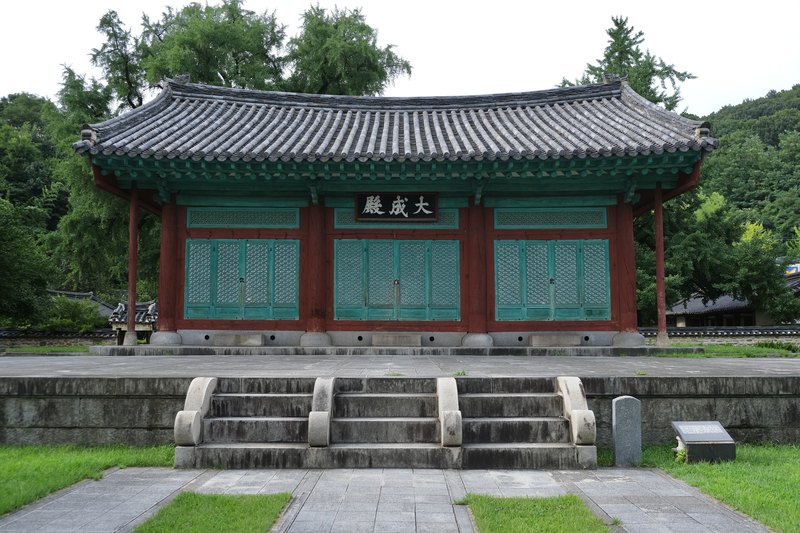
Jeonju Hyanggyo has few people in it
- Where:
- At the east end of the village, close to the Jeonju stream
- Cost:
- Free
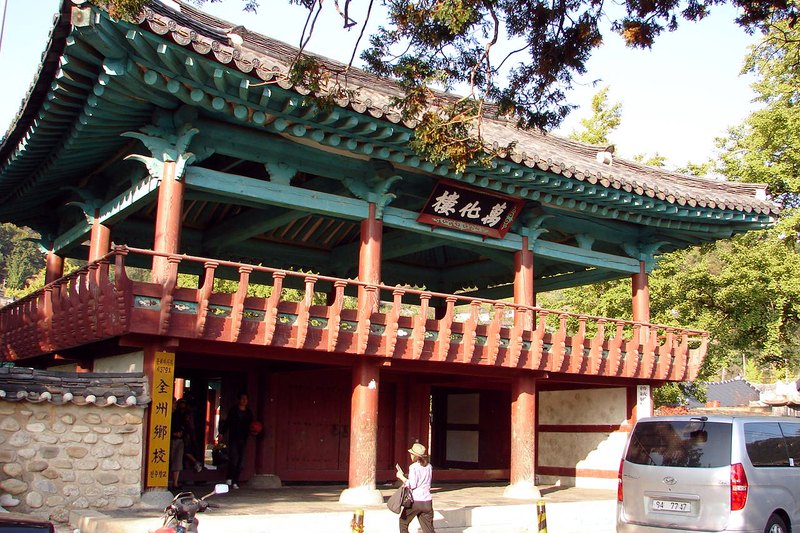
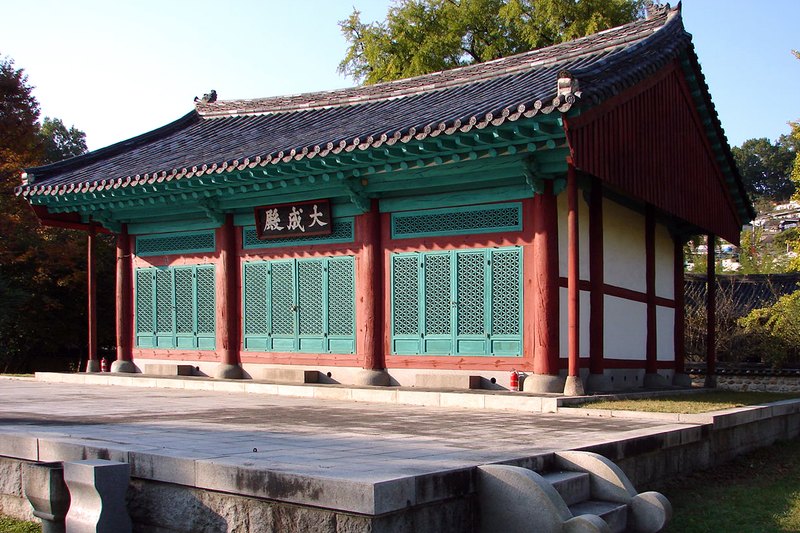
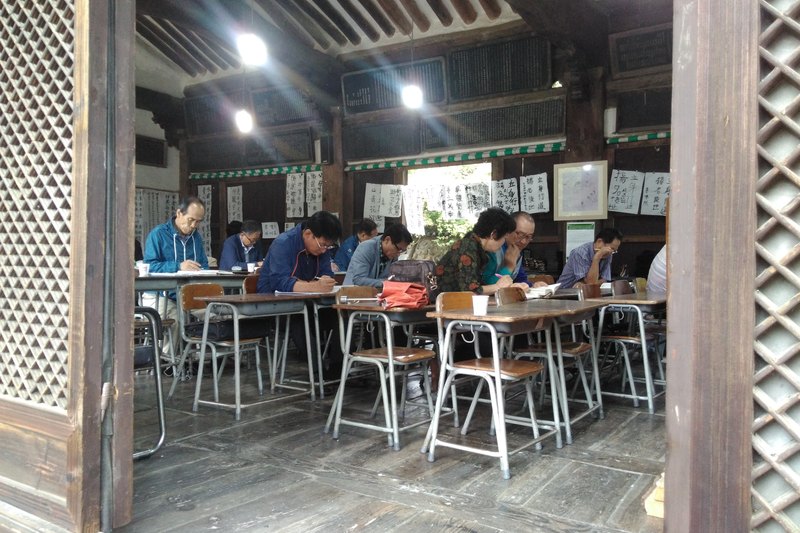
This was a provincial state school in the Joseon period. Walk about ten minutes out of the crowd on Taejo-ro and the noise cuts off, and that drop is the sharpest anywhere in the village. The ginkgo trees in the courtyard are several hundred years old, and when they turn yellow in autumn, half the photographs of this neighbourhood come from here. The large building in the centre is Daeseongjeon, the hall dedicated to Confucius, with lecture halls in front of it and behind. It is used often as a filming location for television dramas, so it may look familiar. The quiet inside the walls makes it a good place to sit, though on days when rites are held, some areas are closed off.
139 Hyanggyo-gil, Wansan-gu, Jeonju, Jeonbuk State, South Korea, ★ 4.3 (1,896)
- 7
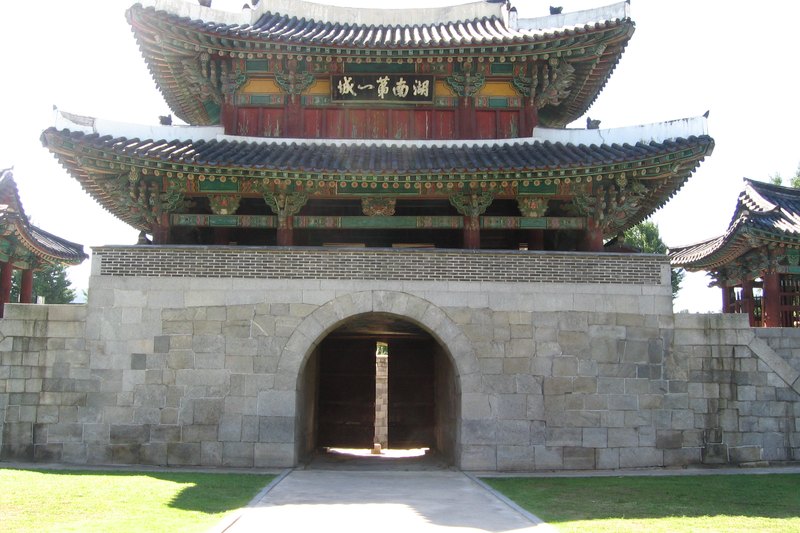
Pungnammun explains why the village is here at all
- Where:
- At the west end of the village, right in front of Nambu Market
- Cost:
- Free
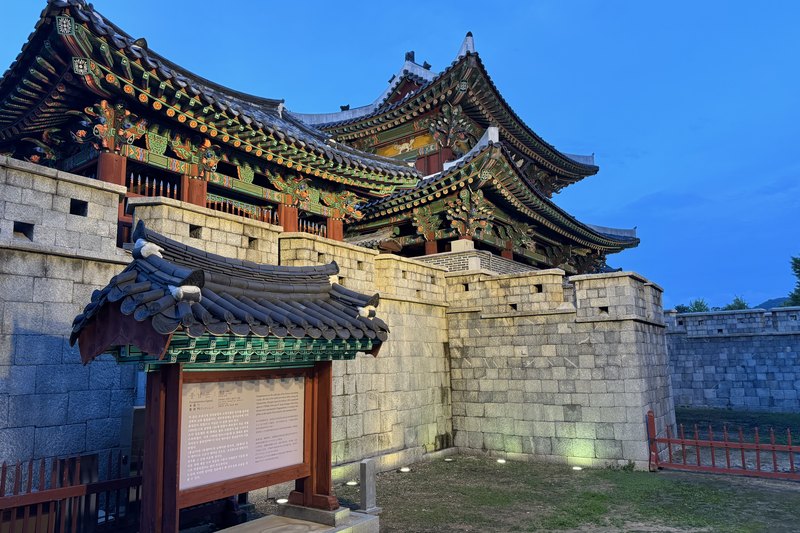
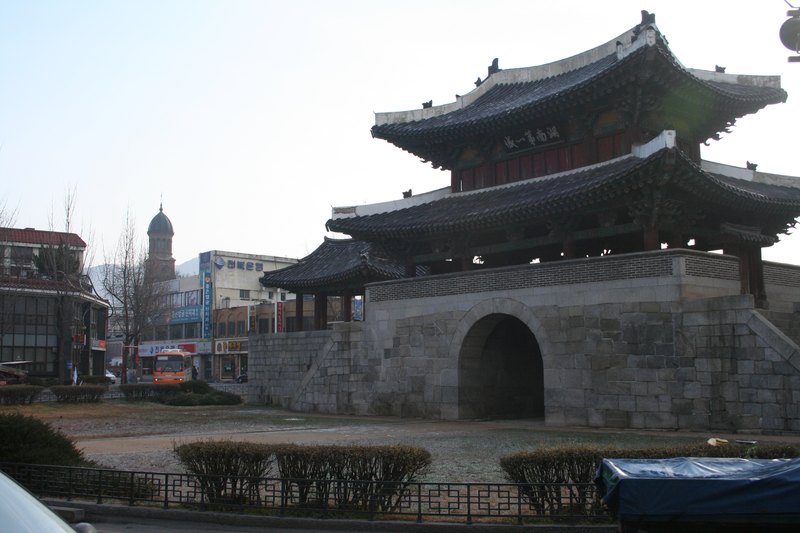
This is the south gate of the old Jeonju fortress. The walls came down between 1907 and 1911 and this gate is all that remains. When and why the village came into being is tied to that demolition. After the 1905 treaty, Japanese settlers pushed in through the gaps left by the fallen walls and took over the commerce inside the fortress, and the people of Jeonju responded by building hanok in concentration in Gyo-dong and Pungnam-dong, east of Pungnammun. The alleys you are walking were laid out then. The gate itself stands like an island in the middle of the road, so getting close means two pedestrian crossings, and once the lights come on at night it looks quite different from the daytime.
1 Pungnammun 3-gil, Wansan-gu, Jeonju, Jeonbuk State, South Korea, ★ 4.2 (1,556)
- 8
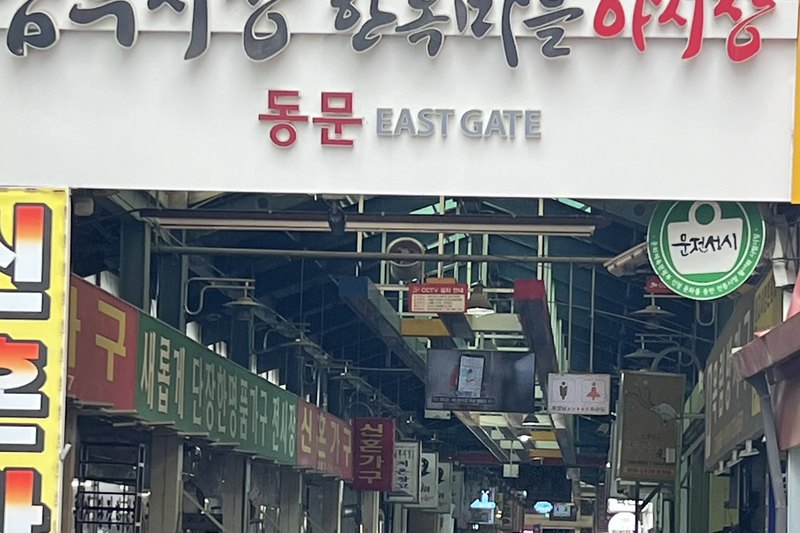
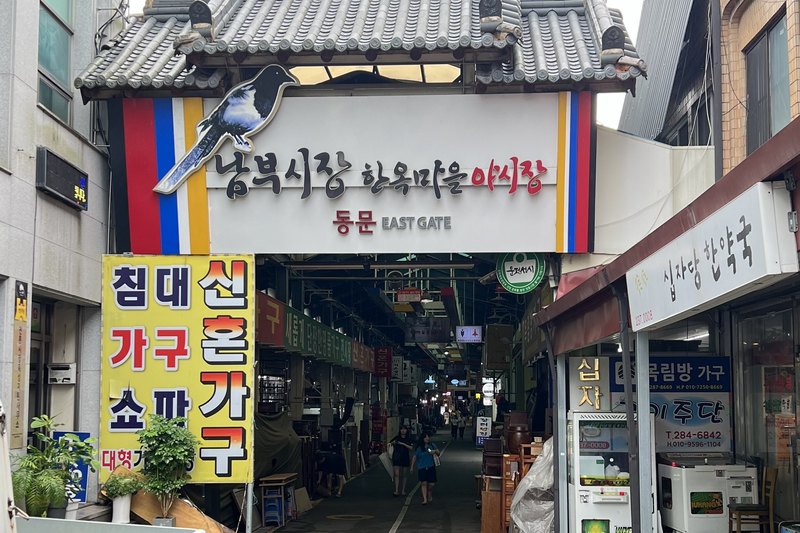
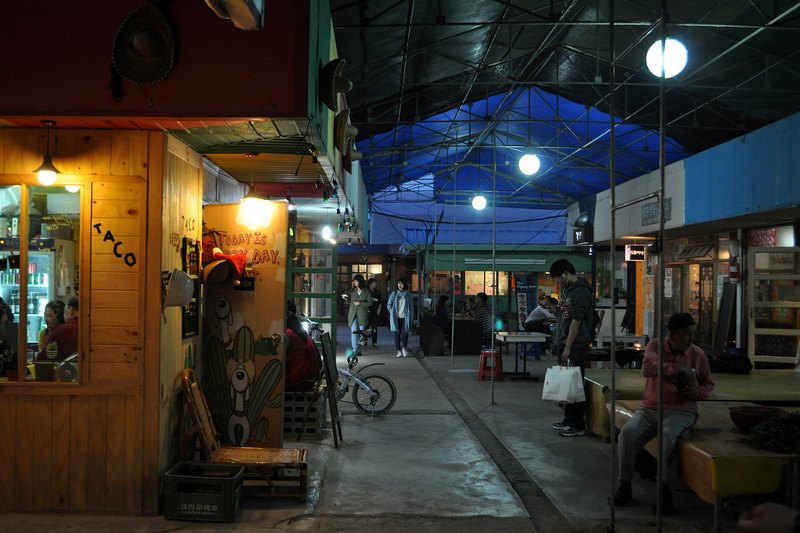
Dinner at Nambu Market
- Where:
- One street across from Pungnammun
- How long:
- The night market runs on Friday and Saturday evenings only. The Youth Mall on the second floor opens on weekdays too and closes on Mondays
- Cost:
- Free to enter
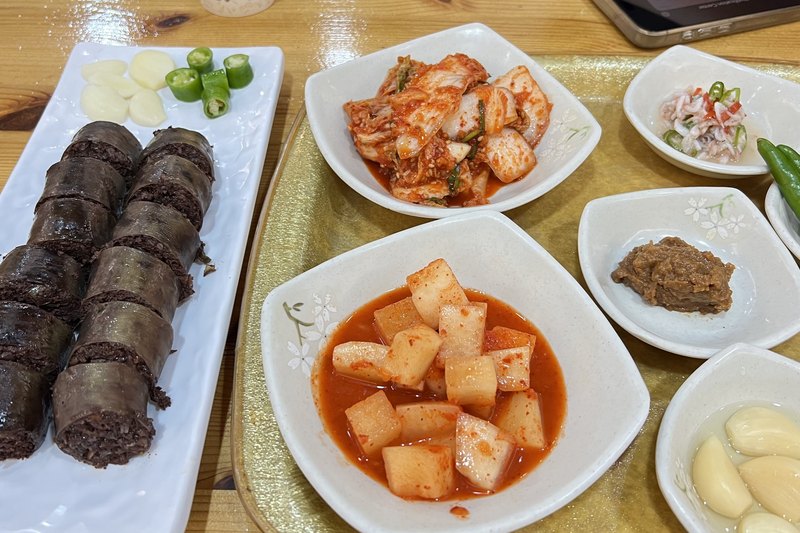
When you want to get away from tourist prices, this is where you come out to. On Friday and Saturday evenings about forty mobile stalls line a passage of roughly 250 metres, and that is what is called the night market. On the second floor of the market is the Youth Mall, a section created when young traders moved into empty units, and it has a different feel from the floor below. If you eat one thing here, make it pisundae. It uses a large amount of pig blood rather than the usual congealed blood, which gives it a dark colour, and it is eaten especially widely in Jeonju. Some stalls have no card reader, so carry a little cash.
Filmed here: Tastefully Yours
19-3 Pungnammun 1-gil, Wansan-gu, Jeonju, Jeonbuk State, South Korea, ★ 4.0 (6,203)
Watch it happen
Videos other people made, picked because they show a part of this guide that words cannot. They are not our sources: the rules and figures above come from the official pages listed at the end.
Jeonju Travel Guide 2026 🇰🇷 Ultimate 2-Day Hanok Village Itinerary from Seoul
Channel: Lost Then Found 로스트 덴 파운드, English narration
Two days are walked in order, from the train out of Seoul to Gyeonggijeon, Jeondong Cathedral and the climb to Omokdae, so you can see how the stops in this guide connect.
Explore A 1400's Joseon-Era Area at Gyeongijeon Shrine, Jeonju | KOREA 4K WALKING TOUR
Channel: Tofu Traveler - Asia Walking Tours, Travel Videos, No narration, ambient sound
It walks in at the gate and carries on past the main hall, inside the Jeonju Sago archive and around to the Royal Portrait Museum, so you can judge the one ticket in this guide before you buy it.
Jeonju Hanok Village Walking Tour, Jaman Mural Village, Omokdae | 4K Korea Travel
Channel: Walking On, No narration, ambient street sound
The walk goes from the main street into the side alleys and on to the hyanggyo, Jaman mural village and Omokdae, so you can see there is no gate to pass through on the way in and how much of the last stretch climbs.
The Korean words
- 한옥hanok, traditional Korean house
- A Korean style house with a timber frame and a tiled roof.
- 어진eojin, portrait of a king
- A royal portrait. This is what Gyeonggijeon and the Royal Portrait Museum are about.
- 사적sajeok, historic site
- A historic remain designated and protected by the state. Gyeonggijeon is one.
- 향교hyanggyo, regional Confucian school
- A state school set up in the provinces during the Joseon period.
- 대성전daeseongjeon, main hall of a Confucian shrine
- The largest building in a hyanggyo, dedicated to Confucius.
- 매표 마감mapyo magam, last ticket sale
- The time ticket sales stop. It is not the same as closing time.
- 피순대pisundae, blood-rich sundae sausage
- Sundae made dark with a large amount of pig blood. Widely eaten at Nambu Market in Jeonju.
Easy to miss
- The claim that Gyeonggijeon is free if you wear hanbok is everywhere, but no such rule exists. The two official concessions are free entry on the last Wednesday of each month and a 50 percent discount on Hanbok Day, the fourth Saturday of each month.
- Free entry for those aged 65 and over applies to Korean nationals only. A foreign visitor over 65 pays.
- An adult on the price board starts at 25. Up to 24 you pay the teenager rate of 2,000 won, and the group discount needs a party of 20.
- Coffee inside the village costs on average 650 won more than outside. The gap comes from rents and the rules on franchise outlets, so it is not something you can haggle over.
- It is a car free street, yet electric carts run through it. The law does not class them as vehicles, so they fall outside the controls and thread through the crowds on narrow lanes.
- The whole village is a no smoking zone. Smoking carries a fine of up to 100,000 won.
You can skip this if
- If you are coming to see a Joseon era hanok village, expect a mismatch. Most of the houses here are modern hanok built after the 1930s, with glass windows and indoor toilets, and along Taejo-ro some Japanese style houses are mixed in.
- If you want photographs without people in them, avoid weekends. The village produces 2.4 tonnes of rubbish on a weekday and 5.2 tonnes on a weekend day.
- If you plan to drive, the public car parks inside the village charge 1,200 won for the first 30 minutes and 600 won for every 15 minutes after that. Public car park number 4 and the National Intangible Heritage Center car park are free.
When it is time for a person
- If you are going as far as thinking about moving to Jeonju, you need someone who also knows that the rental market inside the hanok village and outside it are two different worlds.
Where this comes from
- Jeonju Hanok Village at a glance (Jeonju Hanok Village official site)
- Cultural sites (Jeonju Hanok Village official site)
- Gyeonggijeon (Jeonju City Culture & Tourism)
- Visitor information (Royal Portrait Museum, Jeonju City)
- Gyeonggijeon Shrine, Jeonju (Korea Heritage Service digital heritage service)
- Getting here (Jeonju Hanok Village official site)
- Jeonju Hanok Village passes a record 15 million visitors (Jeonju City press release)
Rules, fees and deadlines change and depend on your exact case. Please confirm the details with the official sources before you act.