
The short version
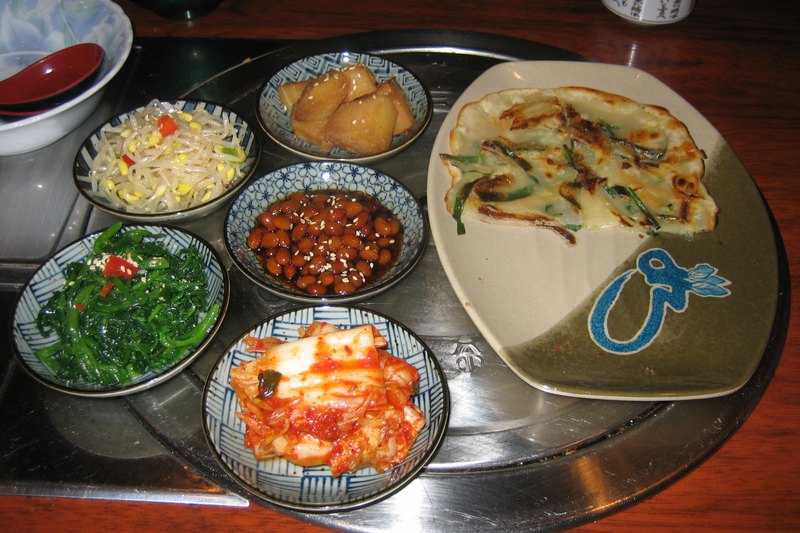
Order one kettle and a full spread of side dishes arrives with it, and every extra kettle brings a fresh set of dishes.
The spread is included in the price of the drink, so what reaches your table that day depends on how many kettles you empty. Samcheon-dong is the original alley, and Jeonju City also lists Gyeongwon-dong, Seosin-dong, Inhu and Ua-dong.
Deadlines that matter
Visiting the Jeonju Traditional Liquor Museum
By when: By 6pm, or by 8pm from 1 June to 31 October
If you miss it: It is closed altogether on Mondays, 1 January, and the days of Seollal and Chuseok. The alley only gets going around then anyway, so swap the order.
Booking the brewing or moju straining class
By when: At least five days ahead
If you miss it: Same day requests are not taken. Without a booking you see the exhibition only.
Nambu Market night market
By when: Friday and Saturday evenings
If you miss it: It does not run on other days. The Youth Mall on the second floor of the market stands in, and on Mondays that is closed too.
Right now
- 1One kettle means one spread of side dishes. The food is not a freebie but part of the kettle price, so if there is something you cannot eat, ask to have it left off when you order.
- 2This is evening trade. Turning up in the daytime and finding the door shut is common, so once you have picked a place, phone ahead.
- 3Dropping a pin on Samcheon-dong Makgeolli Alley in a map app can put you on the wrong block. The shops still trading are on the Samcheon 2-dong side, and the landmark is Geomasan-ro.
Getting there
From Seoul (Yongsan station / Central City Terminal)
From Yongsan station, take a Jeolla Line train and get off at Jeonju station. By express bus, you ride from Central City in Seoul to Jeonju Express Bus Terminal. Jeonju station, the express bus terminal and the intercity bus terminal all sit apart from one another.
The limousine bus from Incheon Airport to Jeonju takes about 3 hours 50 minutes, and about 3 hours 20 minutes from Gimpo Airport.
From Jeonju station (Jeolla Line)
From the stop in front of the station, take a city bus to the Jeondong Cathedral Hanok Village (전동성당(한옥마을)앞) stop. Buses 112, 79, 508, 536, 542, 545, 546, 101, 119 and 999 all stop there.
- How long:
- About 25 minutes
Coming from the terminals, take 79, 999 or 1994 from the Bulgyo Hoegwan (불교회관) stop, about 15 minutes. A taxi runs about 7,000 to 8,000 won from Jeonju station and 5,000 to 6,000 won from the terminals.
From Jeonju Hanok Village (Jeondong Cathedral)
A taxi is the surest way. Tell the driver 'Samcheon-dong Makgeolli Alley' (삼천동 막걸리골목). The destination is the Geomasan-ro area of Wansan-gu, lot number 712 Samcheon-dong 1-ga. The free hanok village shuttle bus does not head out toward the alley.
No city bus number for the hanok village to the alley appears on Jeonju City's official pages. To go by bus, look up that day's routes with the stop search at the Jeonju City Transport Information Center.
From Samcheon-dong Makgeolli Alley (going back at night)
Take a taxi for the way back. If no empty taxi turns up in front of the alley, use a taxi hailing app. Jeonju city buses have a different last departure on each route, and some stop running early at night.
Check the last bus time for your route that night, on the display board at the stop or at the Jeonju City Transport Information Center. A late-night taxi surcharge applies between midnight and 4am.
What to have ready
- Someone to go with: One kettle holds three 750 millilitre bottles of makgeolli. It is not a quantity for one person.
- Cash or a card: Some of the older places have no card reader.
- An empty stomach: A single spread runs to more than ten dishes. Eat dinner first and most of it goes back.
- ID: Moju is alcohol too. You may be asked to prove your age.
Phrases you can copy and paste
Step by step
- 1
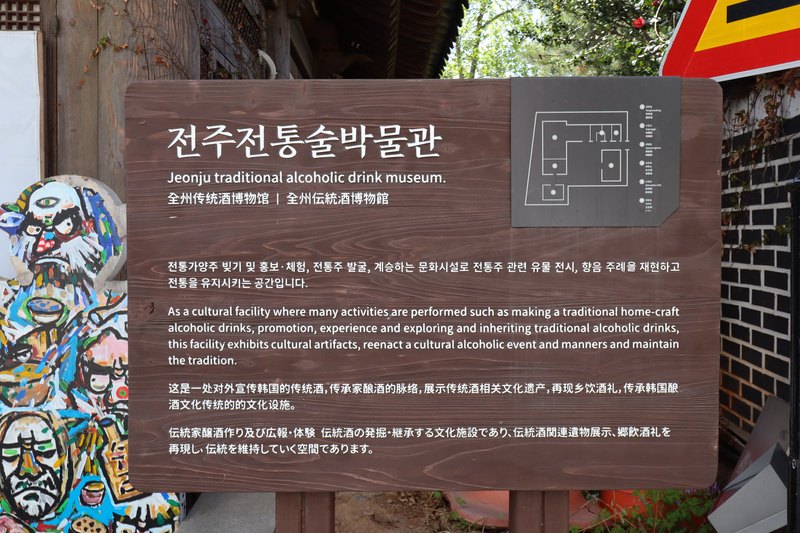
Start at the Jeonju Traditional Liquor Museum to see what you will be drinking
- Where:
- Inside the hanok village, on Hanji-gil
- How long:
- Tuesday to Sunday 10:00 to 18:00, until 20:00 from 1 June to 31 October
- Cost:
- Admission free. Classes: brewing 25,000 won, moju straining 20,000 won, tasting 20,000 won for four kinds and 30,000 won for six
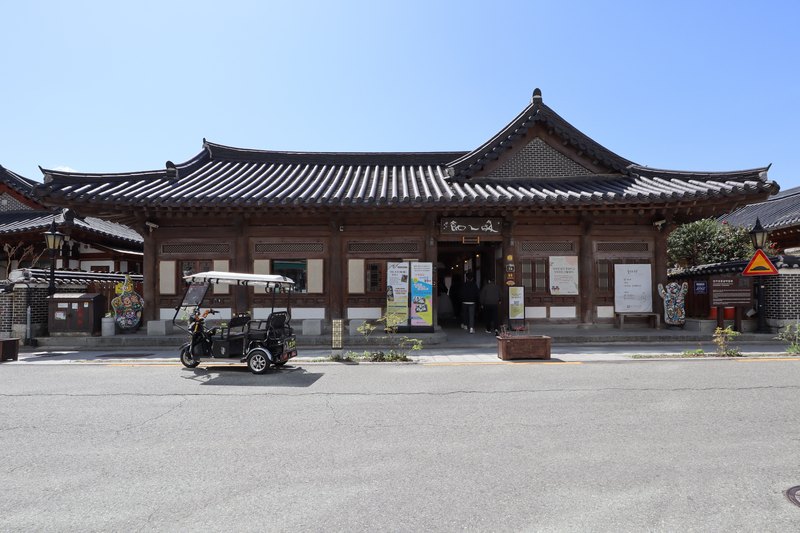
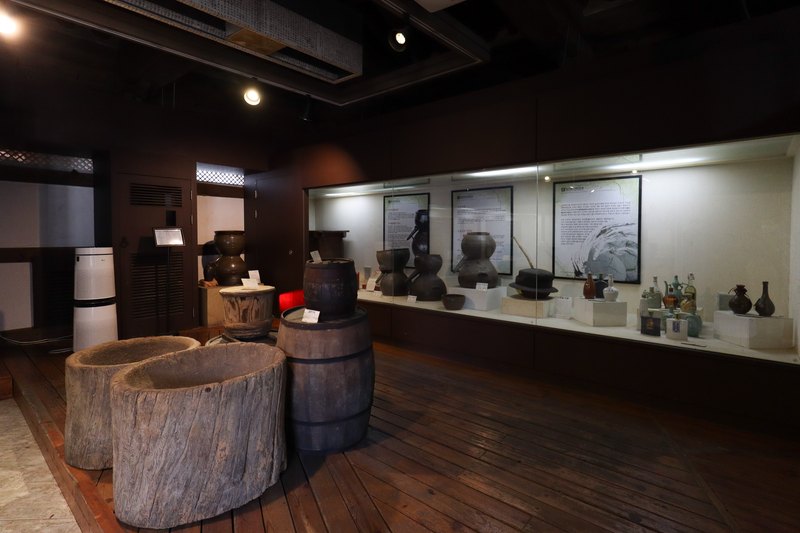
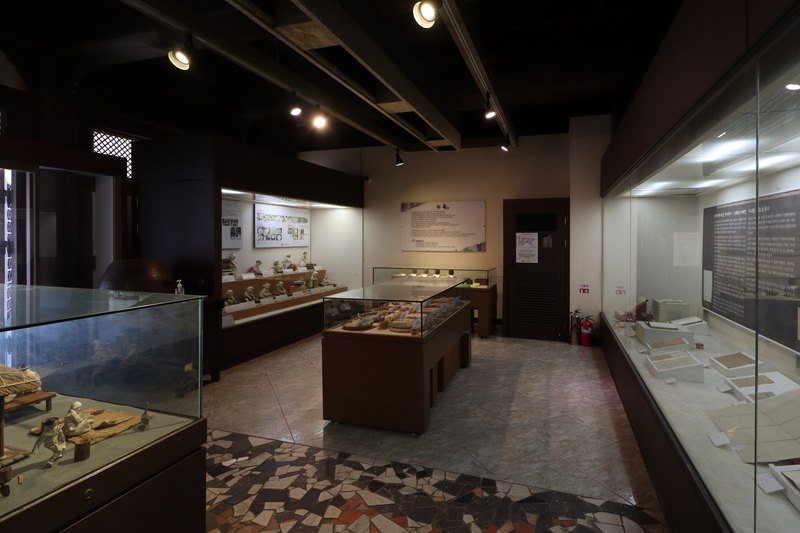
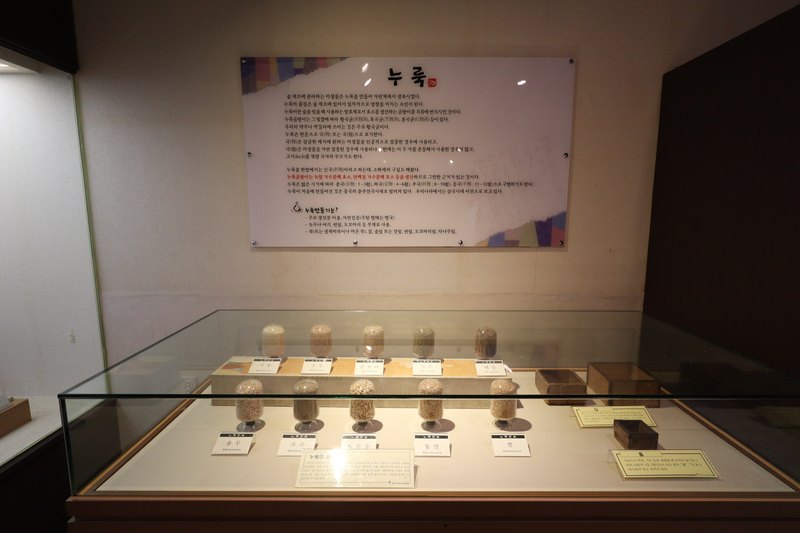
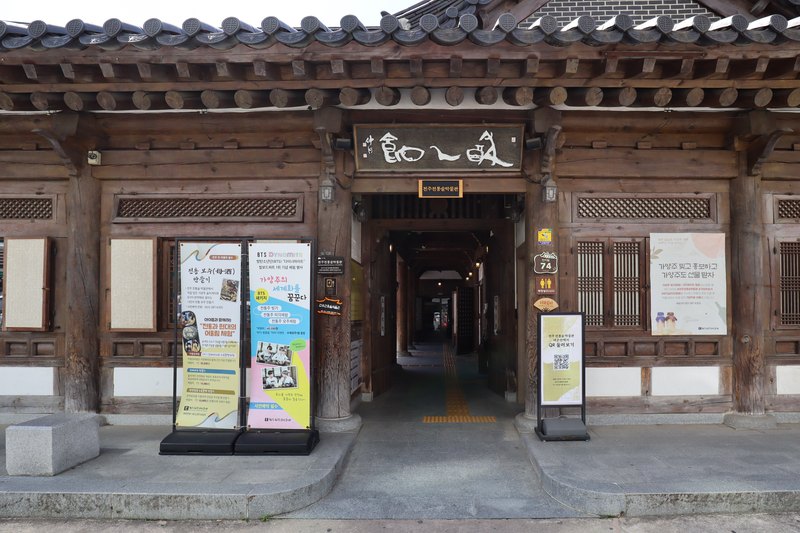
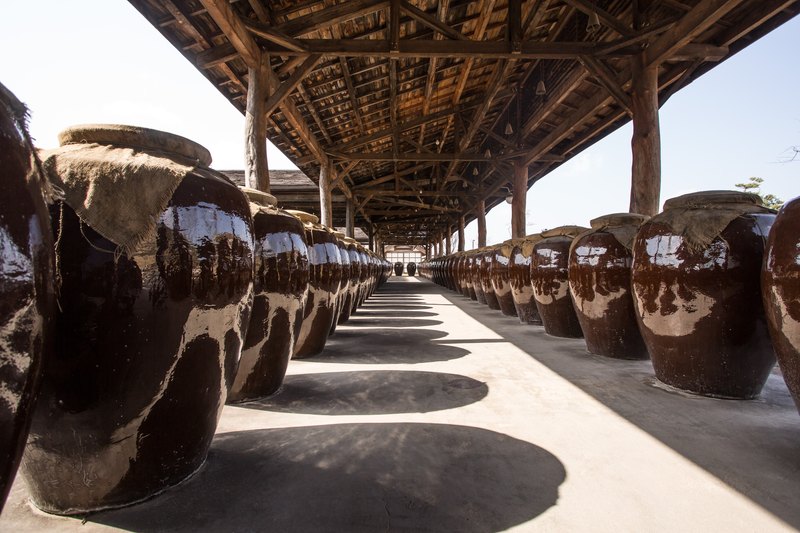
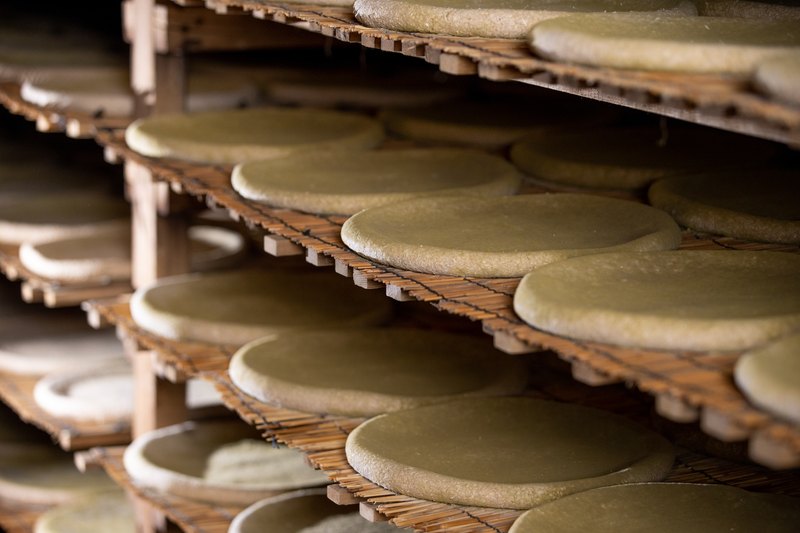
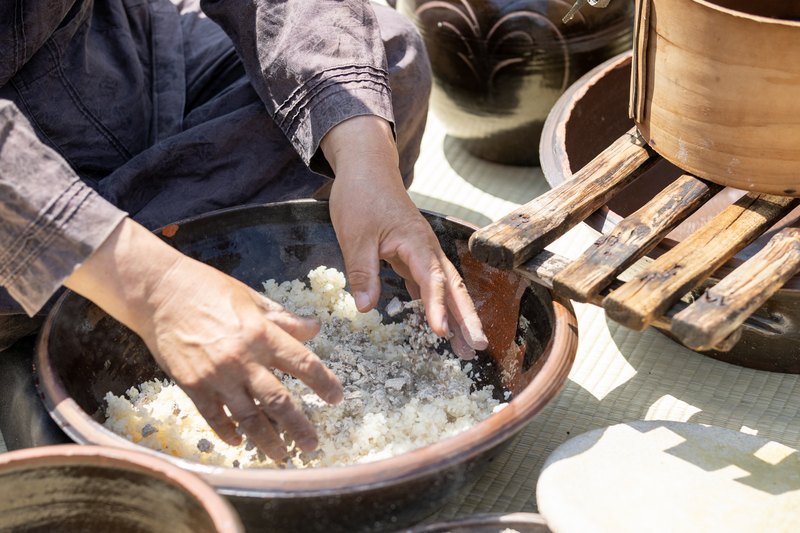
A daytime stop here changes what the evening in the alley feels like. It opened inside the hanok village in 2002 and there is no admission charge. The exhibition follows the tools and stages of brewing, and once you have seen the earthenware jars, the steamer and the nuruk starter in person, the kettle you are handed later makes sense. With a booking you can brew your own batch from steamed rice and nuruk, or boil makgeolli down into moju and take it home in a bottle, though both need to be requested at least five days ahead. The tasting programme runs 30 to 50 minutes and covers representative traditional liquors sorted into clear rice wine, cloudy rice wine and soju. It is closed on Mondays, so if you arrive in Jeonju on a Monday, this step is off.
74 Hanji-gil, Wansan-gu, Jeonju, Jeonbuk State, South Korea, ★ 3.9 (222)
- 2
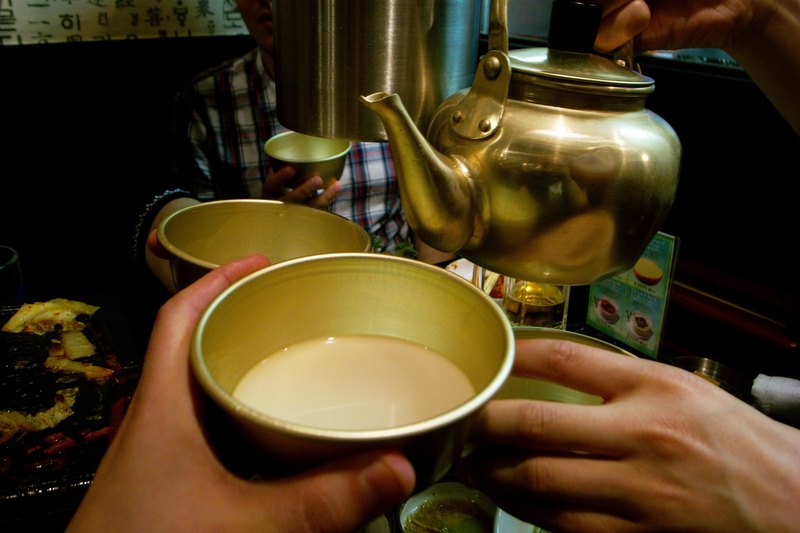
Count kettles in Samcheon-dong Makgeolli Alley
- Where:
- A stretch of a little over 200 metres along Geomasan-ro in Wansan-gu
- Cost:
- Priced by the kettle. Each shop sets its own price, so check the menu board
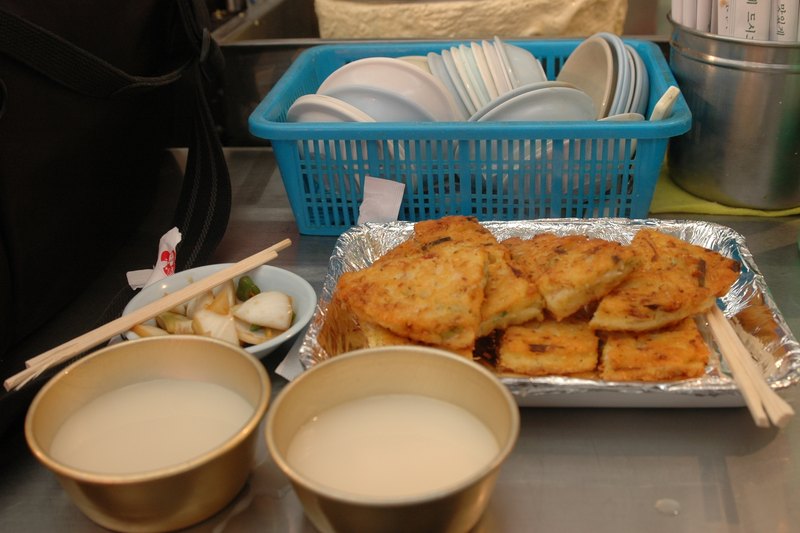
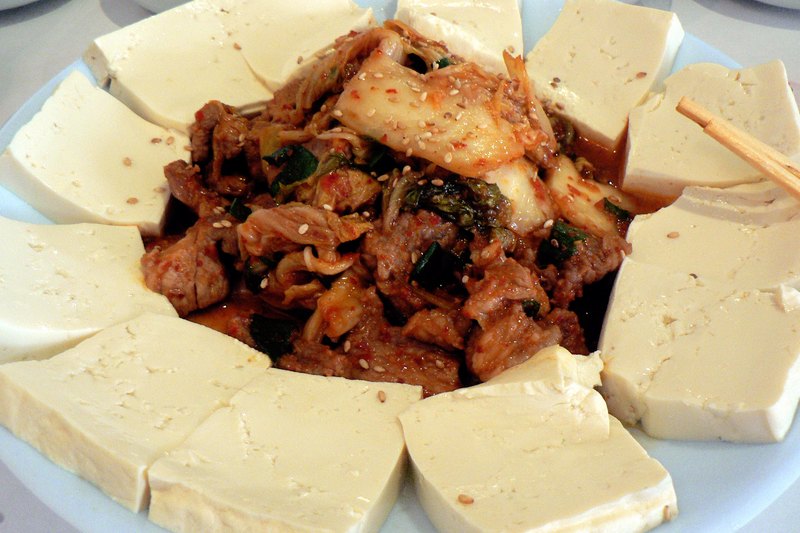
This is the original alley, designated by Jeonju City as part of its future heritage, with twenty or so makgeolli houses along 200 metres of road. You order by the kettle, not the bottle. One kettle holds three 750 millilitre bottles of makgeolli, and the moment you order, a spread of more than ten dishes lands on the table: savoury pancakes, tofu with kimchi, marinated crab and so on. Here is the part that confuses people. When you order another kettle the side dishes are replaced with a new set, and locals call these rounds the first, second and third cha. It is the same word used for moving from bar to bar over a night, but here it means staying put and ordering one more kettle. Government pages write that the practice began in the 1997 financial crisis, when a customer short of money who ordered makgeolli would be given a basic spread.
712 Samcheon-dong 1-ga, Wansan-gu, Jeonju, Jeonbuk State, South Korea, ★ 3.6 (328)
- 3
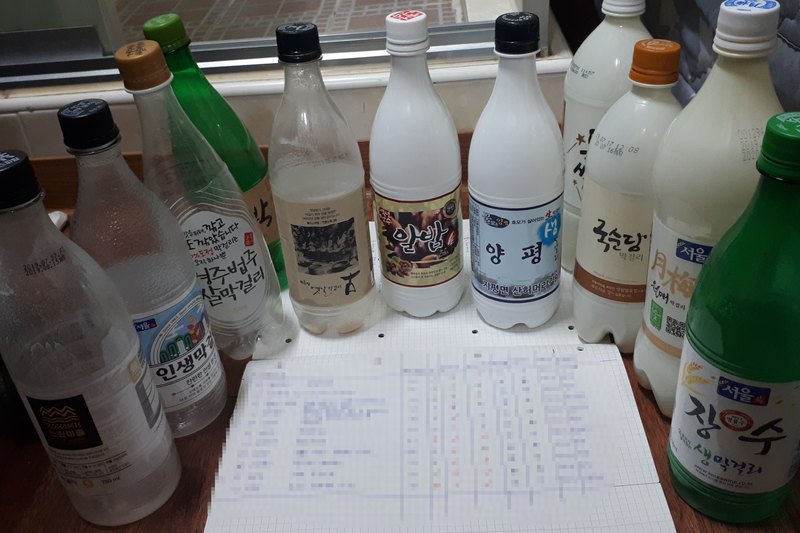
What makgeolli is has been settled by law
- Where:
- Check the label on a bottle in any shop along the alley
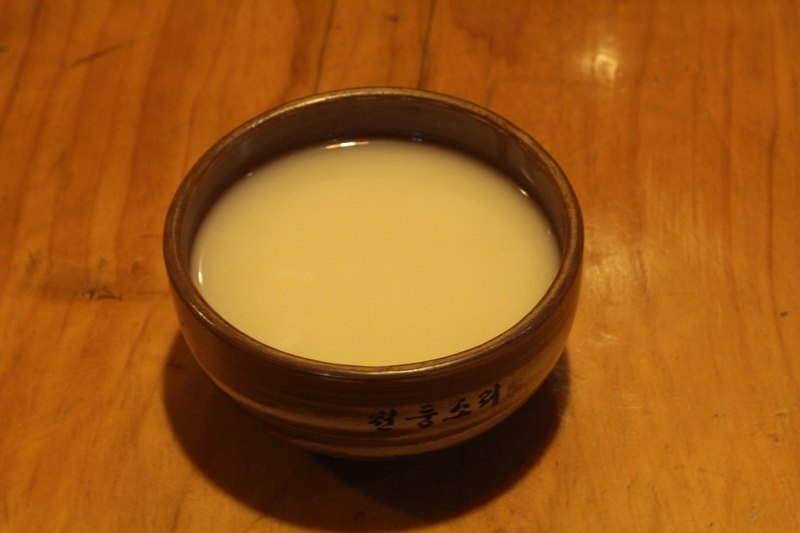
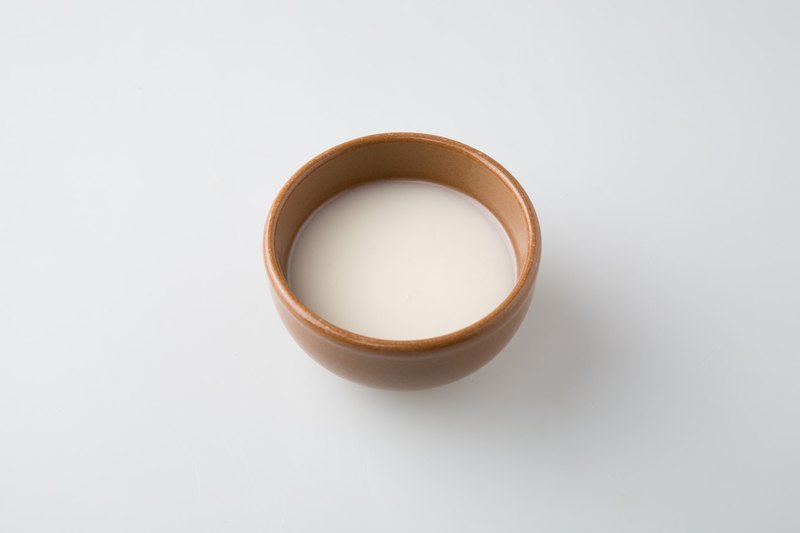
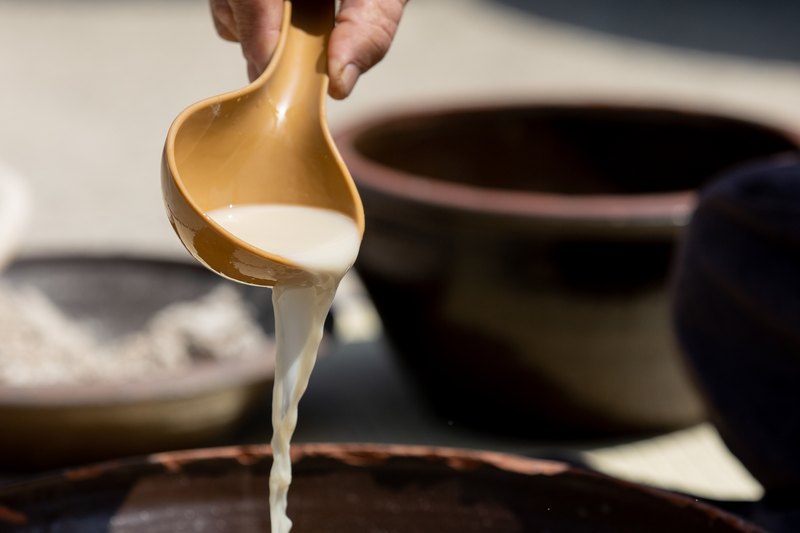
The Liquor Tax Act defines takju as a cloudy liquor made by fermenting grain, nuruk and water and leaving the mash unfiltered. What separates it from yakju is not the ingredients but whether it was strained. Yakju is the same base filtered clear, and takju has no filtering standard at all. The same goes for strength. Makgeolli is often described as a drink of so many percent, but the alcohol table in the enforcement decree of the Act does not list takju at all. It varies by product, so the only way to know is the label. Unpasteurised saeng makgeolli keeps fermenting in the bottle and gets stronger, and since that really does happen, the decree allows an extra 0.5 percent of tolerance to cover it. Jeonju City puts its makgeolli among the three great makgeolli of the country, and eighteen breweries in the city merged in 1970 to form the Jeonju Brewing Company.
712 Samcheon-dong 1-ga, Wansan-gu, Jeonju, Jeonbuk State, South Korea
- 4
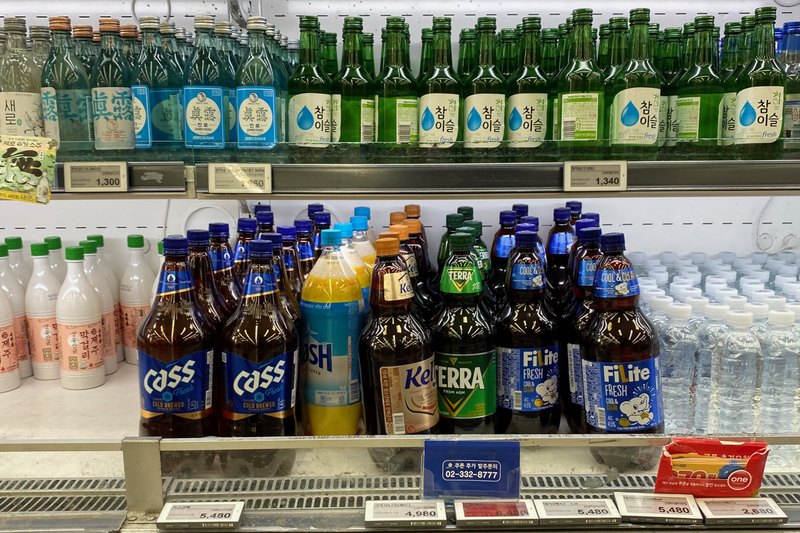
Gamaek is beer drunk in a shop, not a bar
- Where:
- Old corner shops in the alleys near Pungnammun
- Cost:
- The beer is priced separately from the snacks
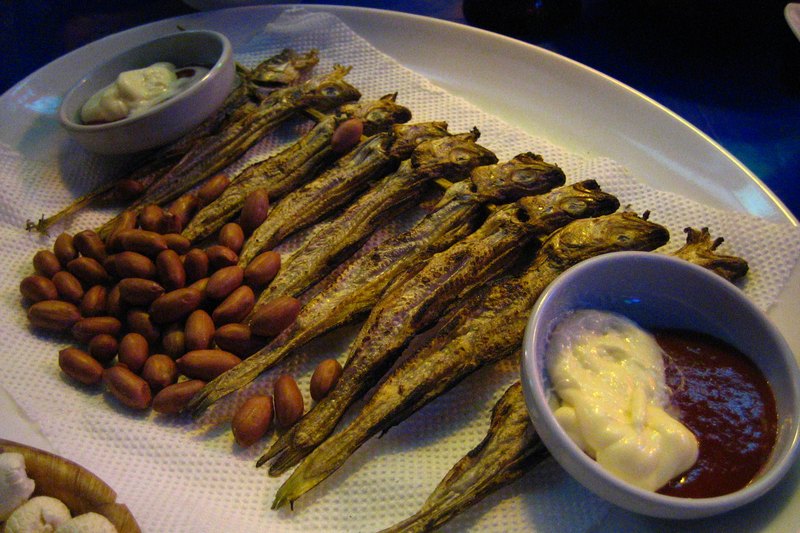
Gamaek is short for gage maekju, shop beer. Buying beer at the neighbourhood store and sitting down right there to drink it with a quick snack was everyday life that turned into a Jeonju drinking culture of its own, and Jeonju City says the same form is hard to find anywhere else. The sign says supermarket or convenience store, but there are tables inside and you fetch your beer from the fridge, so at first sight it is hard to be sure you are allowed to drink here. You are. The three places Jeonju City names as representative are Chowon Convenience Store at 32-1 Pungnammun 3-gil in Wansan-gu, which serves dried pollack grilled over charcoal, Jangteomok Rest Stop at 27 Sanwol 2-gil, known for its rolled omelette, and Gyeongwon Sanghoe, in the same spot since 1978. Opening hours are not published on the official pages, so check at the door.
32-1 Pungnammun 3-gil, Wansan-gu, Jeonju, Jeonbuk State, South Korea, ★ 4.6 (99)
- 5
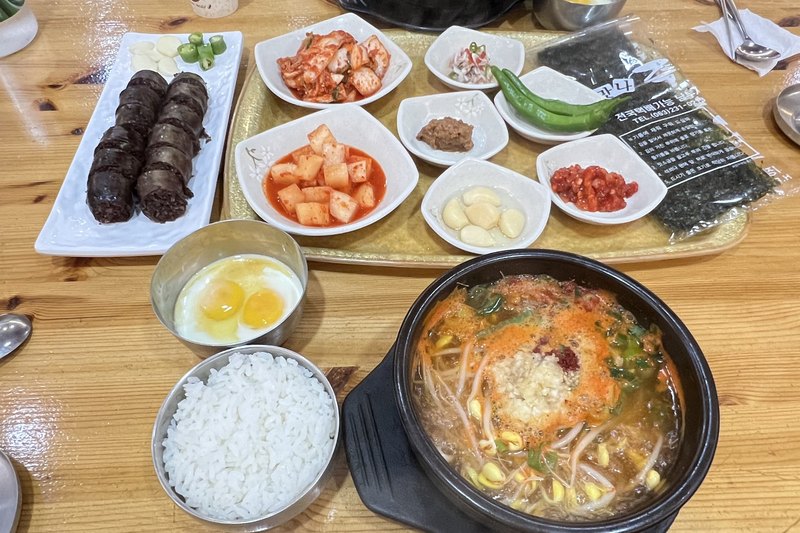
The next morning is bean sprout soup and moju
- Where:
- All over the city. The original Sambaekjip is near the Gaeksa
- Cost:
- Varies by shop
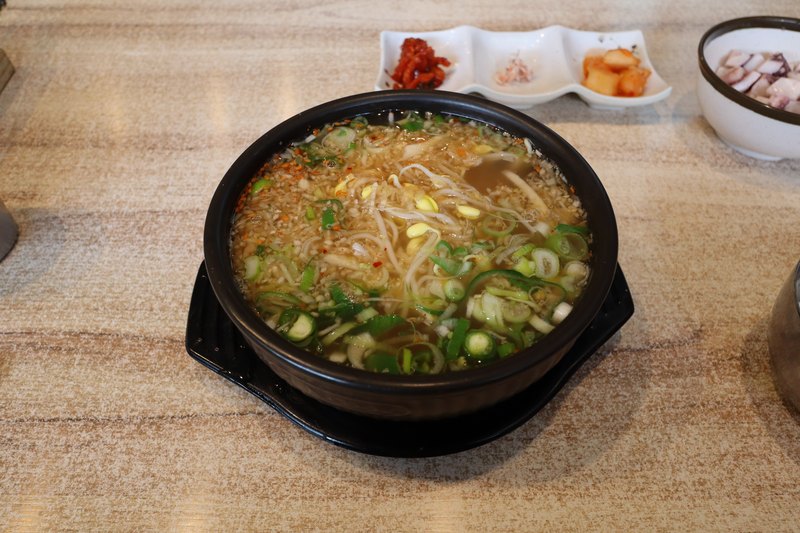
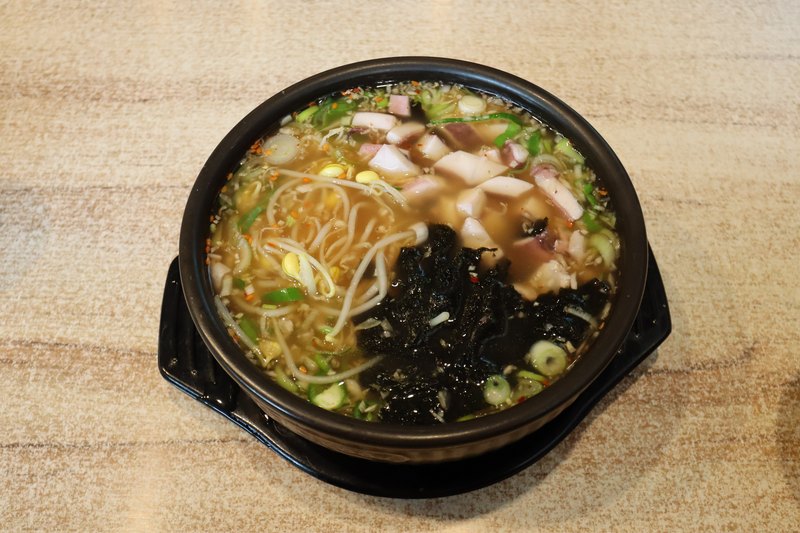
In Jeonju, the day after drinking means kongnamul gukbap, rice soup with bean sprouts. There are two lineages. In the Sambaekjip style, the ingredients and stock go into an earthenware bowl and are brought to a rolling boil, then an egg is cracked in. In the Nambu Market style, cooled rice and boiled sprouts are dipped in and out of hot anchovy and kelp broth several times to warm them through. That dipping is called toryeom. The Nambu Market version comes with a separate poached egg drizzled with sesame oil and a sheet of toasted seaweed, which you can eat on their own or tip into the soup. Moju on the side is the Jeonju hangover cure. It is makgeolli simmered with jujube, cinnamon, ginger and other medicinal ingredients, so it is weak at around 1.5 percent, but anything over 1 percent alcohol counts as liquor under the law, and that is what it is. Do not let its sujeonggwa like sweetness fool you into offering it to a minor.
22 Jeonjugaeksa 2-gil, Wansan-gu, Jeonju, Jeonbuk State, South Korea, ★ 4.0 (2,526)
Watch it happen
Videos other people made, picked because they show a part of this guide that words cannot. They are not our sources: the rules and figures above come from the official pages listed at the end.
[다큐3일📸] 전, 생선, 야채, 굴 등 20여 가지 안주로 한 상! 전주 막걸리 골목 72시간 | KBS 2014.01.26 방송
Channel: KBS 다큐, Korean, no English subtitles. The value is what the tables look like
A public broadcaster spent three days in the Samcheon-dong alley, and the tables are filmed as they are served, which is the clearest way to see what one kettle actually brings with it. It aired in 2014, so treat the prices as history and the system as current.
The Korean words
- 막걸리makgeolli, unfiltered rice wine
- A cloudy liquor brewed from rice and left unstrained. The law calls it takju.
- 탁주takju, unfiltered liquor (legal term)
- The name used in the Liquor Tax Act. It means a liquor left unfiltered and cloudy.
- 주전자jujeonja, kettle
- The vessel makgeolli is served in. In Jeonju it is also the unit you order by.
- 안주anju, food eaten with alcohol
- Food that comes with drink. In a Jeonju makgeolli house it is included in the kettle price.
- 모주moju, spiced simmered rice wine
- A low alcohol drink made by simmering makgeolli with medicinal ingredients. In Jeonju it is drunk as a hangover cure.
- 가맥gamaek, beer drunk at a corner shop
- Short for shop beer. A Jeonju way of drinking, seated inside the neighbourhood store.
- 토렴toryeom, warming rice by repeated dipping in hot broth
- Warming rice by dipping it in and out of hot broth several times. The mark of Nambu Market style bean sprout soup.
- 생막걸리saeng-makgeolli, unpasteurized makgeolli
- Makgeolli that has not been pasteurised. It keeps fermenting in the bottle.
Easy to miss
- The side dishes look free but they are built into the kettle price. If there is an ingredient you cannot eat, saying so when you order is easier for everyone.
- First round and second round here do not mean changing venues but adding kettles. If three of you went to a third round, that is three kettles, not three bars.
- The alley is shrinking. The last shop in the Samcheon 1-dong alley closed in 2023, and Samcheon 2-dong went from 21 shops in 2017 to 13. Trust an old pin in a map app and you will find an empty street.
- Every source lists the alleys differently. The current Jeonju City guide names Gyeongwon-dong, Samcheon-dong, Seosin-dong, Inhu and Ua-dong, while a 2014 government page also includes Pyeonghwa-dong and Junghwasan-dong. Go with an old list and you will be looking for alleys that no longer exist.
- Moju is alcohol. It is weak and sweet enough to pass for a soft drink, but anything over 1 percent alcohol is liquor under the law.
- Do not cycle after drinking. The Road Traffic Act bans drink driving on bicycles as well as cars. If you rode a Jeonju public bike to the alley, leave it there when you go home.
You can skip this if
- If you are on your own, this alley is not built for you. One kettle is three 750 millilitre bottles and the food is scaled to match. Solo, gamaek is the better fit.
- If you do not drink, the Jeonju Traditional Liquor Museum and a bowl of bean sprout soup tell the same story without the alley. The museum is free.
- If your trip runs on a precise budget, this alley is hard to plan for. No official page publishes kettle prices, and the spread differs from house to house.
When it is time for a person
- If you are settling in Jeonju and want a regular place, it is quicker to ask someone who also knows that each alley draws a different crowd.
Where this comes from
- Samcheon-dong Makgeolli Alley (Jeonju City Culture & Tourism)
- Samcheon 2-dong Makgeolli Alley (Korea Tourism Organization, Visit Korea)
- The taste and culture of Jeonju's makgeolli alleys (Korea Policy Briefing)
- Liquor Tax Act (Korean Law Information Center, Ministry of Government Legislation)
- Jeonju Traditional Liquor Museum
- Jeonju makgeolli alley shops closing one after another as prices rise and locals turn away (YTN)
Rules, fees and deadlines change and depend on your exact case. Please confirm the details with the official sources before you act.