
The short version
There is a hard line between what a foreign visitor can and cannot do right now.
The Paju DMZ peace tour takes you inside the Civilian Control Line on a same day ticket if you bring your passport, while the Panmunjom tour and the DMZ Peace Trail accept applications from Korean nationals only. Imjingak and the two unification observatories need no clearance at all.
Deadlines that matter
Buying a DMZ peace tour ticket
By when: By 2:30pm on the day
If you miss it: No entry past the Civilian Control Line that day. The free part of Imjingak and the gondola still run.
Applying for the DMZ Peace Trail
By when: Eight days before your visit
If you miss it: You wait for the next departure. It costs 10,000 won per person and takes applicants aged 8 and over holding Korean nationality.
Applying for the Panmunjom tour
By when: By 11:59pm, twenty days before the visit
If you miss it: You wait for the next month's round. Applications open at 10am on the first of the previous month, for up to five people, once per person per year.
Right now
- 1Bring your passport. Every route that crosses the Civilian Control Line checks identity, and foreign visitors are cleared with a passport, ARC or US military ID.
- 2The DMZ peace tour ticket office at Imjingak opens at 9am and closes at 2:30pm, and shuts on Mondays and on public holidays that fall midweek.
- 3The Panmunjom tour and the DMZ Peace Trail currently take Korean nationals only. Building a day around the blue buildings will not work.
Getting there
Central Seoul (Hongik Univ. Station), or Incheon Airport
Ride the Gyeongui-Jungang Line from Hongik Univ. Station toward Munsan to the terminus, Munsan Station. Out of Exit 1, the 058 village bus marked 임진각행 leaves from Hanjin 1-cha, Munsan Station (한진1차, 문산역) and reaches 임진각정류장(6.25기념관) in about 30 minutes. From Incheon Airport, ride the Airport Railroad to Hongik Univ.
- How long:
- About 2 hours (including transfer waits)
Ticket sales at Imjingak end at 14:30, so leave Seoul in the morning. The 7300 bus that ran straight from Hongik Univ. to Imjingak was withdrawn and no longer runs.
Imjingak (Third Tunnel, Dora Observatory, Tongilchon)
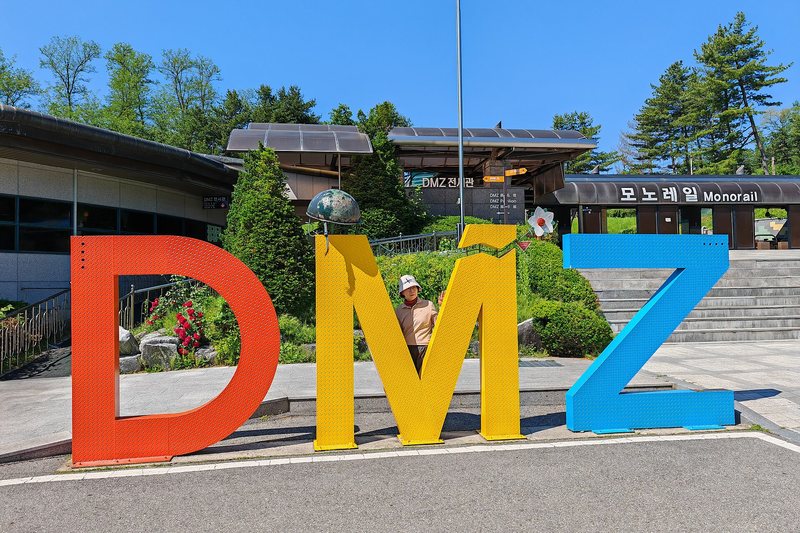
Buy a ticket at the DMZ peace tour office at Imjingak and board the shuttle bus. Course A takes in the Third Tunnel, Dora Observatory and Tongilchon (통일촌), then returns to Imjingak. Identity is checked before you board and again at the checkpoint.
- How long:
- About 3 hours (Course A)
- Cost:
- 9,200 won walking, 12,200 won with the monorail, both including the 5,000 won facility fee. Children and teenagers pay 7,000 / 9,500 won, ages 65 and over 6,200 / 7,700 won. No reduced rate for foreign visitors.
You need the original passport; copies and screenshots are not accepted. Closed on Mondays, on public holidays that fall midweek, and on Seollal and Chuseok themselves.
Hapjeong Station, Seoul (Odusan Unification Observatory)
From Exit 1 of Hapjeong Station on Line 2, or Exit 8 on Line 6, take the 2200 bus to Seongdong Sageori (성동사거리), then walk about five minutes and change to the shuttle up to the observatory. The 900 from Exit 4 or 5 of Daehwa Station on Line 3 ends at Tongildongsan Jeonmangdae (통일동산전망대), where the same shuttle calls.
- How long:
- About 60 minutes from Hapjeong to Seongdong Sageori, then about 5 minutes on foot
Admission is free and it closes on Mondays. Opening is 09:30 to 17:30 from March to October and 10:00 to 17:00 from November to February, with last entry at 17:00 and 16:30.
What to have ready
- Your passport: Even with an ARC, having the passport too speeds up the check.
- Shoes you can walk in: The Third Tunnel means a steep ramp down and back up. Plenty of people walk it.
- A jacket: The observatories sit on ridgelines and catch more wind than Seoul.
- Cash or a card: The ticket office and the gondola both take cards; some snack counters do not.
Phrases you can copy and paste
Step by step
- 1
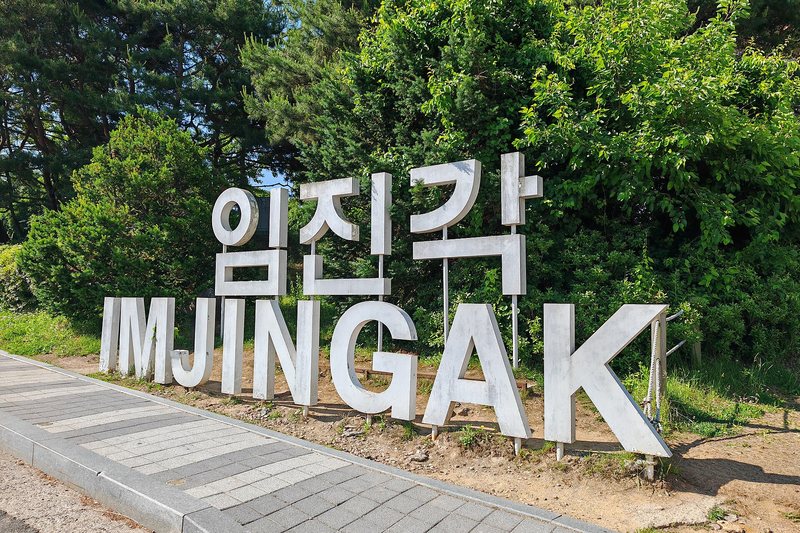
Start at Imjingak and Pyeonghwa Nuri
- Where:
- About ten minutes on foot from Imjingang Station on the Gyeongui-Jungang Line, or a large car park if you drive up the Jayu-ro
- Cost:
- Free
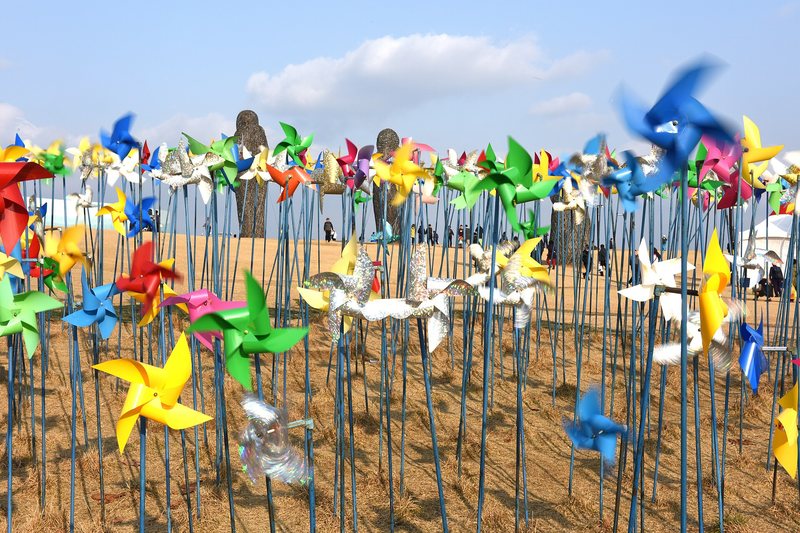
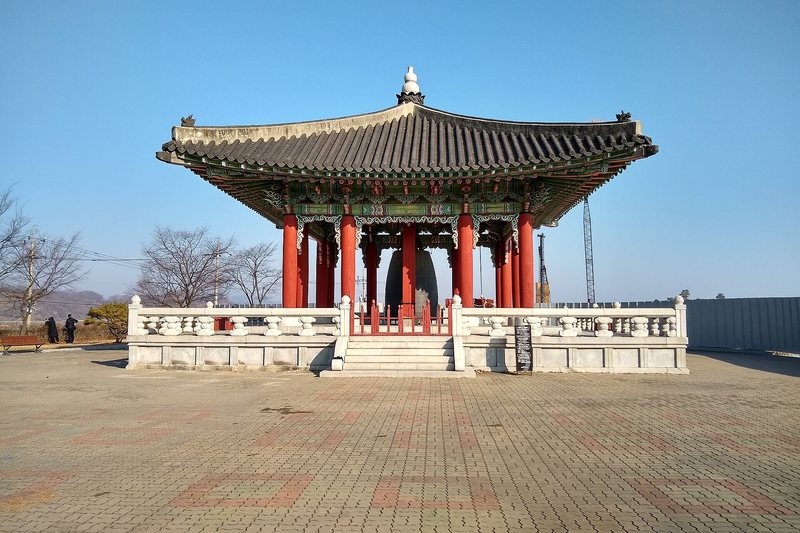
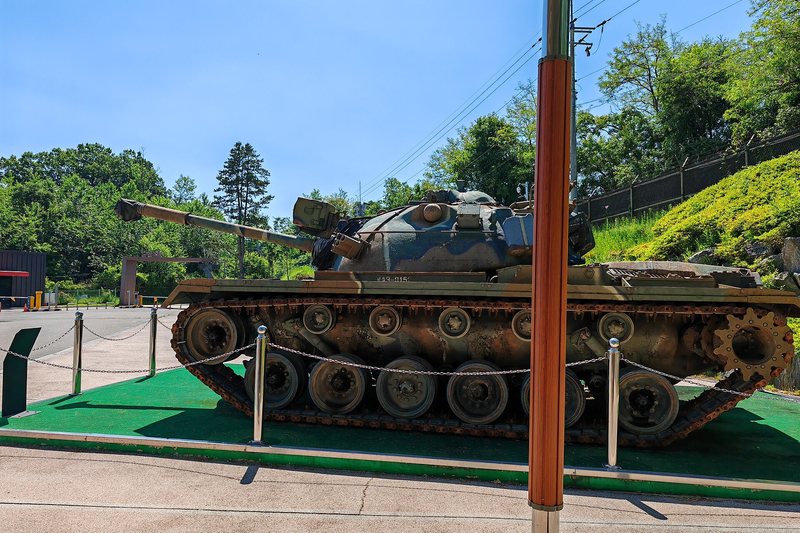
Nothing is required to get this far. Imjingak sits outside the Civilian Control Line, so you walk in without a ticket or a form, and the routes that go past the line also depart from here. The wide lawns of Pyeonghwa Nuri include a slope known as the hill of wind, where several thousand coloured pinwheels turn all day. On the far side stands the Peace Bell, and near it the Mangbaedan altar where families displaced by the war bow toward the north at each holiday. The Imjingak building holds both the DMZ peace tour ticket office and the Panmunjom tour information centre, so if you plan to go past the line, start there.
148-40 Imjingak-ro, Munsan-eup, Paju, Gyeonggi-do, South Korea, ★ 4.4 (7,481)
- 2
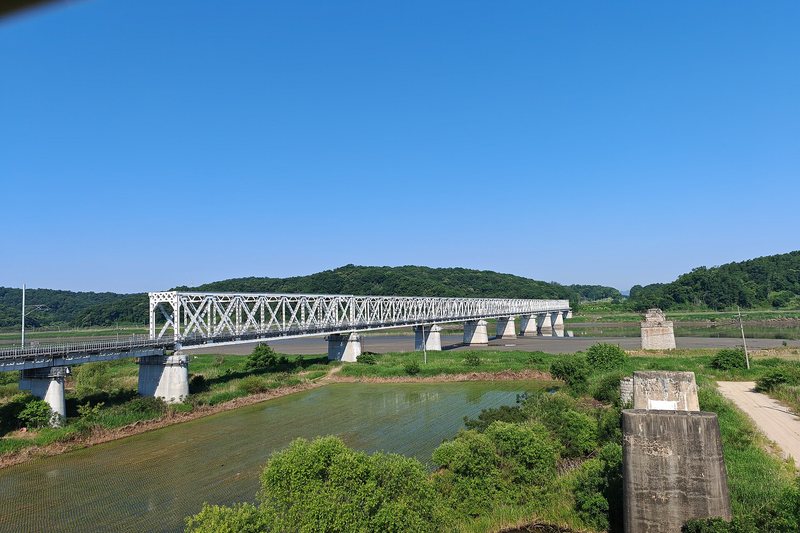
Freedom Bridge and the Dokgae Bridge
- Where:
- Behind Imjingak, on the south bank of the Imjin River
- Cost:
- Free
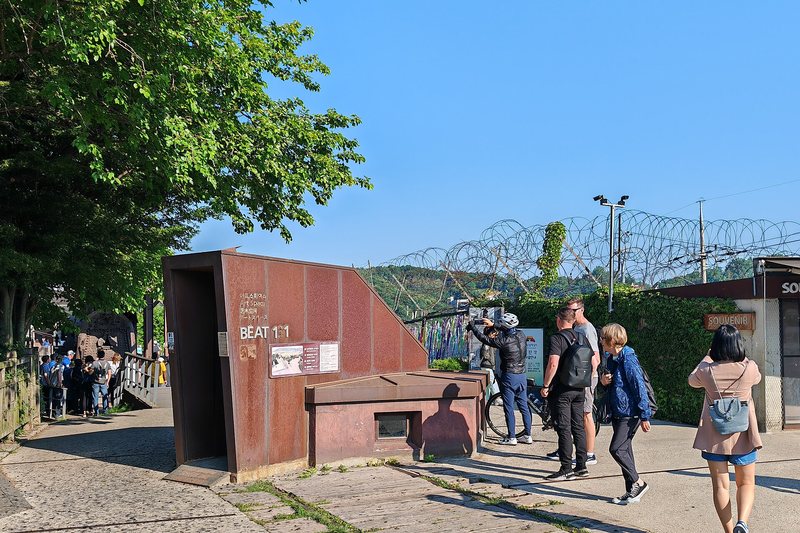
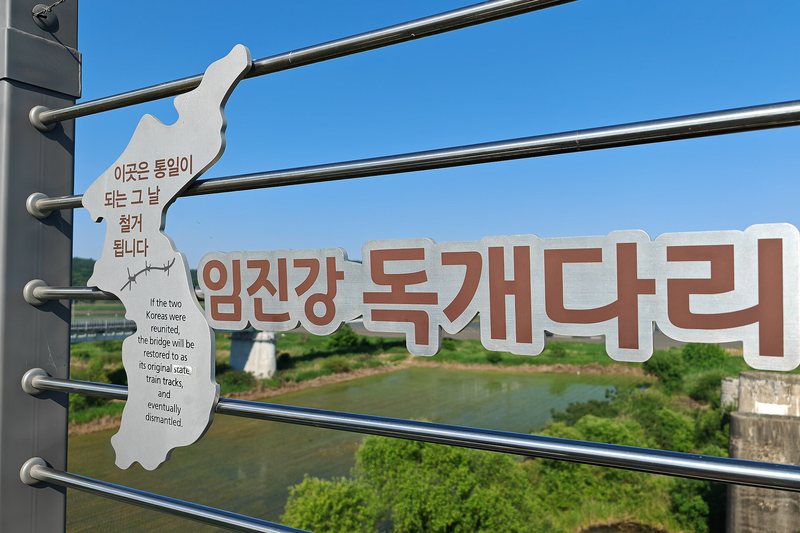
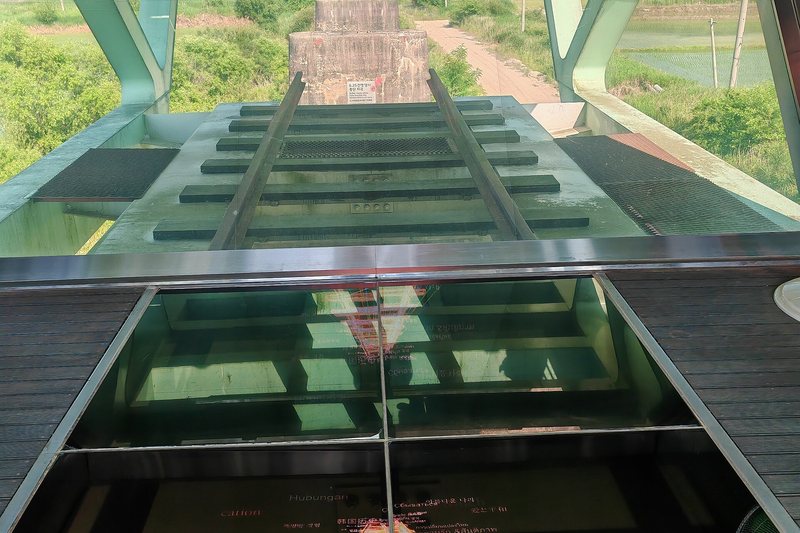
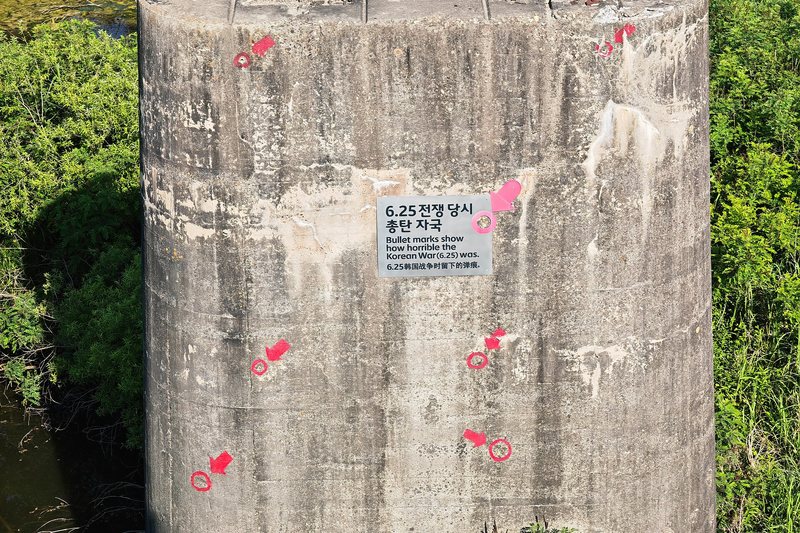
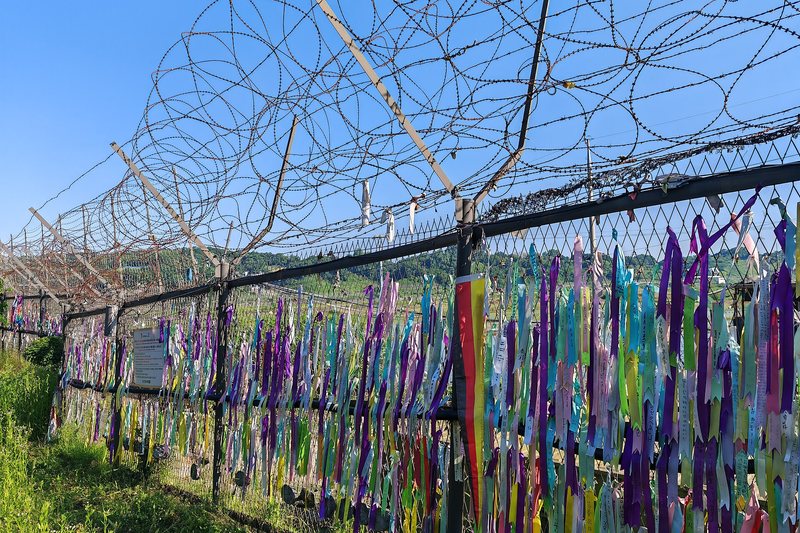
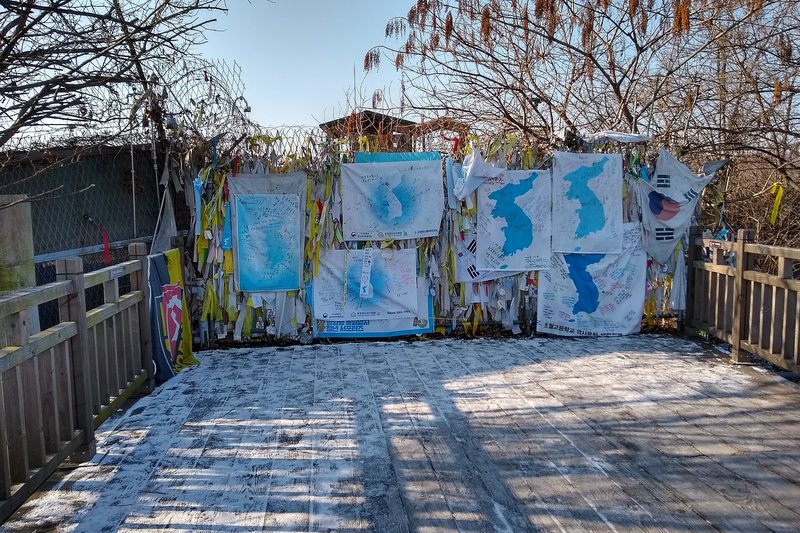
Walk out behind Imjingak and the remains of a railway bridge stand at the water. Prisoners of war walked south across it when the fighting ended, which is where the name Freedom Bridge comes from, and the old Gyeongui Line bridge beside it has been restored under the name Dokgae. Part of the deck is glass, so crossing it puts the broken sleepers and the river directly under your feet. The pier at the near end still carries bullet holes from the war, marked so you can count them. The wire fence is layered with ribbons left by visitors, and up close most of them are messages looking for family. All of this is still outside the Civilian Control Line.
148-40 Imjingak-ro, Munsan-eup, Paju, Gyeonggi-do, South Korea
- 3
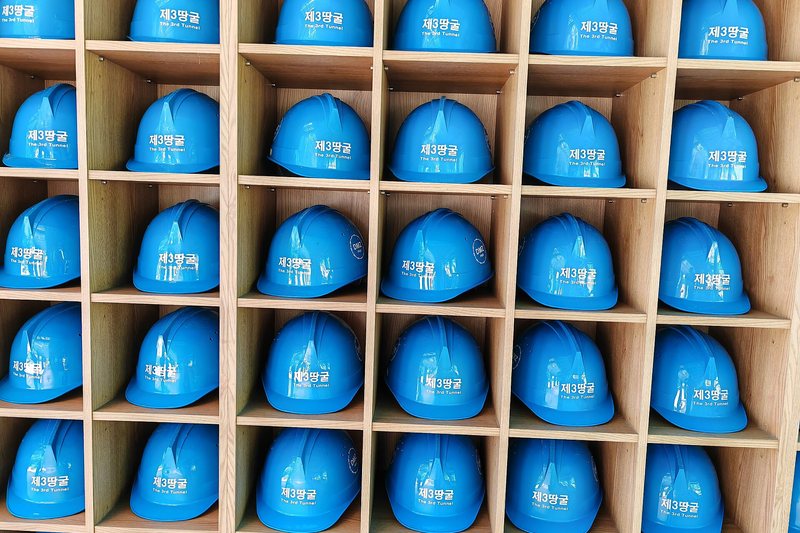
Down into the Third Tunnel
- Where:
- Reached by the DMZ peace tour bus from the ticket office at Imjingak
- Cost:
- 9,200 won for an adult walking, 12,200 won with the monorail. Facilities and the shuttle bus are included
This is where the Civilian Control Line begins. Identity is checked before you board and again at the checkpoint, and foreign visitors show a passport or ARC. The Third Tunnel was found in 1978, dug south from the military demarcation line, and part of the shaft has been opened for visitors to walk into. You are given a hard hat at the entrance, and it earns its keep: the ceiling is low enough that tall visitors walk bent over, and the air inside is damp and cool. The slope back up is steep, so a monorail ticket is the option if you would rather not climb it. Above ground there is an exhibition hall and outdoor displays, and by the time you leave you are roughly halfway through the day.
210-358 Je3ttanggul-ro, Gunnae-myeon, Paju, Gyeonggi-do, South Korea, ★ 4.6 (3,354)
- 4
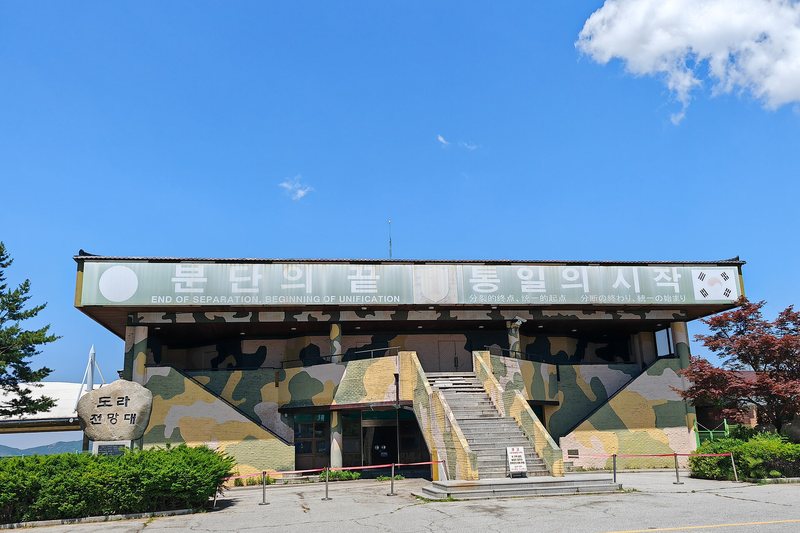
Looking north from Dora Observatory
- Where:
- The same bus continues here from the Third Tunnel
- Cost:
- Included in the DMZ peace tour fare
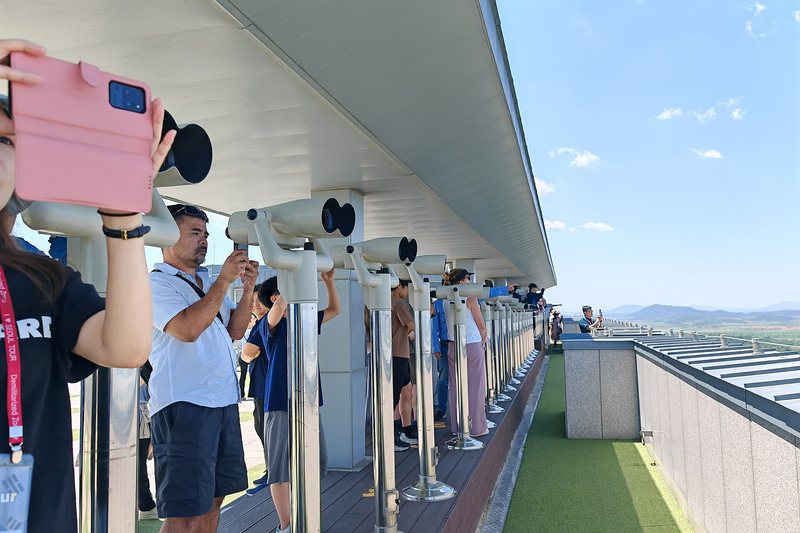
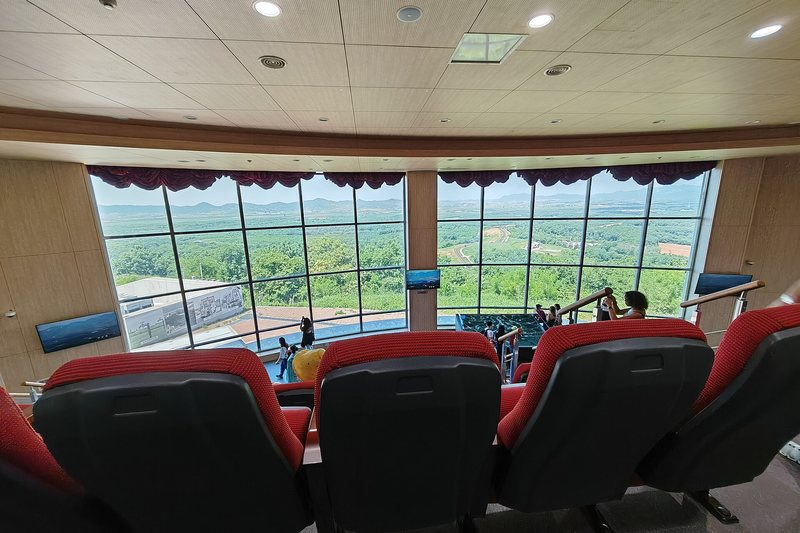
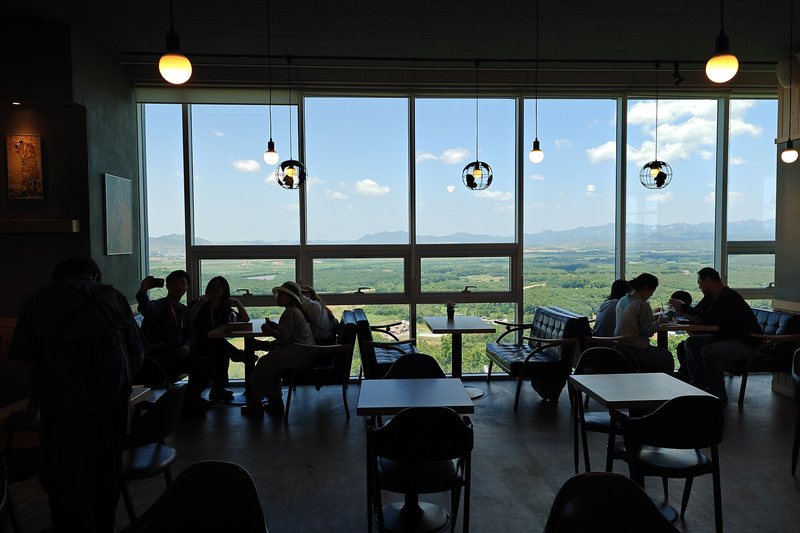
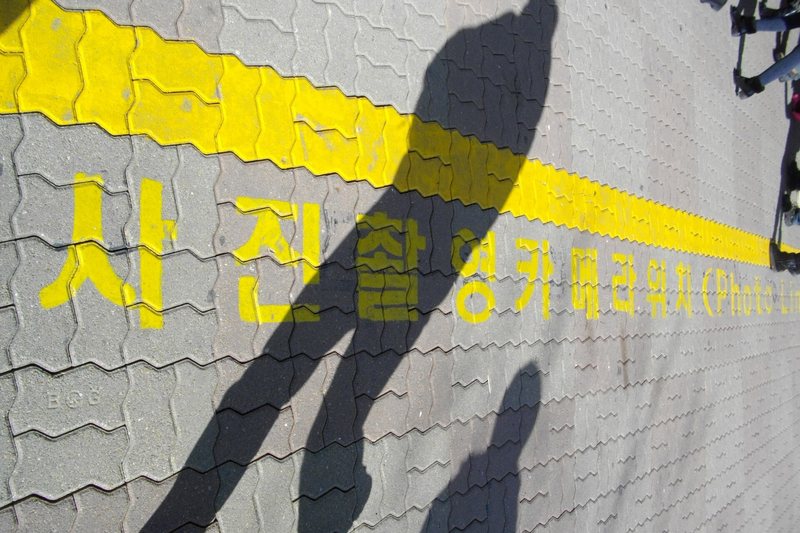
Built on a ridge, so standing at the glass gives you the far side of the demilitarised zone in one view: the buildings of the Kaesong industrial complex, the village of Kijong-dong and, on a clear day, Songak Mountain behind them. A row of binoculars lines the window and most of them are free to use. Inside, the seating is tiered like a cinema, so the rhythm is to sit through the briefing and then go to the glass. The floor above has a cafe facing the same way. A yellow line marking a photography zone is still painted on the ground, but Paju City currently states that photography and video, drones included, are banned throughout the DMZ peace tour route, so following the instructions given on site is the safe reading.
310 Je3ttanggul-ro, Jangdan-myeon, Paju, Gyeonggi-do, South Korea, ★ 4.5 (4,494)
- 5
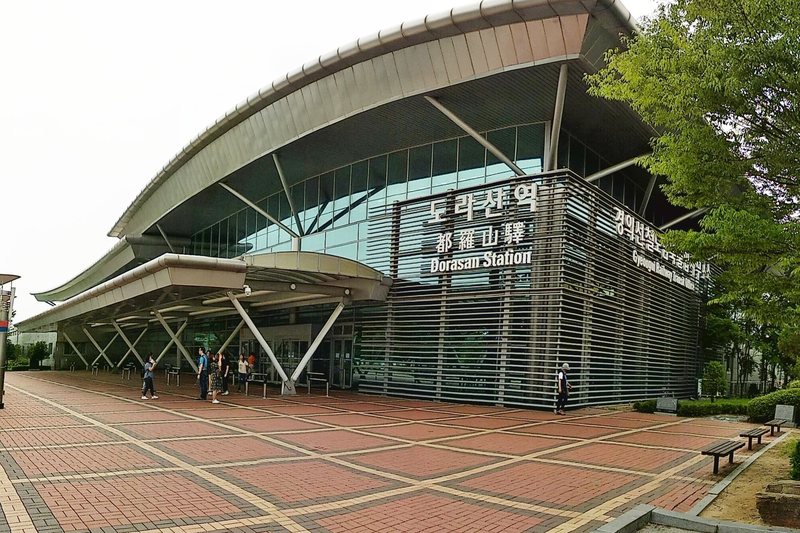
Dorasan Station, platform for Pyongyang
- Where:
- Next on the bus route, though some days skip it
- Cost:
- Included in the DMZ peace tour fare
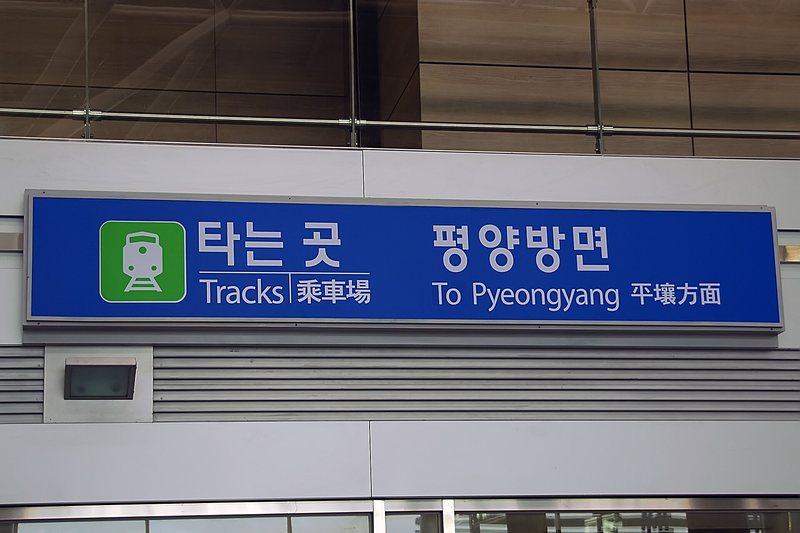
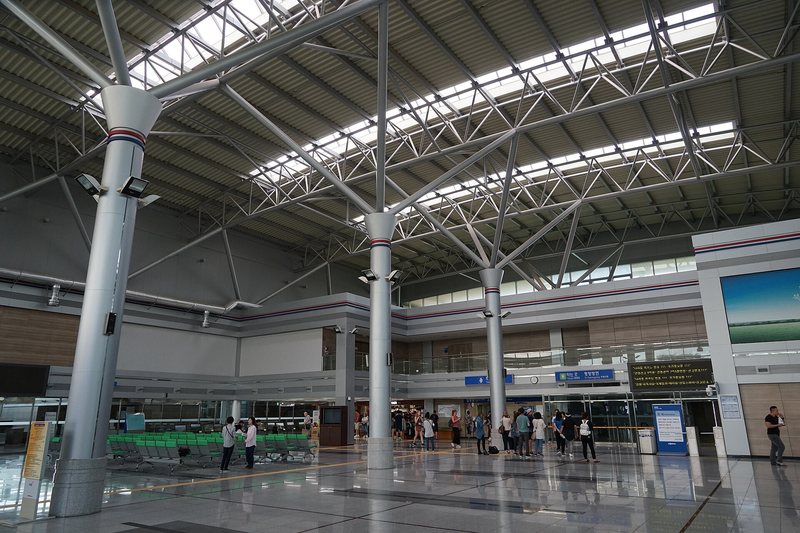
The last station south on the Gyeongui Line. It opened in 2002 as one link in a route meant to run from Seoul to Sinuiju, which is why the platform sign reads To Pyongyang. No train goes that way. Built to international station specifications, the concourse feels conspicuously empty, and that emptiness is the impression the place leaves. Immigration desks and a customs area were built and have never been used. A counter gives out a commemorative stamp, which most people press into a notebook rather than a passport.
Nosang-ri, Jangdan-myeon, Paju, Gyeonggi-do, South Korea, ★ 4.2 (350)
- 6
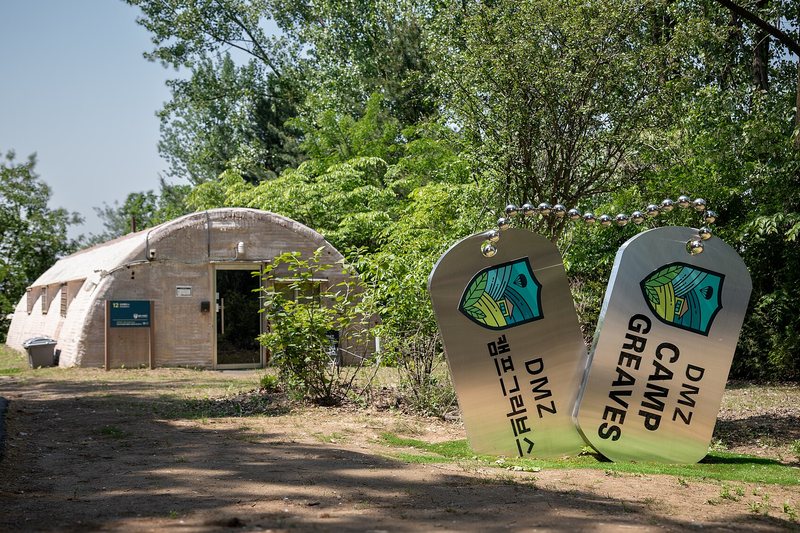
Cross to Camp Greaves by gondola
- Where:
- The cable car leaves from Imjingak and crosses the Imjin River
- Cost:
- 12,000 won return in a standard cabin, 15,000 won in a crystal cabin with a glass floor
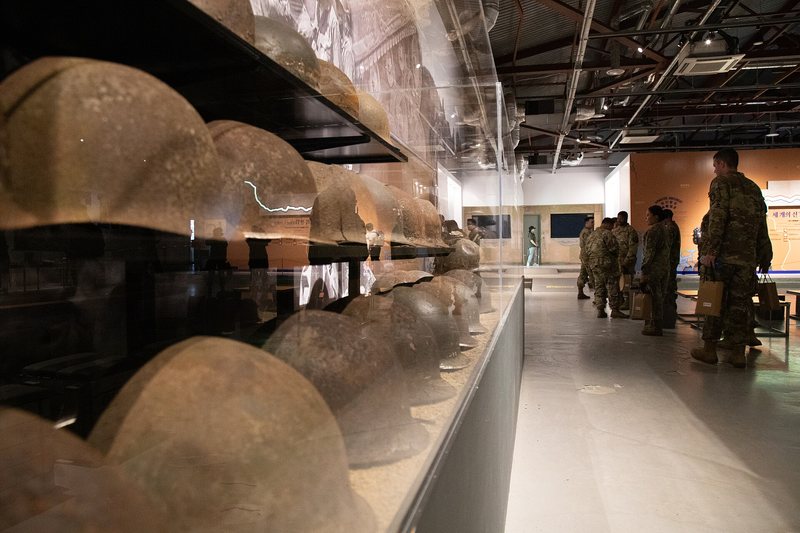
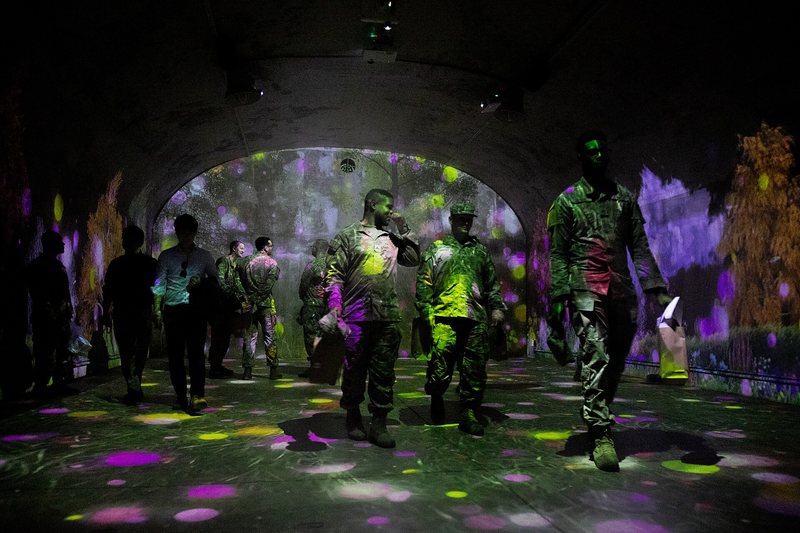
Separate from the bus route, a cable car takes you over the river to the far bank. Because the span crosses the Civilian Control Line, you hand over ID and sign a security undertaking before the ticket is issued, and photographing military installations or the fence from inside the cabin is not allowed. Camp Greaves on the other side was a US Army base for over half a century until it was returned in 2007, and the barracks now stand as exhibition and programme space. Inside a half cylinder Quonset hut, the soldiers' belongings sit where they were left; another block runs an installation of light and sound. The gondola operates year round, but Camp Greaves closes on Mondays.
Filmed here: Made in Korea
357-1 Baegyeon-ri, Gunnae-myeon, Paju, Gyeonggi-do, South Korea, ★ 4.2 (284)
- 7
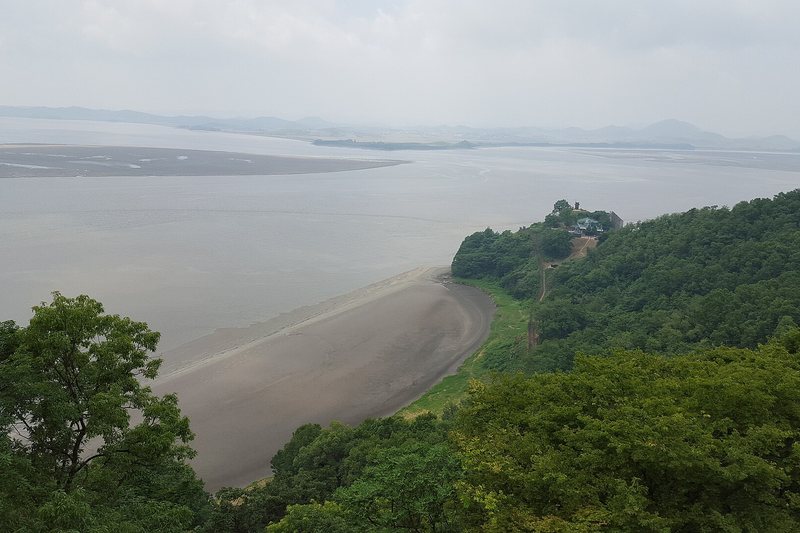
Odusan, if you want the view without the paperwork
- Where:
- Close to the Seongdong interchange on the Jayu-ro, about an hour from Seoul by car
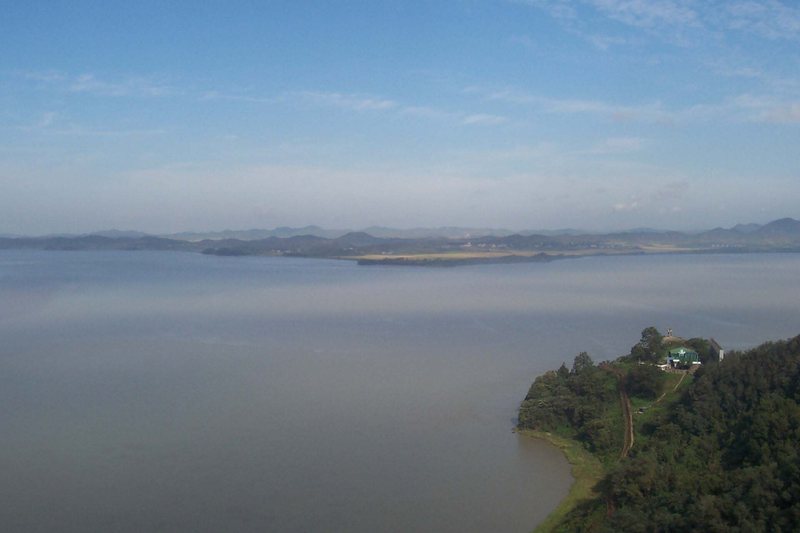
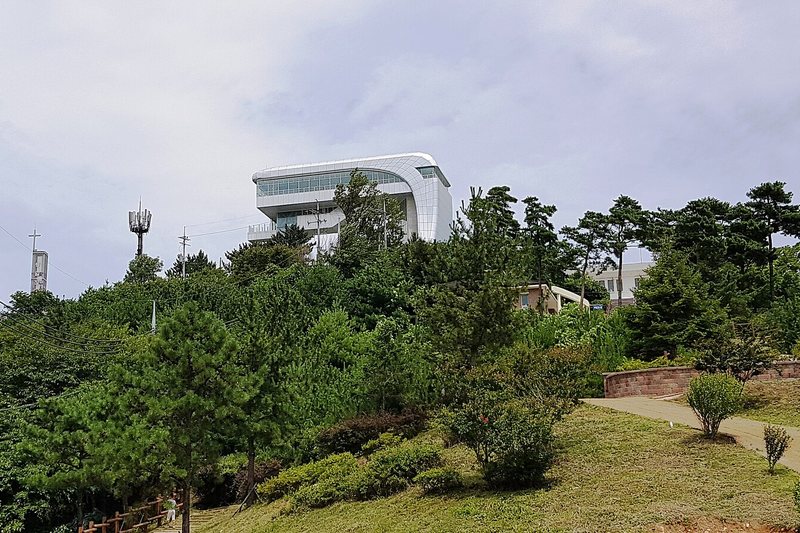
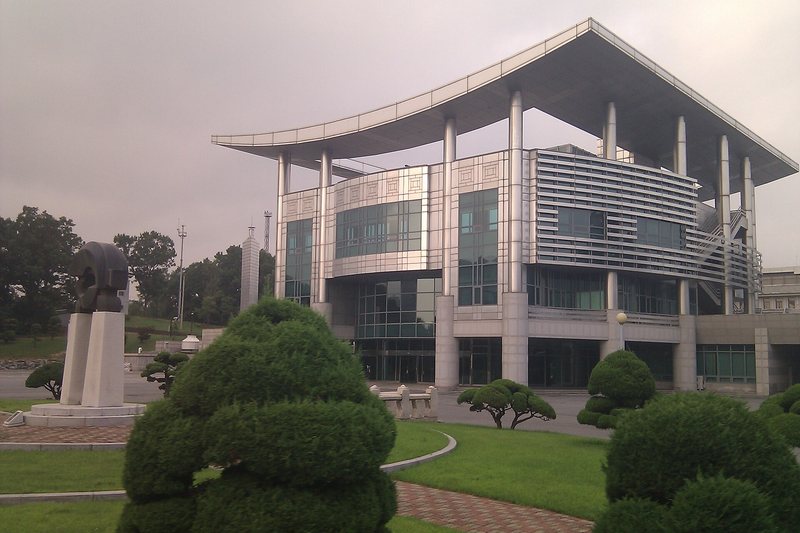
An observatory on the hill where the Han and the Imjin meet. It is outside the Civilian Control Line, so there is no form and no checkpoint, and yet the far bank is already the north. The river narrows here, so binoculars pick out houses and fields on the other side clearly. Where the Paju route asks for half a day, a couple of hours covers this, which makes it the fallback when the schedule is tight or you missed the ticket window. There is an indoor exhibition, so a wet day still leaves something to see. Haze is common here, so how far you can see changes a lot from one day to the next.
Filmed here: Reborn Rookie
369 Pilseung-ro, Tanhyeon-myeon, Paju, Gyeonggi-do, South Korea, ★ 4.4 (4,882)
- 8
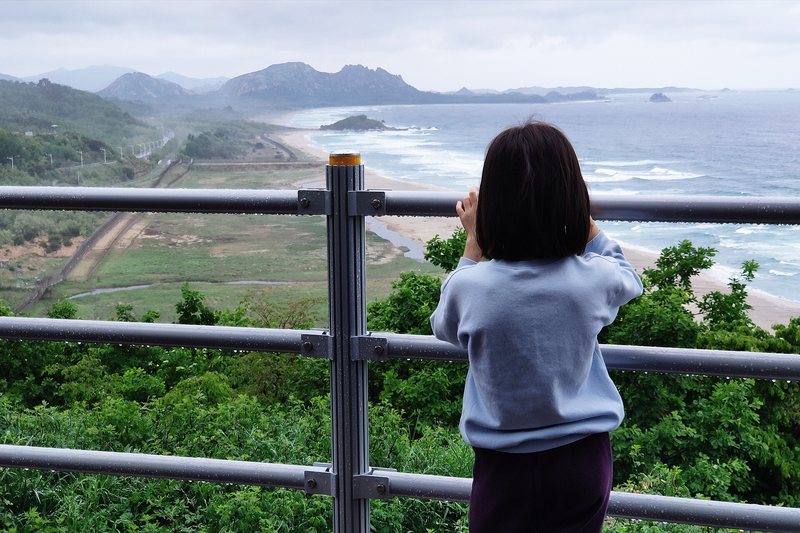
On the east coast, the Goseong observatory
- Where:
- An hour north of Sokcho by car. Stop at the Tongil Security Park registration office first
The point where the armistice line meets the East Sea. From here you get the sea, the Haegeumgang rocks and, in clear weather, the foothills of Mount Kumgang. The procedure differs from Paju. You first fill in an entry form at the Tongil Security Park registration office, pay the admission and parking fees, sit through a short security briefing, and then drive up past the checkpoint to the observatory. Foreign visitors present a passport. The stretch has to be driven, though: no walking, cycling or motorcycles, so arriving without a car means turning back at the office. Military operations and weather can change the schedule, so check the last admission time before you set out.
481 Geumgangsan-ro, Hyeonnae-myeon, Goseong-gun, Gangwon-do, South Korea, ★ 4.3 (7,538)
- 9
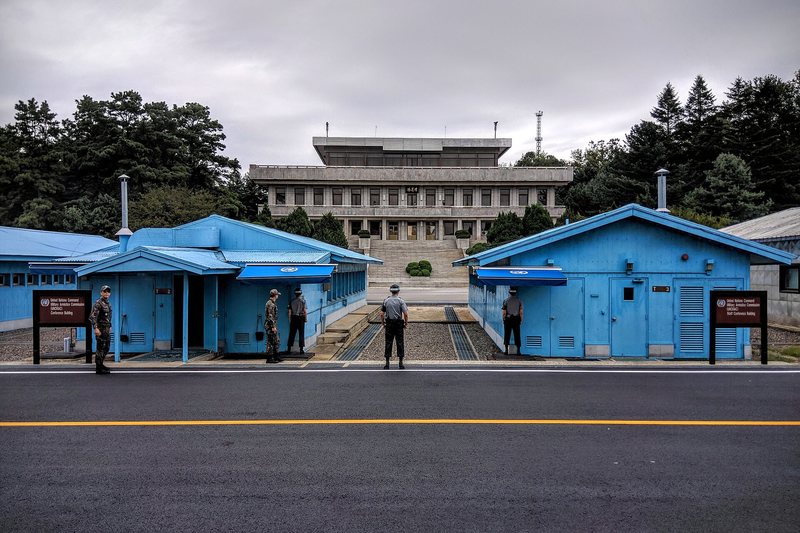
Panmunjom is closed to foreign visitors right now
- Where:
- Applications and departures are handled at the Panmunjom tour information centre inside Imjingak
The blue buildings everyone knows from photographs are the Joint Security Area at Panmunjom. Tours stopped in 2023 and later resumed, and applications were consolidated under the Ministry of Unification, which made the process much simpler. The current guidance, though, states plainly that only Korean nationals aged 8 and over may apply, and that groups and foreign nationals cannot. It runs Tuesday, Wednesday, Friday and Saturday, with a strict dress code that rules out sleeveless tops, shorts, short skirts, slippers, sandals and camouflage. The DMZ Peace Trail is in the same position, open to Korean nationals only. Both could change, so if your trip is still some way off, check the official sites again before you go.
148-40 Imjingak-ro, Munsan-eup, Paju, Gyeonggi-do, South Korea
Watch it happen
Videos other people made, picked because they show a part of this guide that words cannot. They are not our sources: the rules and figures above come from the official pages listed at the end.
[파주 DMZ 투어] 임진각 곤돌라타고 비무장지대로 슝~🚡
Channel: 파주시청, Korean, with English subtitles
Filmed by the city that runs the route, so you can see the ID check at the gate, Dora Observatory, the Third Tunnel and the shuttle bus, on the stretch where visitors are asked not to take photographs.
Trip to the DMZ | Imjingak + Cafe with a View of North Korea VLOG
Channel: cari cakes, English narration, English subtitles
Filmed at Imjingak without joining a tour, so you can see the park, the war relics and the English signboards on the free side of the line.
Inside Secret North Korean 3rd Tunnel-DMZ (With Historical Facts)
Channel: Andy's Awesome Adventures, English narration, auto-generated English subtitles
Filmed inside the Third Tunnel itself, so you can see the shaft you walk into and judge whether you want the monorail for the climb back up.
The Korean words
- 민통선mintongseon, civilian control line
- The line civilians cannot cross without an identity check.
- 안보관광anbo gwangwang, security tour
- Touring the border area. Paju calls its version the DMZ peace tour.
- 땅굴ttanggul, infiltration tunnel
- A tunnel dug south. The one in Paju is the Third Tunnel.
- 전망대jeonmangdae, observatory
- A facility built for looking north.
- 출입신고소churip singoso, entry registration office
- Where you register before the Goseong observatory.
- 촬영 금지chwaryeong geumji, no photography
- Posted on signs or said out loud. Assume it inside the route.
- 신분증sinbunjeung, ID
- For foreign visitors: passport, ARC or US military ID.
Easy to miss
- Arriving at Imjingak late in the afternoon. Ticket sales end at 2:30pm and that closes the day inside the line.
- Planning it for a Monday. The DMZ peace tour is closed on Mondays and on public holidays falling midweek.
- Assuming you can photograph freely. The route is signed as no photography, drones included.
- Believing a travel agency can book the Panmunjom tour for you. Group and foreign applications are not open at all right now.
- Going to the Goseong observatory without a car. Walking, cycling and motorcycles cannot pass the checkpoint.
- Leaving the passport at your accommodation. A copy or a photo of it will not clear the check.
You can skip this if
- If half a day is too much, Imjingak's free area and the gondola alone still get you across the river.
- If walking the border zone is what appeals, the DMZ Peace Trail is built for exactly that, but the nationality requirement rules out foreign applicants for now.
- If the military framing is not what you want from a trip, staying in the park area of Imjingak is a complete visit on its own.
When it is time for a person
- If you are here long enough to return to the border area more than once, someone to plan the routes and transport with makes it easier.
Where this comes from
- DMZ peace tour visitor information (Paju City)
- DMZ peace tour fares (Paju City)
- Panmunjom tour guidance (Panmunjom Tour Support Center, Ministry of Unification)
- DMZ Peace Trail application procedure (Durunubi, Korea Tourism Organization)
- Paju Imjingak Peace Gondola information
- Unification Observatory (Goseong County tourism portal, Gangwon)
Rules, fees and deadlines change and depend on your exact case. Please confirm the details with the official sources before you act.