
The short version
One Ttareungi pass covers almost the whole Han River bike path.
As a visitor you buy a foreigner pass with a card issued outside Korea, and the part that trips people up is not the price but the way the clock works. Electric scooters follow completely different rules, so as long as you stay on the bicycle side of that line, this is simple.
Deadlines that matter
The base time on one rental
By when: One hour from pickup, or two hours on the two hour pass
If you miss it: 200 won is charged every five minutes to the card you paid with. Past four hours the bike is treated as lost or stolen.
Right now
- 1The Ttareungi foreigner pass has to be paid with a credit card issued outside Korea, and one card can buy only one pass.
- 2A pass is not an all day ride. Each single rental has a base time of one or two hours, and after that it is 200 won per five minutes.
- 3An electric scooter is not a bicycle. You need at least a motorised bicycle licence, and riding without one on the road is a 100,000 won fine.
Getting there
Yeouido Hangang Park (여의도)
Take line 5 to Yeouinaru (여의나루), exit 2 or 3. The city calls it a one minute walk into the middle of the park. The platform is five floors down.
- How long:
- One minute on foot from the Yeouinaru exits to the park (Seoul Han River Bureau)
Yeouido station (여의도) is a different stop. From its exit 1 the city puts the walk at 15 to 20 minutes.
Banpo Hangang Park (반포)
Take line 3, 7 or 9 to Express Bus Terminal (고속터미널), exit 8-2, and walk toward Banpo Bridge. The last stretch is the Banpo nadeulmok underpass.
- How long:
- About 15 minutes on foot from the Express Bus Terminal exits (Seoul Han River Bureau)
Exits 8-1 and 8-2 sit by the line 9 concourse, so from line 3 or 7 add a walk inside the station first.
Ttukseom Hangang Park (뚝섬)
Take line 7 to Jayang (자양), exit 2 or 3, which open straight onto the park. The park's bike rental shop is on the plaza beside those exits.
- How long:
- One minute on foot from the Jayang exits to the park (Seoul Han River Bureau)
Seoul Metro names it Jayang (Ttukseom Hangang Park); city pages also write Ttukseomyuwonji (뚝섬유원지).
Jamwon Hangang Park (잠원)
Take line 3 to Jamwon (잠원), exit 4, and walk toward the Jamwon Hanshin apartments (잠원한신아파트). The last stretch is an underpass beneath the riverside road.
- How long:
- About 15 minutes on foot from Jamwon exit 4 (Seoul Han River Bureau)
Sinsa exit 5 (신사) and Apgujeong exit 6 (압구정) also lead in, but the city puts those at 15 to 20 minutes.
What to have ready
- A credit card issued outside Korea: Required for the foreigner pass. One card, one pass.
- A light jacket: The riverside is windier than the streets, and it cools down quickly once the sun goes.
- Water: Convenience stores sit near the bridges, and the gaps between them are longer than they look.
Phrases you can copy and paste
Step by step
- 1
Buy the Ttareungi foreigner pass
- Where:
- The Ttareungi website (bikeseoul.com) or the Seoul Bike app
- Cost:
- Day pass: 1,000 won for one hour, 2,000 won for two hours
Ttareungi runs a separate rate plan for foreign visitors. Choose English, Chinese or Japanese on the website, or pick the foreigner option in the app, then buy the foreigner pass. The official guidance says the pass has to be paid for with a credit card issued outside Korea, and that one card can buy only one pass. If you are travelling with other people, each person buys with their own card. If you already hold a Discover Seoul Pass sold to foreign visitors, that works too.
- 2
Understand the clock, not the price
- Cost:
- 200 won per five minutes past the base time
People rarely overpay for Ttareungi because it is expensive. They overpay because they misread the clock. The pass is valid for the day, but each time you take a bike the base time is one hour, or two on the two hour plan. After that it is 200 won every five minutes. The useful part is that returning a bike and taking another one starts the base time again. If you want a long ride along the river, dock the bike at a station you pass before the time runs out and take a new one straight away. Holding one bike for more than four hours is treated as loss or theft.
- 3
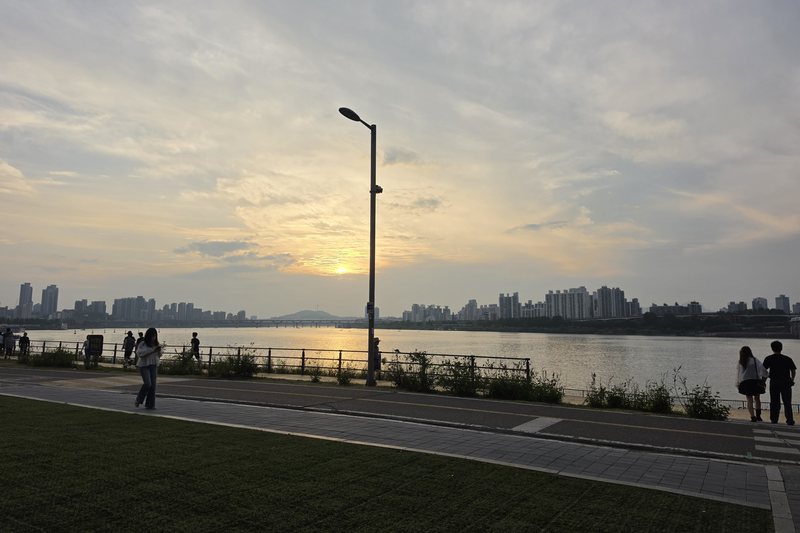
Pick which bank of the river to ride
- Where:
- Han River parks (Yeouido, Banpo, Ttukseom, Jamsil and others)
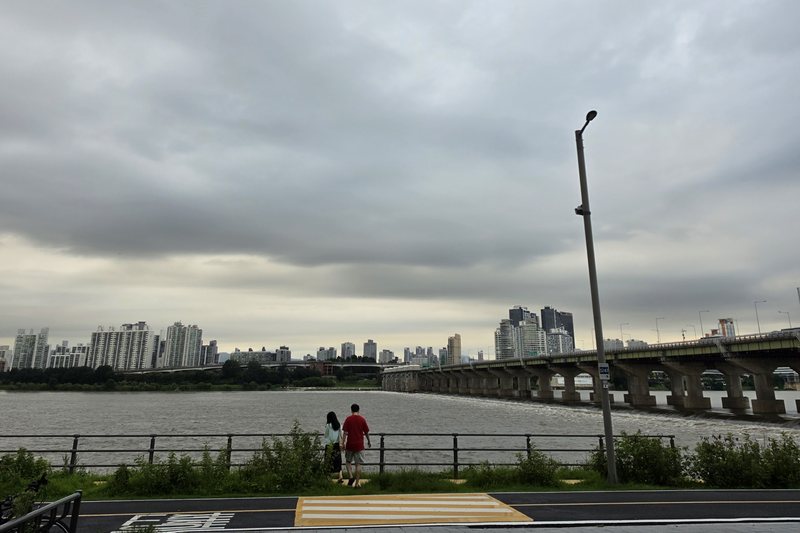
The bike path runs along both banks and stays connected across the Seoul stretch, so wherever you start you are unlikely to lose the route itself. For a first ride, start at Yeouido or Banpo, where stations and facilities are concentrated, and go out and back over two or three bridges. To cross to the other bank, look for the ramp that leads up beside or under each bridge from the riverside, rather than riding up onto the road deck.
- 4
Use a Han River rental shop for bikes Ttareungi does not have
- Where:
- Bicycle rental shops in the Han River parks: Yeouido (near Wonhyo and Mapo bridges), Banpo, Ttukseom and others
Tandem bikes, bikes with a child seat and electric bikes come from the rental shops inside the parks rather than from Ttareungi. Locations, opening hours and prices differ by park and change with the season and the weather, so check the official facility page listed in the sources for that day. They cost more than Ttareungi and give you a wider choice of bike.
- 5
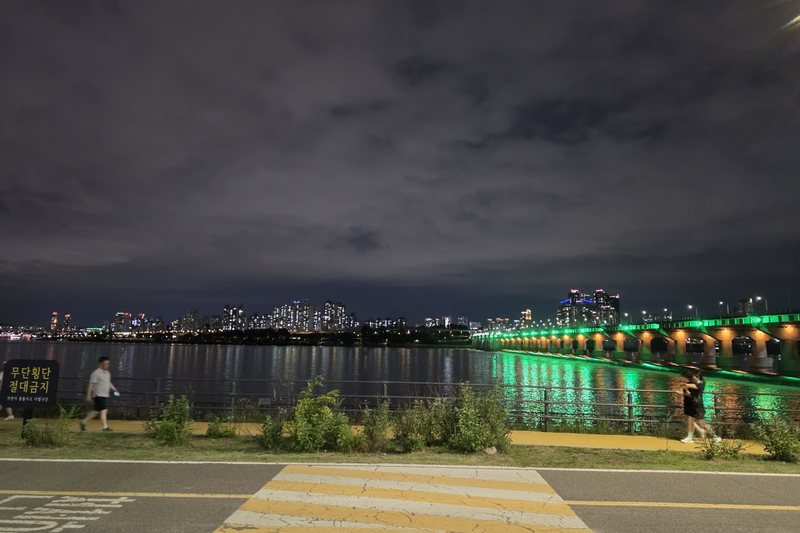
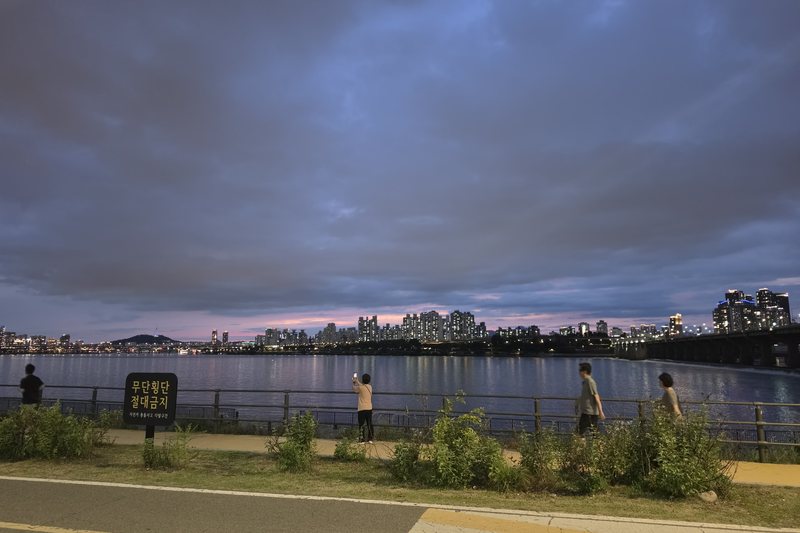
After dark the path becomes a different place
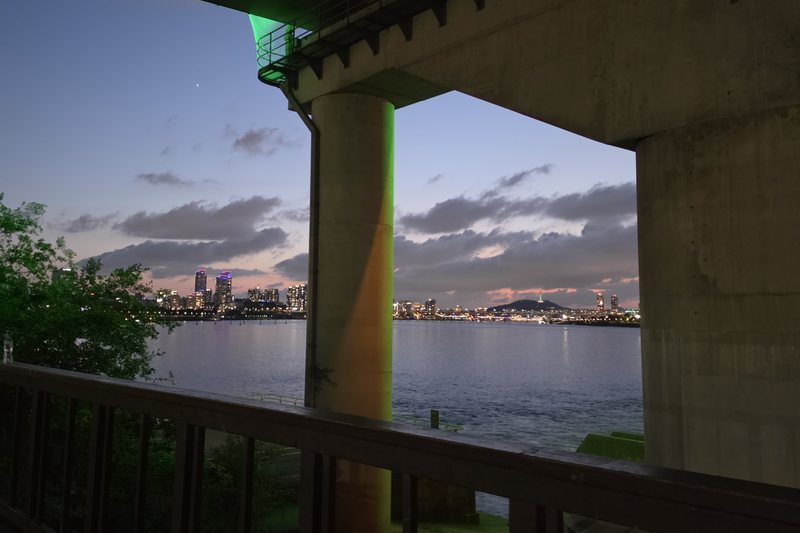
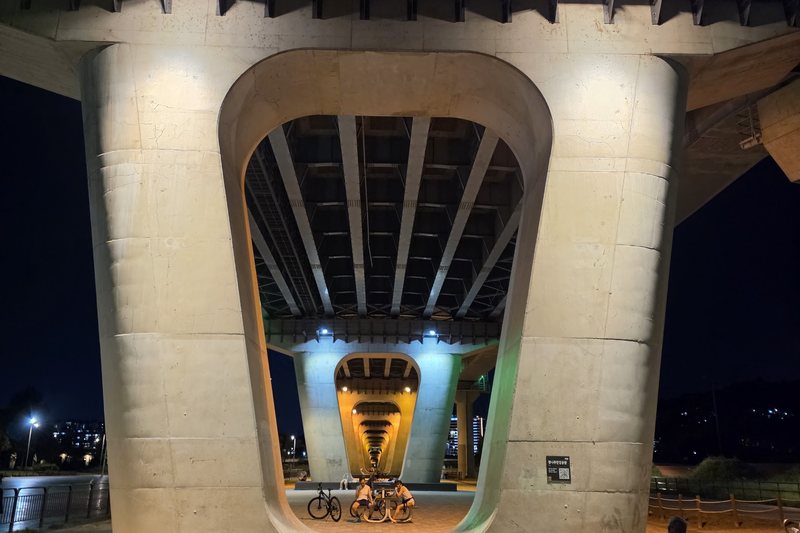
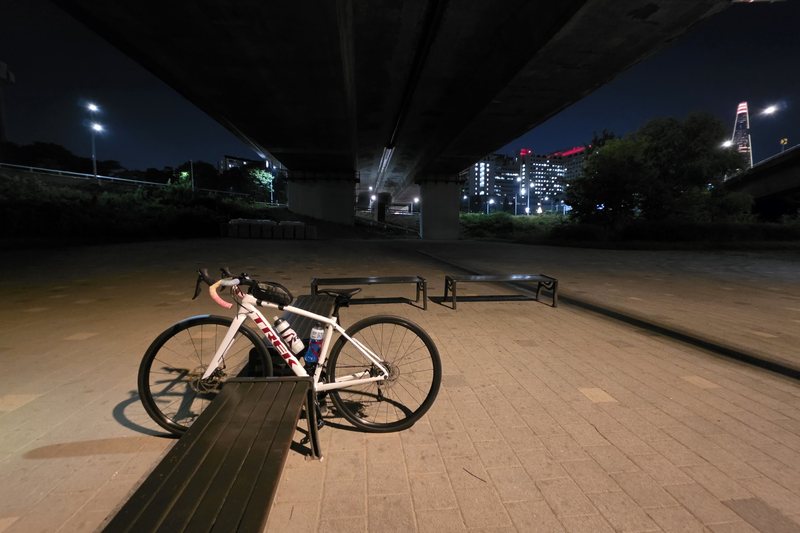
The Han River path is at its busiest after sunset. The bridges light up and the far bank spills across the water, and the same hour brings out everyone who walks. The cycle lane and the footpath are marked in different colours, but where it is crowded that line stops meaning much. Slow down, and when you come up behind someone, a spoken word startles them less than a bell. Front and rear lights are not optional at night. The streetlights are far apart and the riverside is darker than it looks, and the point is less that you can see than that the bike coming the other way can see you. The space under a bridge is well lit and usually has benches, which is why that is where people stop to drink water or fix something.
- 6
Shared electric bicycles need no licence
Electric bicycles split into two kinds. If the motor only assists while you pedal, the law treats it the same as a bicycle and no licence is needed. If it runs on a throttle without pedalling, it counts as a personal mobility device and a licence is required. Most shared electric bikes around Seoul are the first kind, but it is worth checking in the app before you ride.
- 7
Electric scooters follow different rules
- Cost:
- No licence 100,000 won, no helmet 20,000 won, drink riding 100,000 won, riding on the pavement 30,000 won, carrying a passenger 40,000 won, no rear light at night 10,000 won
Shared scooters stand on the street next to the bikes, but the law calls them personal mobility devices. You need a motorised bicycle licence or higher, and since that licence starts at 16, nobody under 16 may ride one. Riding without a licence on the road is a 100,000 won fine and counts as a criminal matter, not a parking ticket. Whether your foreign licence works depends on its categories and on how each app verifies it, and if the app will not register your licence then you cannot rent through that app.
- 8
If you have been drinking, leave the bike
You will see people drinking beer by the river and cycling home, but cycling under the influence is enforced and punished. The threshold is the same 0.03 percent blood alcohol level used for cars. The fine is 30,000 won, and refusing a police test is 100,000 won. If you have been drinking, dock the bike and walk or take public transport.
Watch it happen
Videos other people made, picked because they show a part of this guide that words cannot. They are not our sources: the rules and figures above come from the official pages listed at the end.
서울자전거 따릉이 사용법 이용방법, 대여 반납법&꿀팁 정리(QR,임시잠금)
Channel: 해소해, Korean, no English subtitles. The value is what is on screen
The rental screens are filmed tap by tap, including the QR scan and the temporary lock people get stuck on. It is narrated in Korean with no English track, so watch the screen rather than listen.
Korea Cycling: Seoul Han River 78km(48miles) Virtual Ride (4K POV) | Riding with Yeda
Channel: 예다링 YEDALING, No narration. English subtitles available
A rider's eye view of the riverside path end to end, which shows how the bike lane is separated from walkers and where the path passes under the bridges.
The Korean words
- 따릉이ttareungi, Seoul Bike
- The public bike run by the city. The app and site are called Seoul Bike.
- 대여소daeyeoso, rental station
- The dock where you take and return a bike.
- 이용권iyonggwon, pass
- The right to rent for a period. Not the same thing as the base time on one rental.
- 반납bannap, return
- Locking the bike back into a dock. The clock only stops once this is done.
- 자전거도로jajeongeo-doro, bike lane
- The marked lane for bicycles, separated from the walking path by colour or symbols.
- 안전모anjeonmo, helmet
- On an electric scooter, riding without one carries a fine.
Easy to miss
- It is easy to read the pass validity and the base time of one rental as the same thing. Almost every surprise charge starts here.
- A return is finished only when the bike locks into the dock. Walking away without seeing the confirmation in the app leaves the clock running.
- Some stations are full. If there is no free slot you have to ride to the next one, so check free slots in the app when your time is tight.
- In the evening the path fills with people walking. Slow down in the busy stretches, and a spoken word startles people less than a bell.
You can skip this if
- Ttareungi can only be taken and returned inside Seoul. In another city, look up that city's own public bike.
- If you have no plans to ride an electric scooter, you can skip the licence and fine section.
When it is time for a person
- If this is not a few days of sightseeing and you plan to cycle around Seoul regularly, someone can help you sort out a season pass and insurance together.
Where this comes from
- How can foreigners use Ttareungi? (Seoul Facilities Corporation FAQ)
- Seoul public bike 'Ttareungi' guide (Seoul Metropolitan Government)
- Han River park bicycle rental shops (Seoul Han River Bureau)
- Do electric bicycles need a licence? (Korea policy briefing)
- Licences for electric scooters and personal mobility devices (Easy Law, Ministry of Government Legislation)
- Cycling under the influence is enforced and punished (Ministry of the Interior and Safety)
- Getting to Yeouido Hangang Park (Seoul Han River Bureau)
- Getting to Banpo Hangang Park, with underpass information (Seoul Han River Bureau)
- Getting to Ttukseom Hangang Park (Seoul Han River Bureau)
- Getting to Jamwon Hangang Park, with underpass information (Seoul Han River Bureau)
Rules, fees and deadlines change and depend on your exact case. Please confirm the details with the official sources before you act.