
The short version
Seongsu is a working factory district with cafes and showrooms laid over the top of it.
Red brick alleys, shoemakers' workshops, a large park and the riverside all connect on foot, so half a day here needs no plan at all.
Right now
- 1The walk runs between Seongsu station on line 2 and Seoul Forest station on the Suin Bundang line. Start at one end and leave from the other and you never repeat a street.
- 2Many cafes and pop-up shops close on Monday or Tuesday. If you are going for one particular place, check that it opens that day.
- 3This is still a factory district. Trucks come down the narrow lanes, so do not step back into the road to take a photo.
Getting there
From Incheon Airport Terminal 1 and Terminal 2
Take an all-stop Airport Railroad train to Hongik Univ. station. Change to line 2 there, take an inner loop train toward Sinchon and City Hall, and get off at Seongsu station on line 2.
- How long:
- About 1 hour 40 minutes to 2 hours (approximate)
The express Airport Railroad train does not stop at Hongik Univ., so take the all-stop train. With heavy luggage, airport bus 6013 stops at Seongsu 119 Center (성수119센터), 17,000 won for adults, last bus 20:10.
From Seoul Station
Take line 1 toward Cheongnyangni and Soyosan and get off one stop later at City Hall station. Change to the line 2 inner loop toward Euljiro 1(il)-ga and get off at Seongsu station on line 2.
- How long:
- About 30 to 40 minutes (approximate)
You can also take line 4 and change to the line 2 inner loop at Dongdaemun History & Culture Park station. It takes about the same time.
From Hongik Univ. (the lodging cluster)
At Hongik Univ. station on line 2, take an inner loop train toward Sinchon and City Hall. Stay on it and get off at Seongsu station on line 2.
- How long:
- About 35 to 45 minutes (approximate)
The outer loop toward Hapjeong and Dangsan goes the long way around through Gangnam and takes more than twice as long. The platform and the front of the train say which loop it is.
From Seongsu station, on foot in the neighborhood
Leave Seongsu station on line 2 by exit 2 and walk west along Achasan-ro to reach the handmade shoe street. Carry on to Ttukseom station and leave by exit 8 for Seoul Forest. Going back, enter Seoul Forest station on the Suin Bundang line by exit 3 or 4 and change one stop later at Wangsimni station.
- How long:
- About 25 minutes of walking time (approximate). From exit 8 of Ttukseom station to Seoul Forest it is a 10 to 15 minute walk.
To carry on from Seoul Forest to the Han River, cross the footbridge linking the park to the river and come out toward Seongsu Bridge. A walking path runs about 1.5km upstream from there.
What to have ready
- Comfortable shoes: The streets are flat but you cover a lot of ground once Seoul Forest is included.
- A little cash: Older workshops and small shops may not have a card terminal.
- A picnic mat or thin blanket: If you plan to sit down in the park or by the river.
Phrases you can copy and paste
Step by step
The route on a map
- 1
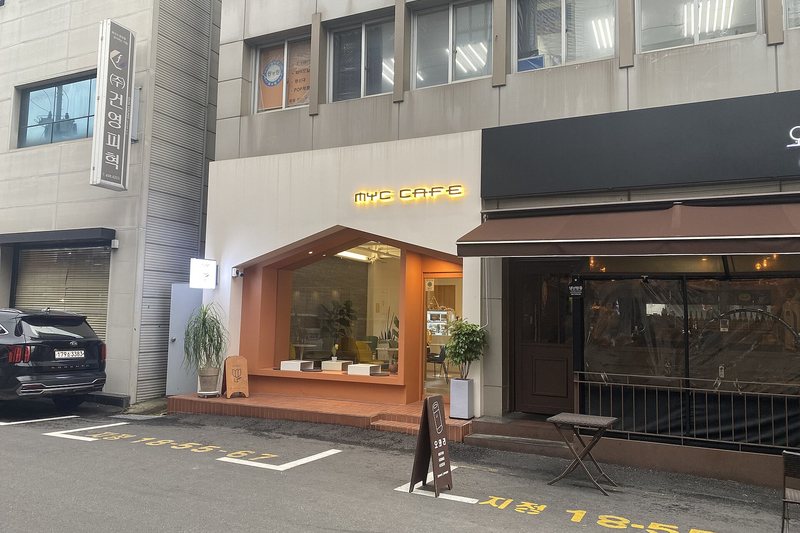
The red brick lanes and Yeonmujang-gil
- Where:
- From exit 3 of Seongsu station, line 2, heading towards Ttukseom station
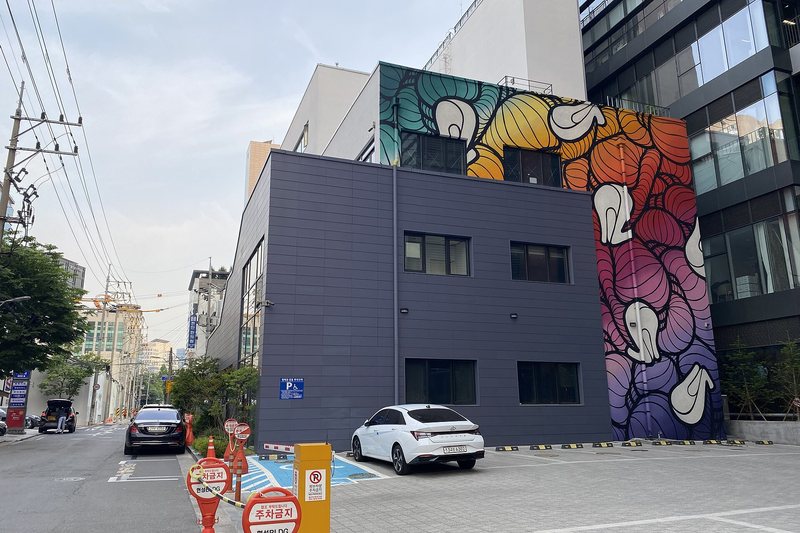
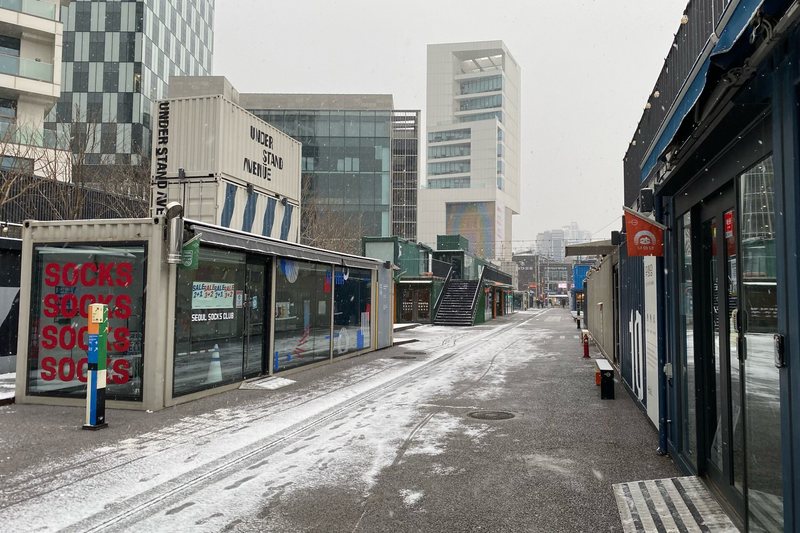
Red brick is what gives Seongsu its face. Old factories and warehouses are still standing, with cafes, showrooms and exhibition spaces moved inside them. Since 2018 the city and the district office have supported repairing and building in this red brick style, so even new buildings follow the same material. Signs are small and doorways often look like factory entrances, so it is normal to walk straight past a place your map says you are standing in front of. A shut looking door is often open, and it is worth glancing through the window.
Filmed here: Our Unwritten Seoul
Yeonmujang-gil, Seongdong-gu, Seoul, South Korea
- 2
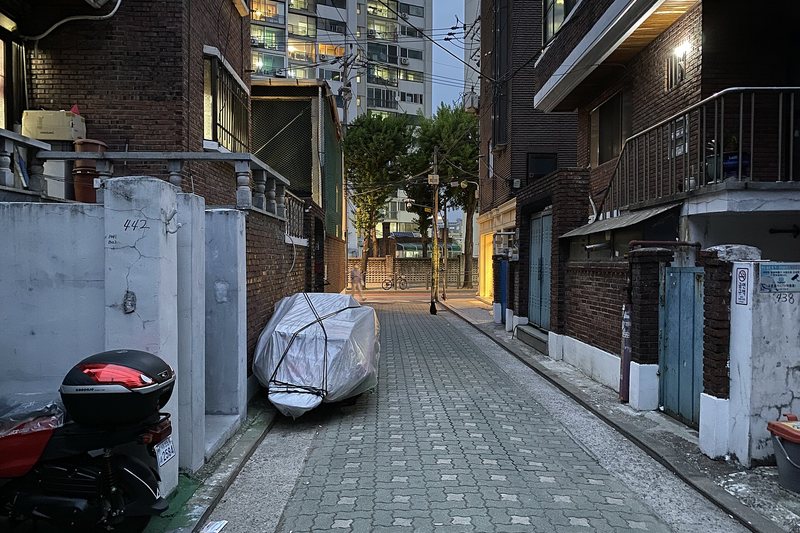
The handmade shoe street
- Where:
- Around exit 1 of Seongsu station, line 2
Seongsu holds the largest concentration of handmade shoe production in the country. According to the district office there are more than 350 workshops making finished shoes, alongside about 100 more handling processing and materials. One block off the cafe lanes the smell turns to leather and the shutters are workshops where shoes are actually made. You can order a custom pair, but it takes time to make, so if you are visiting for a few days the shops selling finished pairs are the practical option. The workshops mostly run on weekdays.
53 Achasan-ro, Seongdong-gu, Seoul, South Korea
- 3
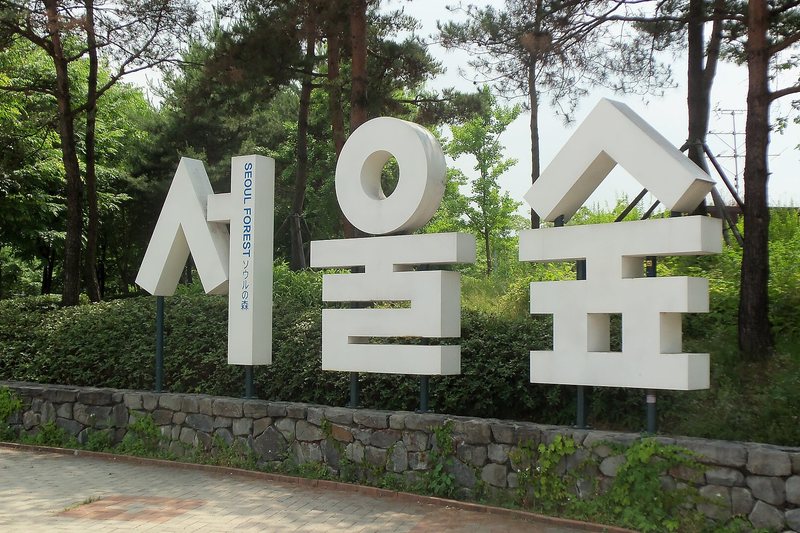
Seoul Forest
- Where:
- Walk from Seoul Forest station on the Suin Bundang line, or Ttukseom station on line 2
- How long:
- The park is open all year, though some exhibition facilities inside close on Mondays
- Cost:
- Free
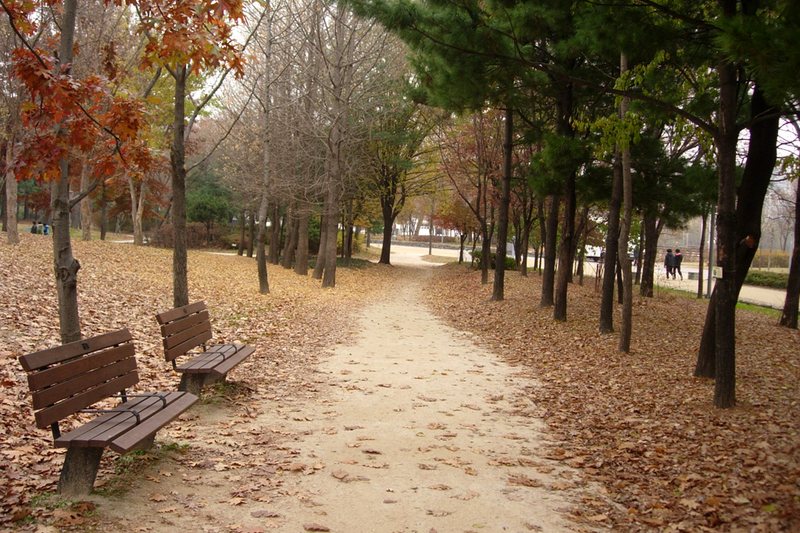
When the alleys wear you out, the park is right there. Wide lawns, shaded trees, a deer enclosure, a gallery and a greenhouse all sit together. There is no entrance fee and no closing time, so it works well with a coffee carried out of a nearby cafe. Cherry blossom season and autumn colour bring crowds, but on a weekday afternoon it is usually quiet.
273 Ttukseom-ro, Seongdong-gu, Seoul, South Korea
- 4
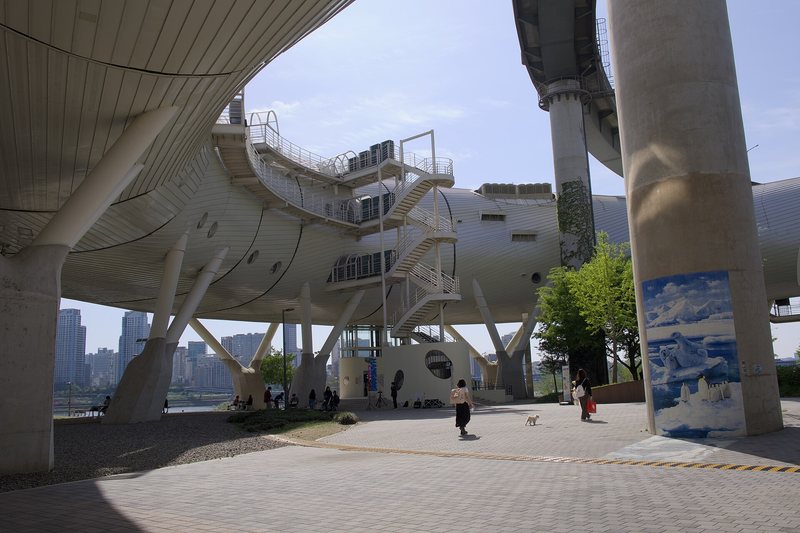
Carry on to Ttukseom Hangang Park
- Where:
- The long Jabeolle building attached to Jayang station on line 7 acts as the entrance
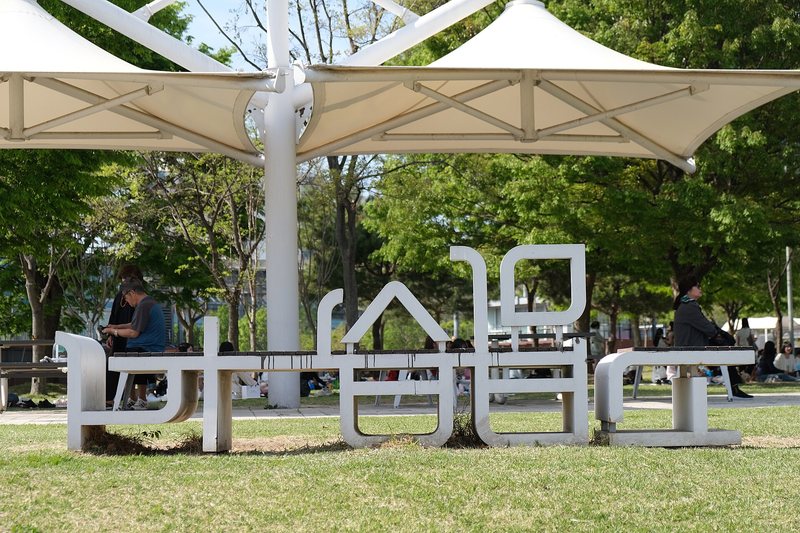
Head further towards the water and you reach the riverside itself. The long curved building known as Jabeolle serves as the park entrance and holds a cafe, a library and places to sit. From here the bike path continues along the river, so this is a natural point to swap walking for cycling. Once the sun goes down and the far bank lights up, it looks nothing like the alleys you started in.
139 Gangbyeonbuk-ro, Gwangjin-gu, Seoul, South Korea
Watch it happen
Videos other people made, picked because they show a part of this guide that words cannot. They are not our sources: the rules and figures above come from the official pages listed at the end.
Seoul Seongsu Cafe Street Walking Vlog On Saturday Afternoon 서울 핫한 성수동 카페거리 브이로그 화창한 토요일 카페 산책
Channel: dingo walk, No narration and no subtitles. It is a walking tour
A Saturday afternoon walk with no commentary, which is when the street is at its fullest and the crowding this guide warns about is visible rather than described.
서울 여행 성수동 완벽하게 보는 방법 - 건대입구 연무장길 성수동카페거리 서울숲 서울숲뒷길까지
Channel: 직방탈플러스, Korean, no English subtitles. The value is the route
Links Yeonmujang-gil, the cafe street and Seoul Forest into one route, which shows how far apart they actually are before you plan the order to walk them in.
The Korean words
- 수제화sujehwa, handmade shoes
- Shoes made by hand. The old industry of this neighbourhood.
- 공방gongbang, workshop
- A workshop where the maker works on site.
- 팝업paeop, pop-up store
- A shop that opens for a few weeks and disappears. Seongsu has a lot of them.
- 돗자리dotjari, picnic mat
- The thin mat people spread out in parks and by the river.
- 브레이크 타임beureikeu taim, afternoon break
- The hours a place shuts between lunch and dinner.
Easy to miss
- Many places here do not put up a large sign. Standing exactly where the map points and still not finding the door is normal.
- Popular cafes and pop-ups have long queues at weekends. A weekday afternoon is far more relaxed.
- Trucks and motorbikes use these lanes. It is not a pedestrian only street.
- The shoe workshops are workplaces, not attractions. Ask before photographing inside.
You can skip this if
- If shopping and cafes are not your thing, Seoul Forest and the river alone make the trip worthwhile.
- Ordering custom shoes does not fit a short trip. It suits people who are staying in Korea.
When it is time for a person
- If you are thinking of living near Seongsu, you want someone who knows how much the living environment varies block by block in a semi industrial zone.
Where this comes from
- The city feeling held in red brick: Seongsu-dong (Seoul Love, Seoul Metropolitan Government)
- Seongsu handmade shoe industry programme (Seongdong-gu Office)
- Seongsu-dong handmade shoe street (Korea Tourism Organization)
- Seoul Forest (Parks of Seoul, Seoul Metropolitan Government)
- How to enjoy Ttukseom Hangang Park (Seoul Metropolitan Government)
Rules, fees and deadlines change and depend on your exact case. Please confirm the details with the official sources before you act.