
The short version
No law says how many grams make one portion.
Some places serve around 150 grams, others 200. Any shop selling meat has to post a price per 100 grams, so when comparing prices, look at that number rather than the portion price.
Right now
- 1Look at the price per 100 grams and the weight of one portion first. Compare portion prices alone and two places serving different amounts will look like the same deal.
- 2Most places take orders from two portions up. A growing number start at three, so check before you sit down.
- 3Asking for more side dishes or lettuce costs nothing. There is no need to hold back.
What to have ready
- One other person: Few places serve a single portion. Solo barbecue restaurants exist as a separate category for that reason.
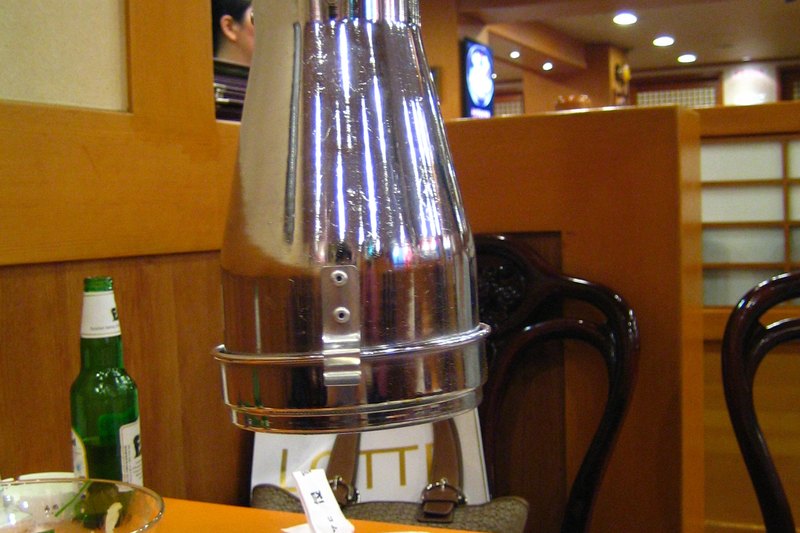
- Clothes that can take the smell: Many places have extractor hoods, but they never catch everything. Lift the seat of your chair and there is a compartment for your coat.
- A card: Almost every barbecue restaurant takes cards, and there is no tipping.
Phrases you can copy and paste
Step by step
- 1
Read the numbers on the menu
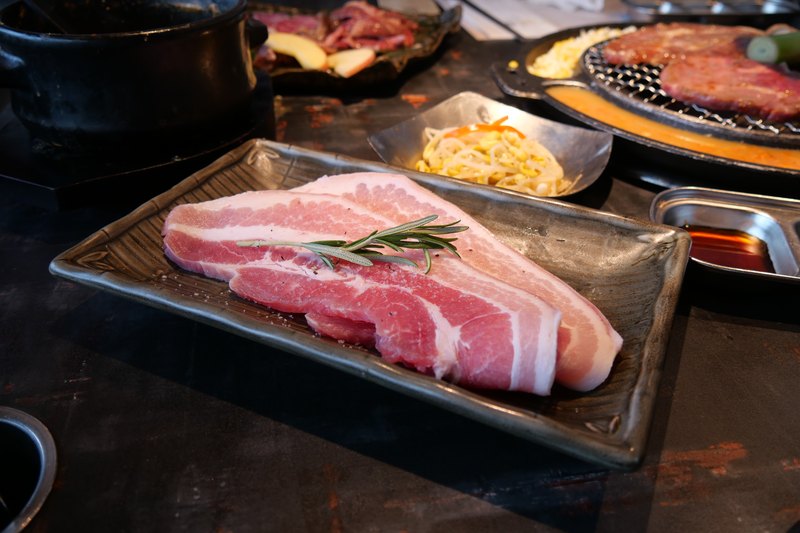
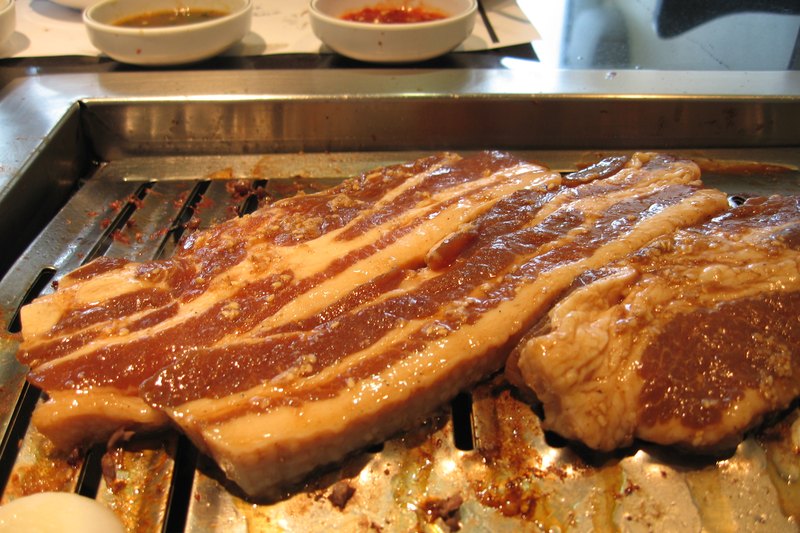
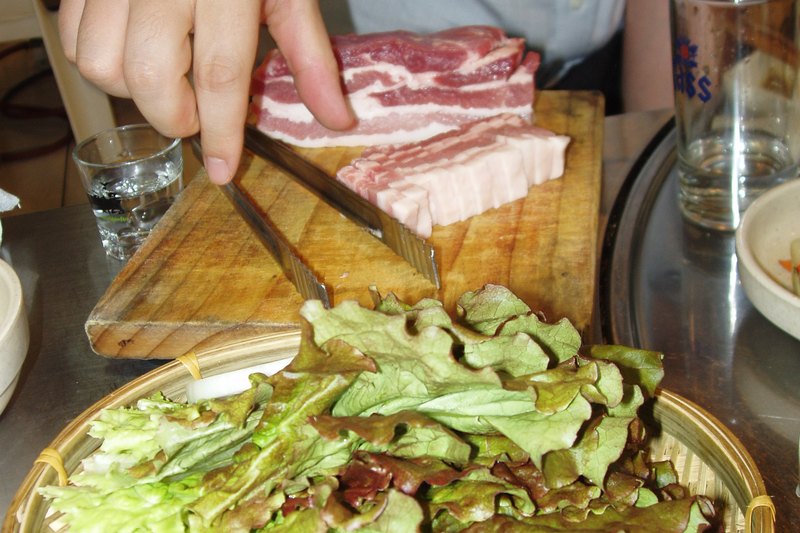
How many grams make one portion of samgyeopsal is not fixed by law. At a butcher, 200 grams is the usual portion, but restaurants range from around 150 grams to 200, and some have gone down to 100. That is how a portion that looks cheaper than next door can turn out to cost more. So there is a separate number to use as the yardstick. Any shop that cuts and sells meat has to display a price per 100 grams, and if it also lists a portion price, it has to state how many grams that portion is. That rule is why meat prices in Korea are quoted per 100 grams. For reference, the Korea Consumer Agency found the average restaurant price of one portion of samgyeopsal in the first half of 2026 to be 17,745 won, and in July 2026 Seoul was the most expensive part of the country at 18,154 won.
- 2
Know what the names of the cuts refer to
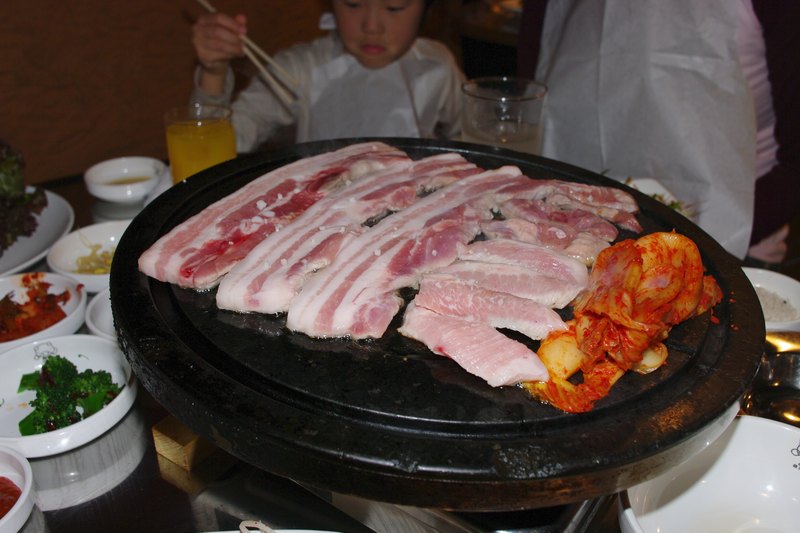
Samgyeopsal is an official cut name set out in a Ministry of Food and Drug Safety notice. Pork is divided into seven primal cuts and twenty five sub cuts, and samgyeopsal is the belly below the loin with the fat, the galmaegisal and the tosisal removed. The other names on the menu stop being confusing once you know where they sit. Moksal, called moksim in the regulation, is the muscle running through the neck and shoulder. Galmaegisal is the diaphragm; the Korean word for it, garomak, drifted through galmagi to galmaegi, and a pig yields only two strips. Hangjeongsal is the muscle joining the head to the neck, and with only 200 to 400 grams per animal it is priced accordingly. Dwitgogi, on the other hand, is not a legal cut name. It refers to lesser cuts or the trimmings left after cutting, so two places using the same name can serve quite different meat.
- 3
Order, and the table fills up first
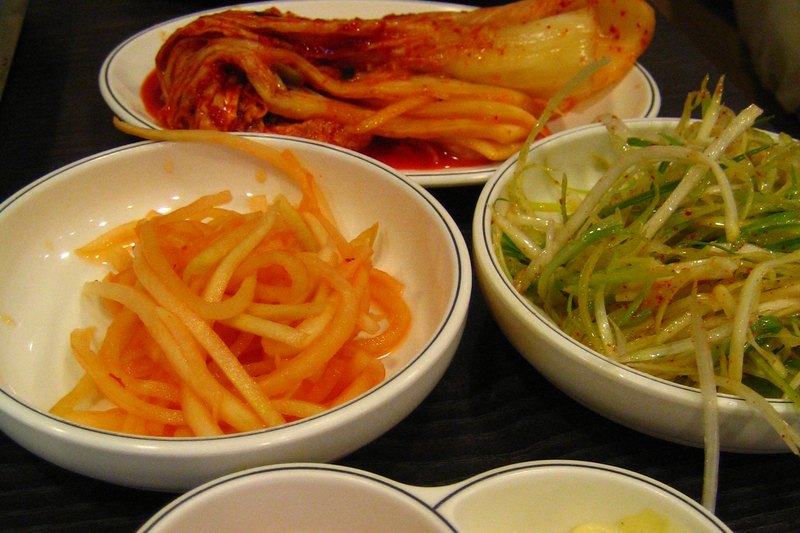
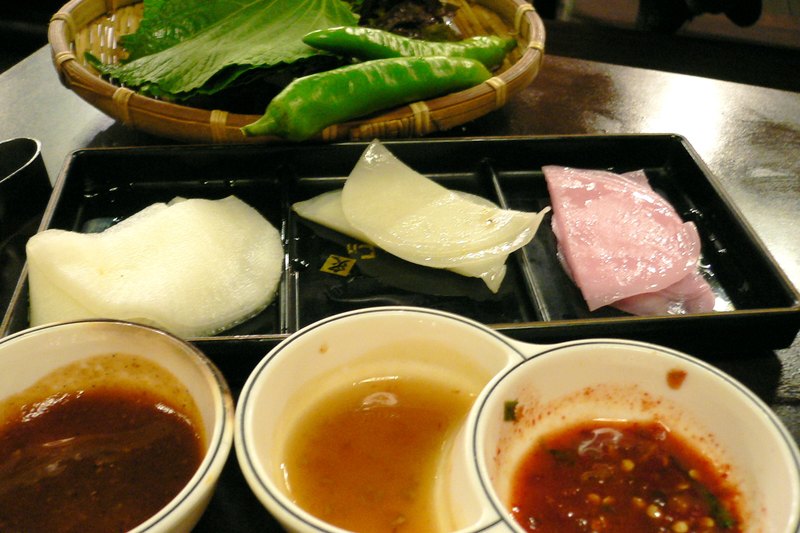
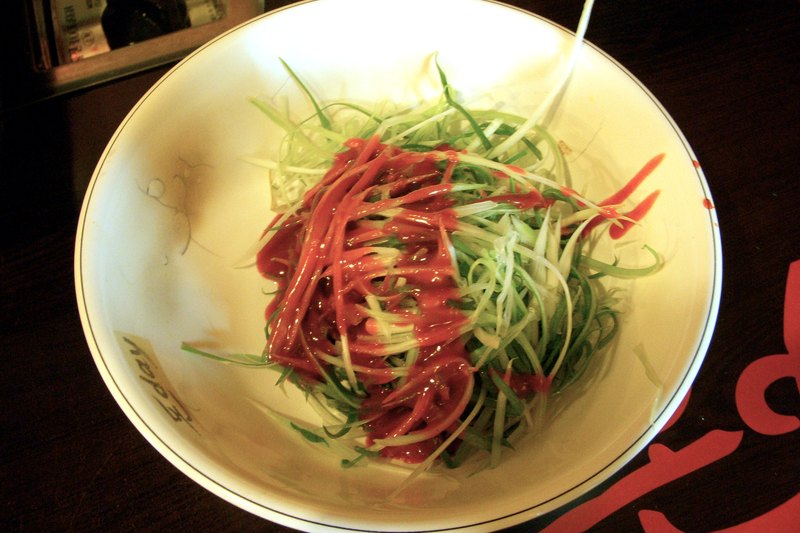
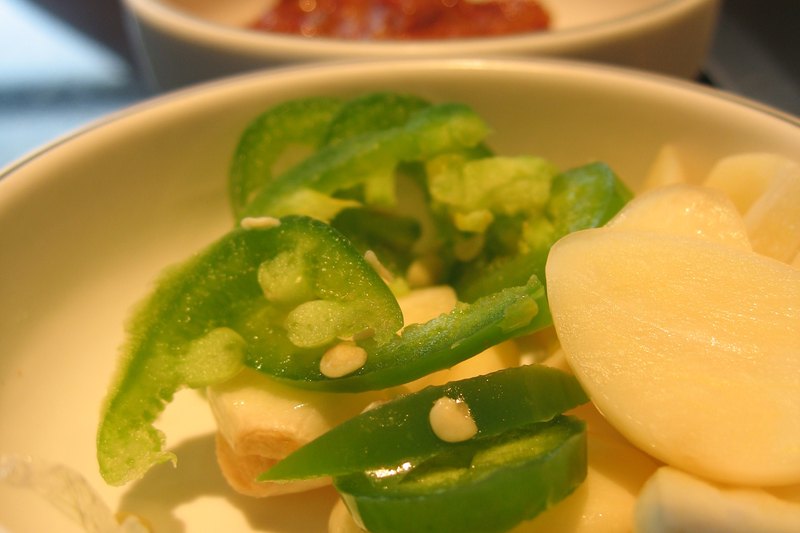
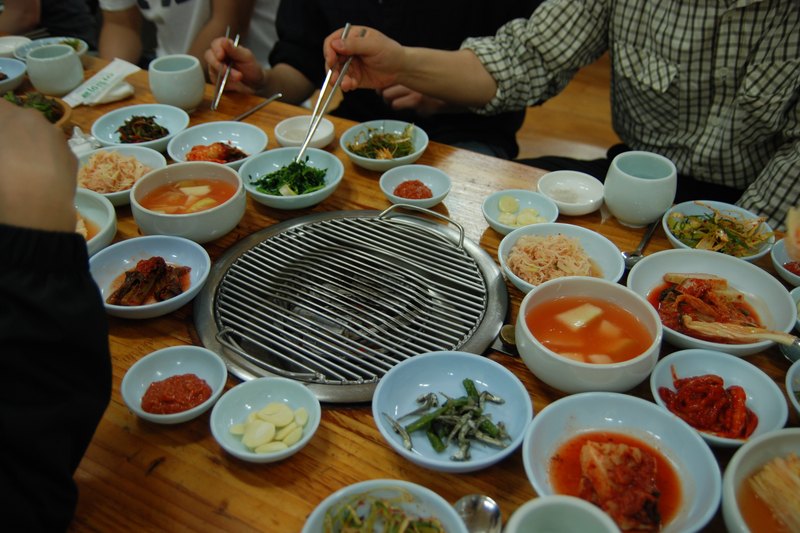
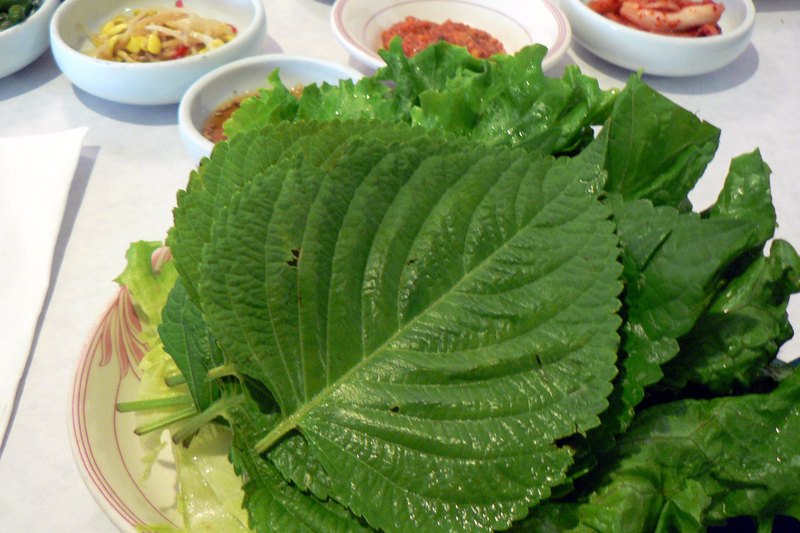
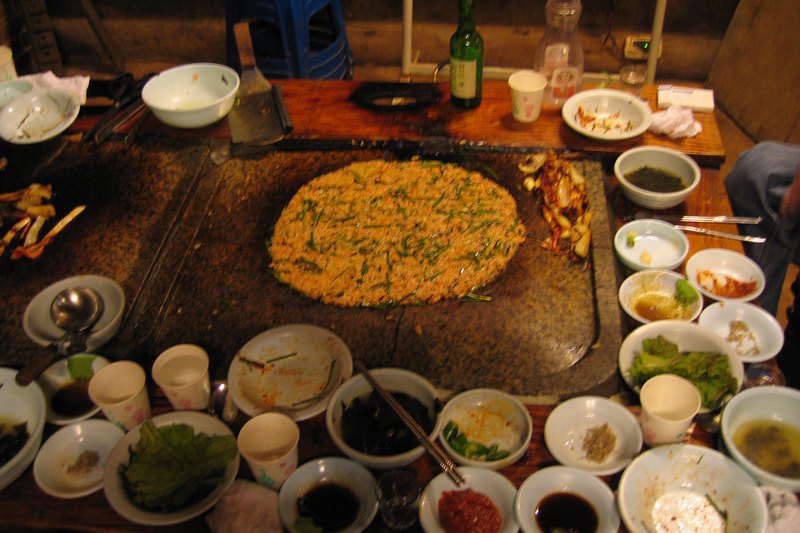
Order the meat and a crowd of small plates arrives. These are banchan, and there is no set order for what to eat when. Asking for more water or more banchan carries no extra charge, and holding back in the belief that it costs money is the most common misunderstanding among foreign visitors. Serving food left by one customer to another is prohibited under the Food Sanitation Act, with a 15 day business suspension for a first offence, so the refill you get cannot have come from the previous table. Alongside the meat come ssam leaves such as lettuce and perilla, ssamjang made by mixing gochujang and doenjang with garlic and sesame oil, a dip of sesame oil and salt, pajeori of shredded seasoned scallions, and raw garlic. The Korea Consumer Agency defines a standard portion of samgyeopsal as 200 grams of meat with 50 grams of kimchi, 15 grams of garlic, 70 grams of lettuce and 15 grams of ssamjang.
- 4
The grilling is your job
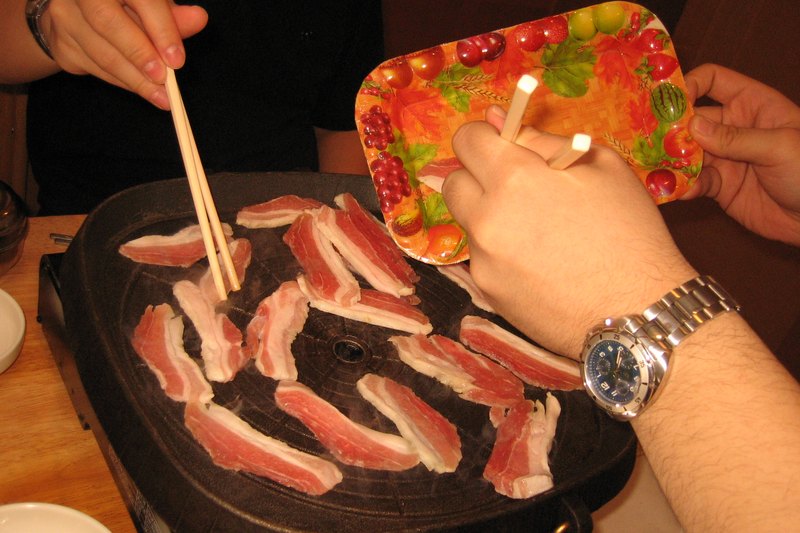
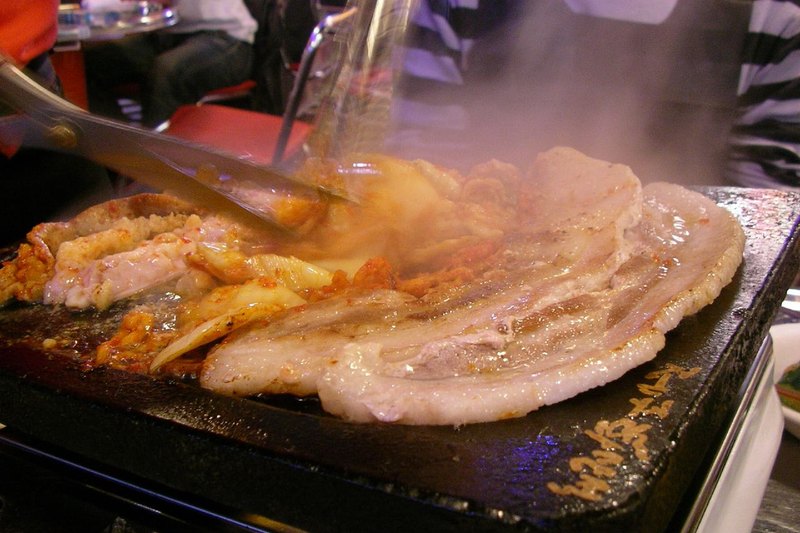
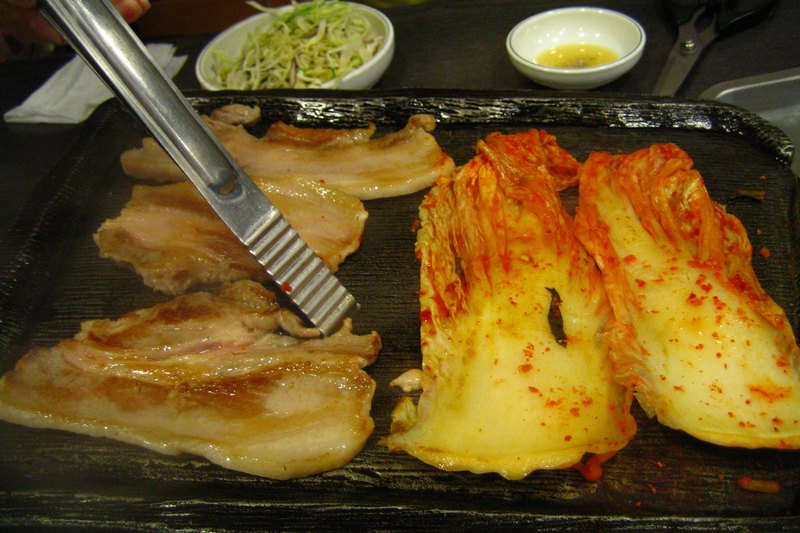
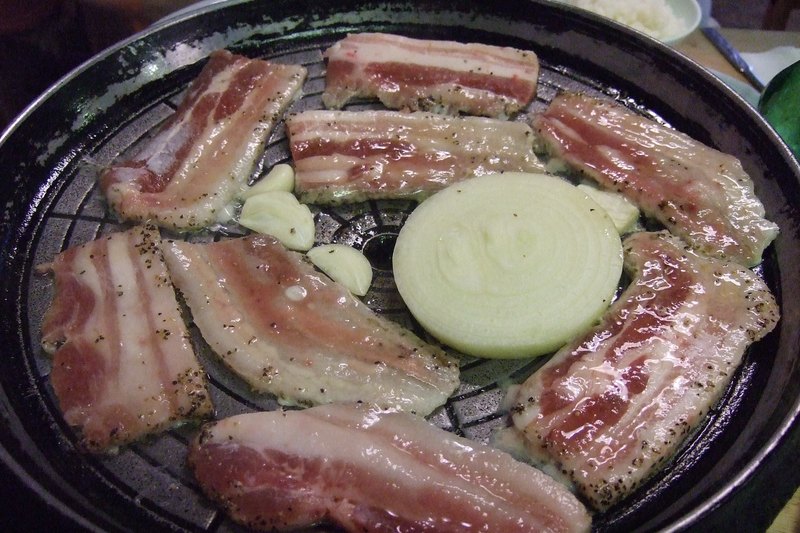
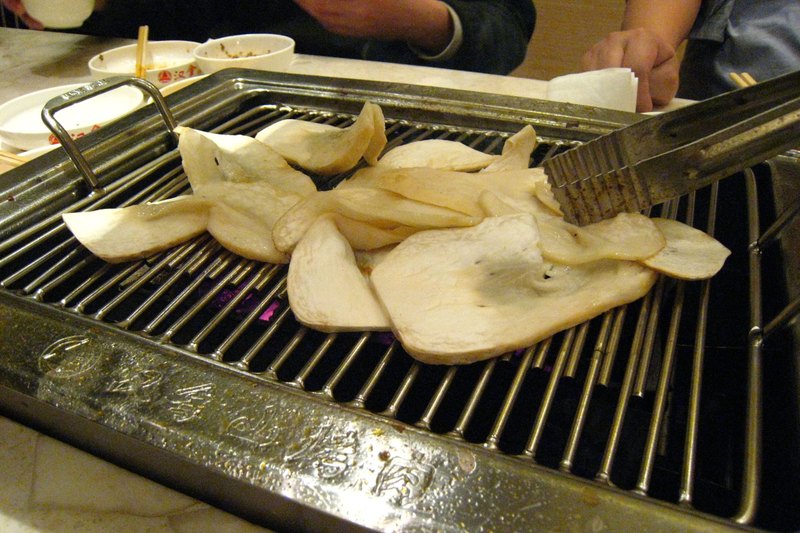
The grill is set into the table and the meat arrives raw. Some places have staff grill it and tell you when to eat, but the default is that you cook it yourself. The tools are a pair of tongs and a pair of scissors. Cutting meat with scissors is the part foreign visitors most often name as strange, and the reason is that it has to be in bite sized pieces to pick up with chopsticks. Putting kimchi, garlic and mushrooms on the empty spots beside the meat is common too. Do not judge doneness by feel; make sure of it. The ministry recommends cooking meat to a core temperature of 75 degrees for at least one minute, and Food Safety Korea uses 74 degrees for one minute. Pork parasites die at 77 degrees. The ministry itself says, though, that under current farming conditions parasite infection is unlikely, and that the real concern is food poisoning such as salmonella. Either way, if it is still pink, it goes back on.
- 5
Wrap it and eat it in one bite
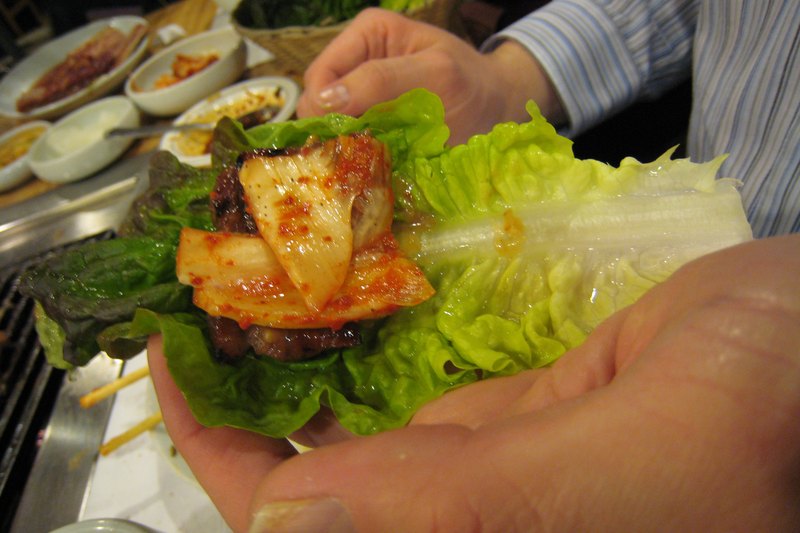
Lay a lettuce or perilla leaf flat on your palm, put the meat on it, add a dab of ssamjang, fold it and put the whole thing in your mouth at once. Bite it in two and the filling spills out, so open wide and go in one. This is the one time when touching food with your hands is fine. The Seoul Tourism Organization's dining etiquette guide says not to pick up food with your hands and then lists ssam as the exception. Two sauces come out: ssamjang is salty and rich, the sesame oil dip is plain, and many people taste the first piece with the oil to judge the meat and switch to ssamjang after that. That is preference, not a rule. Garlic can go into the wrap raw, or onto the grill until it softens.
- 6
Order drinks and one more set of rules applies
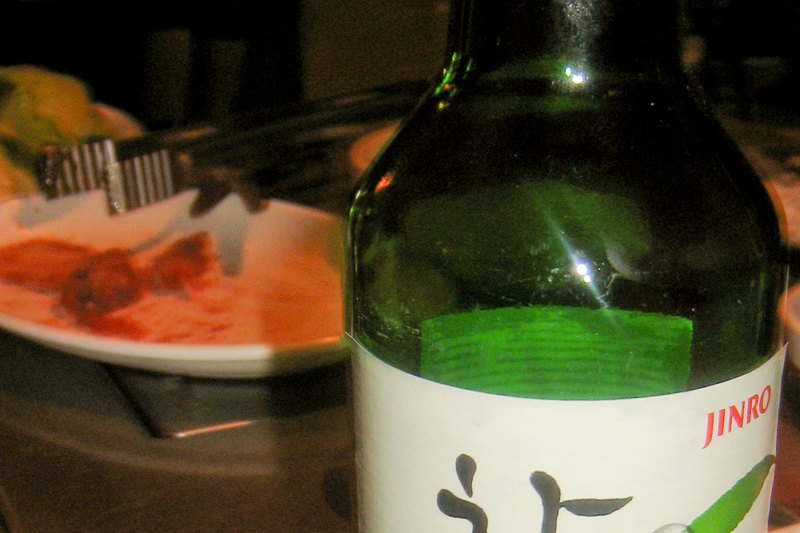
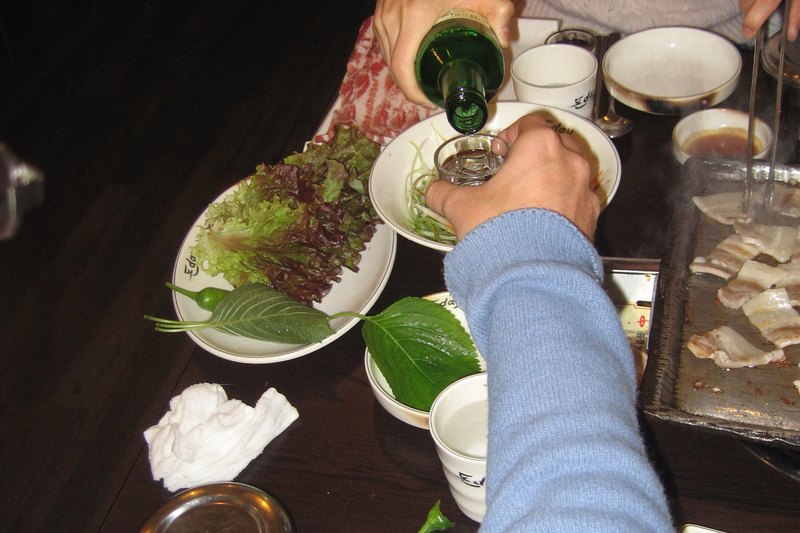
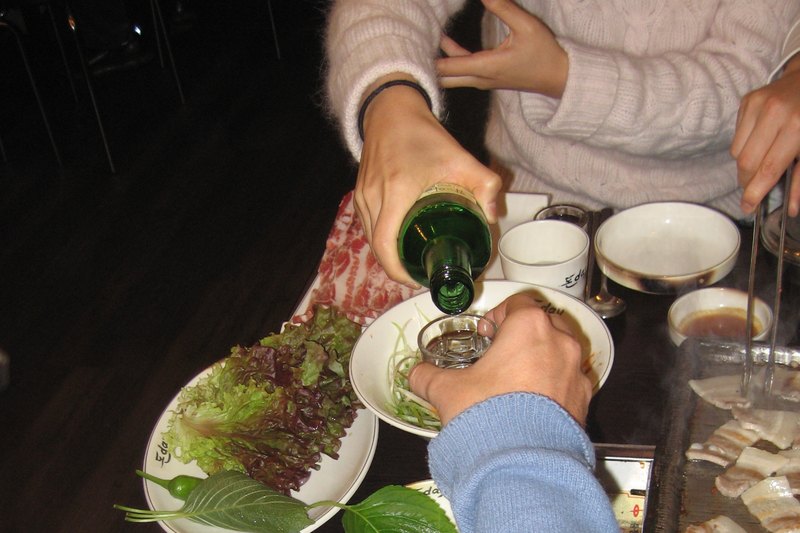
The drinks that sell most at a barbecue restaurant are soju and beer. When Gallup Korea surveyed 1,158 people in 2019, 61 percent of regular drinkers named soju as their favourite and 31 percent named beer. Somaek, the two mixed together, is common as well, and you will often see it stirred by standing one chopstick in the glass and tapping it with another so the vibration does the mixing. A few pouring customs have set hard. You do not fill your own glass, you fill an older or more senior person's glass first, and you hold both bottle and glass with two hands. The junior person turns their head away from the senior to drink. The legal drinking age is counted by birth year rather than exact age. You can buy alcohol from 1 January of the year you turn 19, which in 2026 means anyone born in 2007 or earlier. Being asked for ID is a legal obligation on the seller, not something aimed at you for being foreign.
- 7
Close with a finishing dish
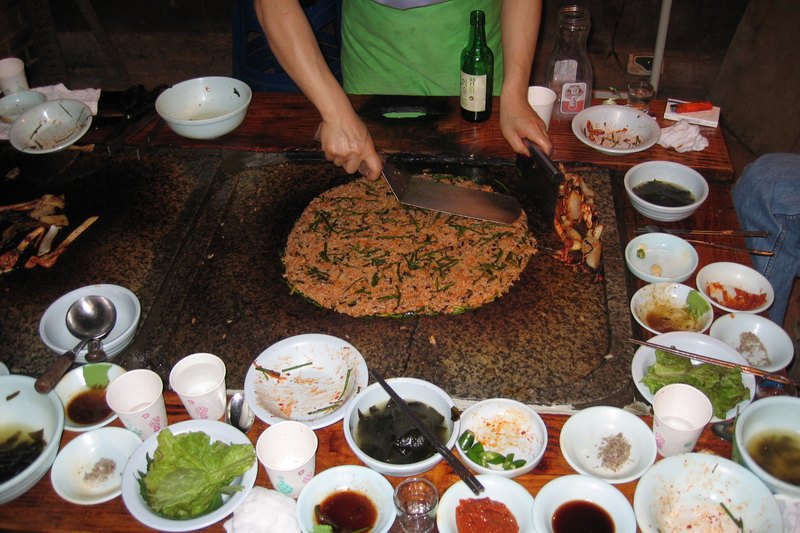
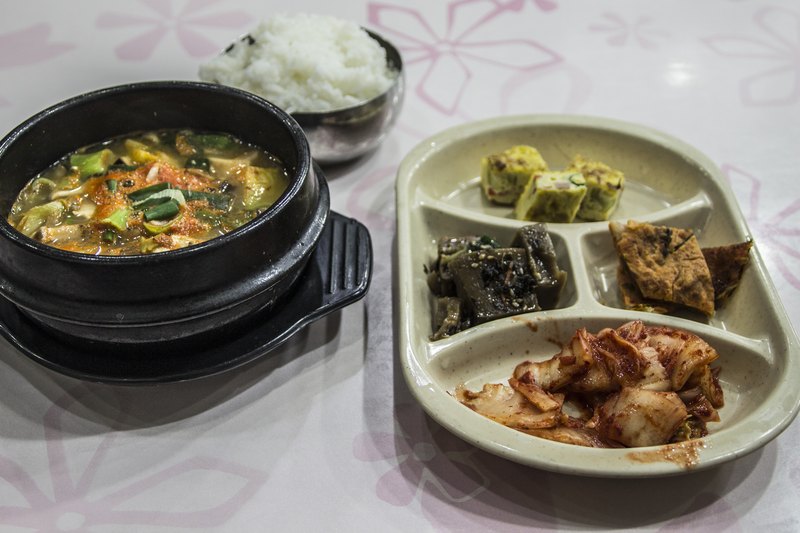
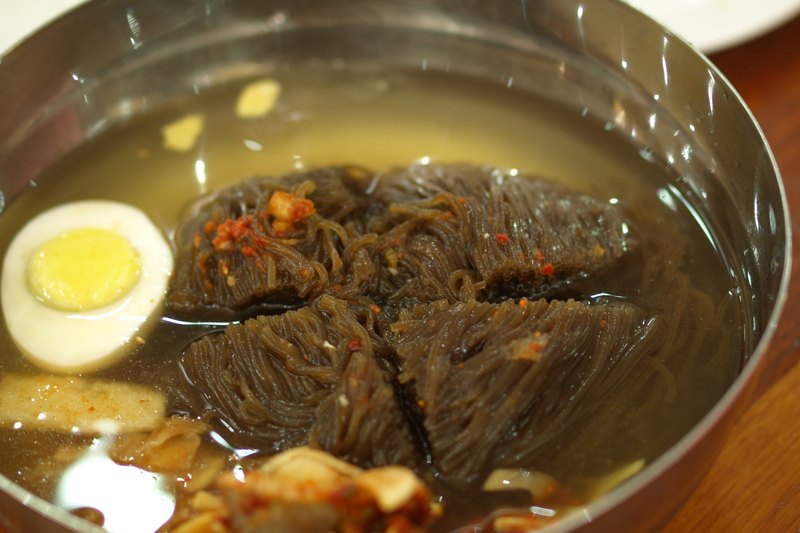
Once the meat is done, the meal moves on to rice. Doenjang jjigae, fried rice and cold noodles are the usual closers, and the Korea Tourism Organization presents that sequence as part of Korean barbecue. The fried rice is often made on the same grill you cooked the meat on. Rice, kimchi and seaweed flakes go into the leftover fat and browned bits, get pressed flat and cook until the bottom is just crisp. Many people do not consider the meal over until this point. These closers are, however, usually paid dishes ordered separately. They do not arrive automatically like banchan, so check the price before ordering. The average price of cold noodles in Seoul was 12,692 won as of July 2026, but that figure surveyed noodle specialists and is not the same thing as a barbecue restaurant's finishing bowl.
- 8
Call, pay, leave
To get a server, press the call button on the table or say yeogiyo out loud. The button is louder than you expect, so do not be startled. Many places take payment at the counter rather than at the table, though table payment and self order kiosks are spreading. There is no tipping. The Korea Tourism Organization states plainly that tips are neither required nor expected, so the amount on the bill is the whole of it. In a group, it is common for one person to pay the lot rather than splitting, but splitting has become ordinary too, so agree beforehand. There is no smoking indoors. Since 1 January 2015 every restaurant regardless of size has been a no smoking zone, and the glass walled smoking sections disappeared at the same time.
Watch it happen
Videos other people made, picked because they show a part of this guide that words cannot. They are not our sources: the rules and figures above come from the official pages listed at the end.
평생 써먹는 삼겹살 굽는 방법
Channel: 고기남자, Korean, with English and Japanese subtitles
Watches the pork the whole way through, when to turn it, when to cut it, when it is done, which is the part of the table you are expected to handle yourself.
How To Eat Korean BBQ: A Beginner's Guide
Channel: Gothamist, English narration, English subtitles
Covers the rest of the table: what the side dishes are for, how the lettuce wrap is assembled, and what gets refilled without asking.
The Korean words
- 삼겹살samgyeopsal, pork belly
- The belly cut below the loin. An official cut name set by Ministry of Food and Drug Safety notice.
- 1인분irinbun, one portion
- One person's share. The weight is not fixed by law and varies by restaurant.
- 목살moksal, pork neck
- Called moksim in the regulation. Leaner than samgyeopsal.
- 쌈ssam, leaf wrap
- Meat wrapped in lettuce or perilla and eaten in one bite.
- 쌈장ssamjang, wrap sauce
- Gochujang and doenjang mixed with garlic, scallion and sesame oil.
- 기름장gireumjang, sesame oil and salt dip
- Sesame oil with salt. Plainer than ssamjang.
- 파절이pajeori, seasoned scallion salad
- Shredded scallions tossed in seasoning. Eaten with the meat.
- 반찬banchan, side dishes
- The small plates that cover the table. Refills cost nothing.
- 볶음밥bokkeumbap, fried rice
- A finishing dish made by frying rice on the grill you cooked the meat on. Ordered separately.
- 여기요yeogiyo, excuse me (calling staff)
- What you say to call a server.
Easy to miss
- Comparing two restaurants by the portion price alone gives the wrong answer. The weights can differ, so look at the price per 100 grams.
- Many people hold back on banchan thinking refills cost money. Neither water nor banchan carries an extra charge.
- Doenjang jjigae, fried rice and cold noodles are usually paid dishes ordered separately. They do not come automatically like banchan.
- A case of an order being refused for not matching the head count made the television news. Four people ordered three portions and the owner insisted on four.
- Dwitgogi is not a legal cut name. The same name on the sign can mean different meat from one place to the next.
- Smoking indoors is banned without exception. Breaking it carries a fine of up to 100,000 won.
You can skip this if
- If you do not eat pork, a barbecue restaurant is a hard place to find an alternative. The Korea Tourism Organization suggests temple food, bibimbap, vegetable gimbap, kongguksu, vegetable pancakes, muk and tofu instead.
- If you are vegetarian, check the kimchi first. The seasoning often contains salted seafood, fish sauce or meat stock.
- If you plan to eat alone, an ordinary barbecue restaurant is difficult. Solo barbecue restaurants with single seats and small grills exist as a separate category, so look for one of those.
When it is time for a person
- If you have reached the point of needing to know the order of drinks and payment at a work dinner, you need someone who reads the room for you rather than the rules.
Where this comes from
- Notice on the classification of pork cuts (Ministry of Food and Drug Safety, Korean Law Information Center)
- Dining out prices (Korea Consumer Agency, Chamgagyeok price portal)
- Livestock retail prices (KAMIS agricultural market information)
- Temperature and time control (Food Safety Korea, Ministry of Food and Drug Safety)
- Is it safe to eat pork undercooked? (Ministry of Food and Drug Safety webzine, Open Maru)
- Korean BBQ guide (Korea Tourism Organization)
- National Health Promotion Act (Korean Law Information Center, Ministry of Government Legislation)
Rules, fees and deadlines change and depend on your exact case. Please confirm the details with the official sources before you act.